





Many people struggle with how to arrange a small office when their space feels cramped, crowded, or just not working the way it should.
You might try different home office decorating ideas, but no amount of style fixes a space that’s poorly set up from the beginning.
The problem often starts when furniture gets placed wherever it fits, not where it makes sense for comfort, storage, or movement.
Without a clear layout, your office can feel tight, cluttered, and hard to use, especially when you’re trying to stay focused.
You may run into blocked drawers, tangled cords, or awkward seating that makes it hard to get through your workday without discomfort.
Over time, these small frustrations add up and make it harder to enjoy your workspace or stay productive.
Even in a small room, poor layout choices can make the area feel more like a storage closet than a spot to work.
This post may contain affiliate links. As an Amazon Associate and a participant in other affiliate programs, I earn a commission on qualifying purchases at no additional cost to you.

Sometimes you move one thing and end up needing to move five others just to sit down or reach a file.
The good news is that with a few simple changes, your small office can become easier to use, more inviting, and better for daily tasks.
Knowing how to arrange furniture for a small home office gives you control over your space and helps you enjoy using it every day.
Why Office Arrangement Matters In A Small Space
The way your furniture is placed plays a big role in how your office feels, especially when you’re working with tight corners and limited space.
Good small home office setup ideas help you move around freely, reach supplies quickly, and avoid bumping into things throughout the day.
Placing your desk near a window adds light and gives the room a more open, relaxed feel, which helps reduce stress.
If your chair is cramped or your drawers won’t open fully, it can make every task feel harder than it needs to be.
Having a clear path between your desk and storage areas means you spend less time shifting things and more time getting work done.
The right setup also helps prevent back and neck pain by letting you position your screen, keyboard, and chair in line with your body.
When your layout makes sense, it’s easier to stay focused and feel organized, even when your space is small.
It also helps reduce visual clutter since items stay in designated areas instead of spreading out into every corner.
The way you place furniture can either make your room feel larger or shrink it down visually with heavy, misplaced items.
So, before buying new decor or tools, focus first on the flow and function of the layout to make the most of every inch.

More Home Office Decorating Ideas + Inspiration
Smart Storage Solutions When Arranging a Small Office
Tiny office spaces quickly become messy when storage isn’t built into the layout, especially if supplies and papers don’t have a set place to go.
Start by using vertical space for storage, like shelves, wall grids, or pegboards, which is a smart first step when learning how to organize a office while keeping items off your desk but still within reach.
Use stackable bins, labeled baskets, or drawer organizers to sort small items and prevent them from cluttering up your workspace.
Rolling carts are helpful because they can be moved wherever needed and tucked away when not in use.
A filing cabinet that fits under your desk saves floor space while keeping your most important papers close at hand.
Try using a tall bookcase for bulkier items or office gear that doesn’t need to be accessed daily.
Hooks mounted on walls or the back of doors are great for holding bags, headphones, or extra cables without taking up shelf space.
Keep your desk drawers neat with dividers so everything has a spot and doesn’t pile up over time.
If you have two desks in the room, consider a shared wall shelf or central storage unit to avoid duplicating supplies and wasting space.
The key is to make storage part of the layout instead of an afterthought that leads to cluttered corners and constant searching.

Best Decor To Decorate A Small Office
Decor in a small office should feel calming and helpful, bringing comfort and style without making the room feel crowded or hard to move around.
Would you like to save this post?
Choose pieces that reflect your style but also support your work and keep you motivated!
Here are some of the best decor items that can add personality to your space while still helping it stay open, organized, and easy to clean.
Tap Photos To Shop

Tips for Decorating A Small Office
Decorating a small office is all about choosing pieces that make the space feel more open, comfortable, and personalized without adding extra clutter.
Use a neutral base color for the walls, such as soft white, light gray, or pale beige, which works well for many ideas for decorating an office and helps make the space feel bigger and cleaner.
Add a rug under your desk to define the workspace and add warmth without making the area feel crowded.
Hang one or two framed prints that inspire you, but avoid overfilling the walls with too many images or shelves.
Keep your desktop simple, using just a lamp, a pen holder, and maybe one decorative object for personality.
Use plants to bring life into the space, but stick to smaller ones like succulents, pothos, or air plants that do not take up floor space.
Stick with one or two accent colors in your decor so everything feels calm and coordinated instead of busy or overwhelming.
Use storage that blends with the decor, like fabric bins, wood boxes, or stylish trays, to keep supplies tucked away but still nice to look at.
A small clock, calendar, or bulletin board can double as wall decor while also keeping you on track.
Use lighting that fits the space and gives enough brightness to reduce eye strain during long work hours.
Don’t forget to leave empty space! It helps the room breathe and gives your mind room to focus while you work.
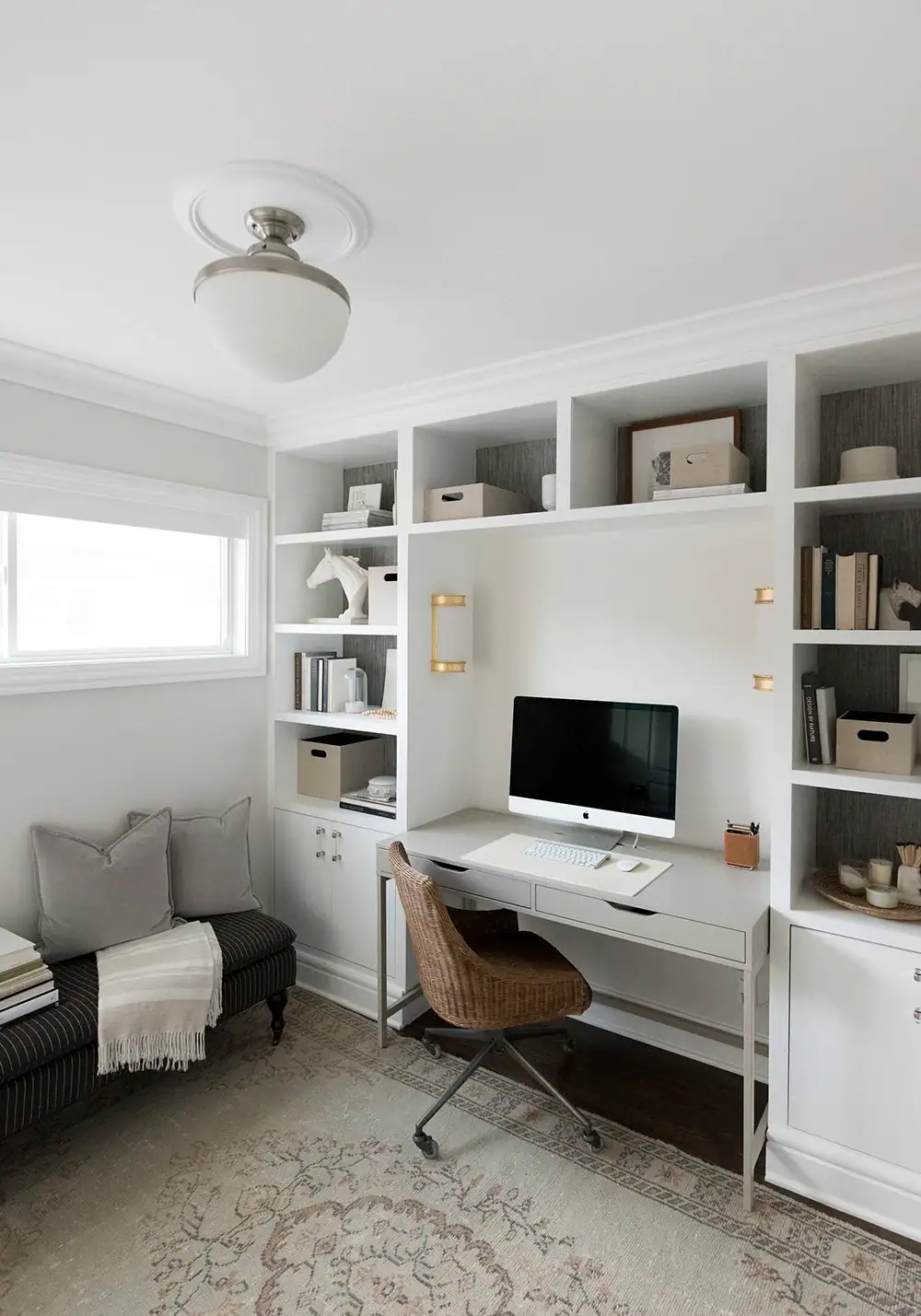
How To Arrange A Small Office
A good layout helps your small office feel less crowded and more comfortable, making it easier to move around and stay focused during the day.
Start by deciding where the desk should go, ideally near a window or light source to keep the space feeling bright and open.
If you need two desks, place them along separate walls or in an L-shape to keep both work areas usable without bumping into each other.
Make sure you can pull out your chair and open drawers fully without hitting walls or other furniture in the process.
Put your most-used items within arm’s reach so you don’t have to get up constantly and lose your focus.
Use corners wisely by placing a desk or vertical shelf in the area instead of leaving it empty or overcrowded.
Keep at least one clear path through the space so you’re not stepping over bags, boxes, or tangled cords.
Hang shelves or storage above the desk to keep the surface open for working, not stacked with supplies.
Try to place your chair where it has some breathing room so you don’t feel boxed in while you work.
Use furniture with clean lines and legs to keep the space visually light and easy to walk through.
Always test the layout before settling on it by sitting in each spot and making sure it’s comfortable and easy to use.

Frequently Asked Questions
Place one desk on each side of the room or form an L-shape to keep both users comfortable without crowding the space. Use shared storage between the desks to save space and reduce the need for duplicate supplies or large furniture pieces.
Start with your desk placement, ideally by a window or in a corner, then add storage vertically to avoid using extra floor space. Keep walkways clear and only use furniture that fits the space so your office stays open and easy to move through.
Yes, use a narrow desk and hang shelves above it to store books, gear, or decor without adding bulky furniture on the floor. Look for floating or wall-mounted shelves that save space and keep everything easy to reach.
Use light colors, open-frame furniture, and mirrors to brighten the room and reflect natural light. Keep surfaces clear and avoid heavy or oversized items that block views and make the space feel closed in.
Choose compact desks, chairs with no arms, and storage that fits under or above the desk to save floor space. Look for multi-use pieces like a filing cabinet that doubles as a side table or a bench with hidden storage.

Learning how to arrange a small office can make a big difference in how your space feels and how well it works every day.
When your layout fits your needs and furniture is placed smartly, everything from work to cleanup becomes easier and more comfortable.
The right setup also helps your space feel open and tidy instead of cluttered and overwhelming.
Even in a tight room, a thoughtful plan can turn your office into a space you actually enjoy using.
So, I hope these tips and ideas will help you stop struggling with layout and finally enjoy a home office that works as hard as you do!