If your closet feels like it is overflowing with clothes but getting dressed still feels stressful, learning how to start decluttering clothes can help you finally make getting ready easier.
When clothing piles keep growing, even the best decluttering ideas can feel hard to follow because you do not know where to begin.
You may have clothes in your closet that no longer fit your body, your routine, your comfort, or the season you are living in.
It can feel hard to let go when pieces cost money, carry memories, or remind you of a past style you once loved that you think will come back.
You might even avoid opening certain drawers because you already know they are packed with things you keep skipping, ignoring, or forgetting about.
A full closet can make your bedroom feel messy and heavy, even when the rest of the room looks tidy and cared for.
When every hanger feels crowded, it takes more energy to find outfits that feel comfortable, useful, flattering, and right for your day.
This post may contain affiliate links. As an Amazon Associate and a participant in other affiliate programs, I earn a commission on qualifying purchases at no additional cost to you.

So, I’m going to share decluttering clothes tips that help you start small, make confident choices, and keep only clothes that truly serve you.
These decluttering tips for beginners will help you sort by category, decide what stays, and create a closet that feels easier to use every day.
Get ready to clear space, make getting dressed simpler, and build a wardrobe that supports your real life right now.
Why You Need to Start Decluttering Clothes
You need to start decluttering clothes because your closet should support busy mornings, quick outfit choices, and daily routines instead of making dressing feel harder.
When your closet only holds clothes you wear, love, and understand, every morning feels calmer, faster, and simpler to manage.
Too many unused pieces can hide your favorite outfits, crowd your drawers, and make your bedroom feel more stressful than restful.
A clothing reset helps you see what you actually own, what you still need, and what no longer fits your real life.
Decluttering clothes is not about creating a perfect wardrobe or removing every beautiful piece that still feels useful, comfortable, and true to you.
It is about making space for clothes that fit your body, support your schedule, match your comfort, and reflect your current personal style.
If you always reach for the same few outfits, that usually means the rest of your closet needs a thoughtful and honest review.
A few simple decluttering tips can help you spend less time digging, less money rebuying, and less energy feeling frustrated every morning.

How To Start Decluttering Clothes the Easy Way
The easiest way to start decluttering clothes is to choose one small category, set a timer, and use simple piles that feel easy to manage.
Do not pull out your entire closet at once unless you have enough time, energy, and clear space to finish everything that same day.
Starting small helps you make better choices because you are not standing beside a mountain of clothes on your bed, feeling stuck.
Begin with one category, like T-shirts, leggings, jeans, pajamas, or workout clothes, so the project feels easier to finish without extra stress.
This keeps the process simple because you compare similar pieces instead of jumping between dresses, shoes, coats, and everyday basics all at once.
Set a timer for fifteen or twenty minutes so you can make steady progress without losing your whole afternoon to sorting and cleanup.
A short session works well because it helps you stay focused, make faster decisions, and stop before the project feels too tiring.
When the timer ends, bag donations, return keepers, and remove trash right away so your room feels calm before you walk away.
Use three piles for keep, donate, and toss so every clothing piece has a clear place from the beginning of your session.
Keep clothes that fit, feel good, and match your real routine instead of saving pieces for a lifestyle you no longer live.
Donate clean items someone else can use, then toss stained, stretched, damaged, or worn pieces that no longer serve anyone well.
Questions To Ask Yourself When Decluttering Clothes
The best decluttering questions help you decide what serves your current life instead of keeping clothes because of guilt, habit, or old routines.
Questions are helpful because they slow you down enough to make thoughtful choices without getting stuck on every shirt, dress, or pair of jeans.
Ask yourself whether you would buy the item today, wear it this month, or feel good putting it on tomorrow morning before leaving.
If the honest answer is no, that piece may need to leave your closet or move into a short-term maybe box for review.
Here are helpful questions to ask while you sort each clothing category, especially when you feel unsure about what should stay or go.
- Am I keeping this for a future body, future event, or future lifestyle that adds pressure instead of peace?
- Does this fit my body comfortably right now without pulling, pinching, slipping, or needing constant fixing throughout the day?
- Have I worn this in the past year, or do I keep skipping it for clothes that feel better?
- Does this match my current routine, or does it belong to a season of life that has already passed?
- Would I feel confident wearing this outside the house, to school pickup, errands, work, dinner, or casual plans?
- Is this piece damaged, stained, itchy, stretched, faded, or too uncomfortable to enjoy wearing for real life?
- Do I keep this because I love it, or because I feel guilty about the money I spent?
- Can I style this with at least three pieces I already own, or does it always feel hard to wear?
- Would I choose this item again today if I saw it in a store, at the same price?
- Does this clothing piece help me feel like myself, or does it make me feel uncomfortable or unsure?

What You Need for Decluttering Clothes
You need simple supplies for decluttering clothes so decisions stay organized and your bedroom does not become another stressful project.
The right products help you sort faster, move donations quickly, and reset your closet without buying unnecessary storage first.
Use these items after you decide what stays, because organizers work best when they hold clothes you truly use.
Tap Photos To Shop

The Best Place To Start When Decluttering Clothes
The best place to start when decluttering clothes is with easy categories that carry less emotion, fewer memories, and quicker decisions.
Starting with simple items helps you build confidence before sorting clothes connected to money, special events, changing body sizes, or past seasons.
You want a quick win first because visible progress makes the next clothing category feel less difficult, more doable, and easier to finish.
T-shirts and basics are great first choices because you can usually tell what fits, feels comfortable, and gets worn most often.
Pull every basic from drawers, shelves, laundry baskets, and closet stacks so you can see how many duplicates you really own.
Keep your best-fitting pieces, then remove stretched necklines, faded colors, uncomfortable fabrics, and shirts you only wear because of guilt.
Would you like to save this post?
Clothes that no longer fit can take up emotional space, especially when they remind you of past sizes, old routines, or different seasons.
Keep only a few meaningful goal pieces if they feel motivating, practical, and connected to your real wardrobe needs right now.
If a piece makes you feel bad every time you see it, it does not deserve daily closet space in your everyday routine.
Worn-out clothing is often the easiest to remove because stains, holes, sagging fabric, and broken zippers give clear answers quickly.
Check collars, underarms, hems, elastic, buttons, and seams before deciding whether something belongs in the keep, repair, or toss pile.
Once damaged items leave, your closet instantly feels cleaner because the pieces left behind look more cared for and ready to wear.
How To Declutter Clothes by Category
These decluttering methods by category helps you make better decisions because you compare similar pieces instead of trying to sort your whole closet at once.
This method also helps you notice duplicates, missing basics, and styles you keep buying but rarely wear during your normal week.
Work through one category at a time, then return only the best pieces before starting another area of your closet or dresser.
Everyday basics
Everyday basics should fit comfortably, wash well, and work with several outfits you already wear during a normal week at home.
Keep your favorite tees, tanks, jeans, leggings, and casual layers, then remove pieces that always sit untouched in drawers or stacks.
If you need a whole-home reset after your closet, simple steps to declutter your home can help you build steady momentum.
Workwear
Workwear should match your current job, dress code, comfort needs, and real weekly schedule instead of old office routines you no longer follow.
Keep polished pieces that fit well and pair easily with shoes, jackets, and accessories you already reach for on busy mornings.
Donate work clothes that feel outdated, uncomfortable, too tight, or disconnected from the way you dress for work right now each week.
Special occasion clothing
Special occasion clothing should earn space only when it fits, feels good, and matches events you can realistically picture attending this year.
Try on dresses, dressy tops, suits, and formal shoes before keeping them because memory alone can make closet decisions harder.
Keep a small, useful mix of pieces for weddings, holidays, dinners, funerals, and dressier moments that come up unexpectedly each year.
Shoes and accessories
Shoes and accessories can clutter a closet quickly because they collect in corners, shelves, baskets, and entryway spots without much notice.
Keep shoes that fit well, match your wardrobe, and feel comfortable enough for the places you actually go during normal weeks.
Let go of painful shoes, broken straps, worn purses, tangled belts, and accessories that never make an outfit feel better anymore.
What To Do with Clothes After Decluttering
After decluttering clothes, move every pile to its next place quickly so the clutter does not creep back into your closet again.
Bag donations, toss trash, wash laundry, schedule repairs, and return keepers before starting another big clothing category in your closet.
The faster you remove unwanted clothes, the less likely you are to second-guess every good decision you already made during sorting.
Donate clean clothes to a local thrift store, shelter, school program, church closet, or community group that accepts wearable items nearby.
Sell higher-value pieces only if you have enough time, patience, and a clear place to store them while they wait for buyers.
Toss clothing that is stained, torn, stretched, or too damaged for someone else to use with dignity after leaving your closet.
For seasonal clothes, use labeled bins and place them on a top shelf, under the bed, or in another storage area nearby.
Keep a small repair pile only for clothes you truly plan to fix, because broken zippers and missing buttons add clutter.
Set a donation deadline so bags do not sit in your hallway, car trunk, or bedroom corner for another month untouched.
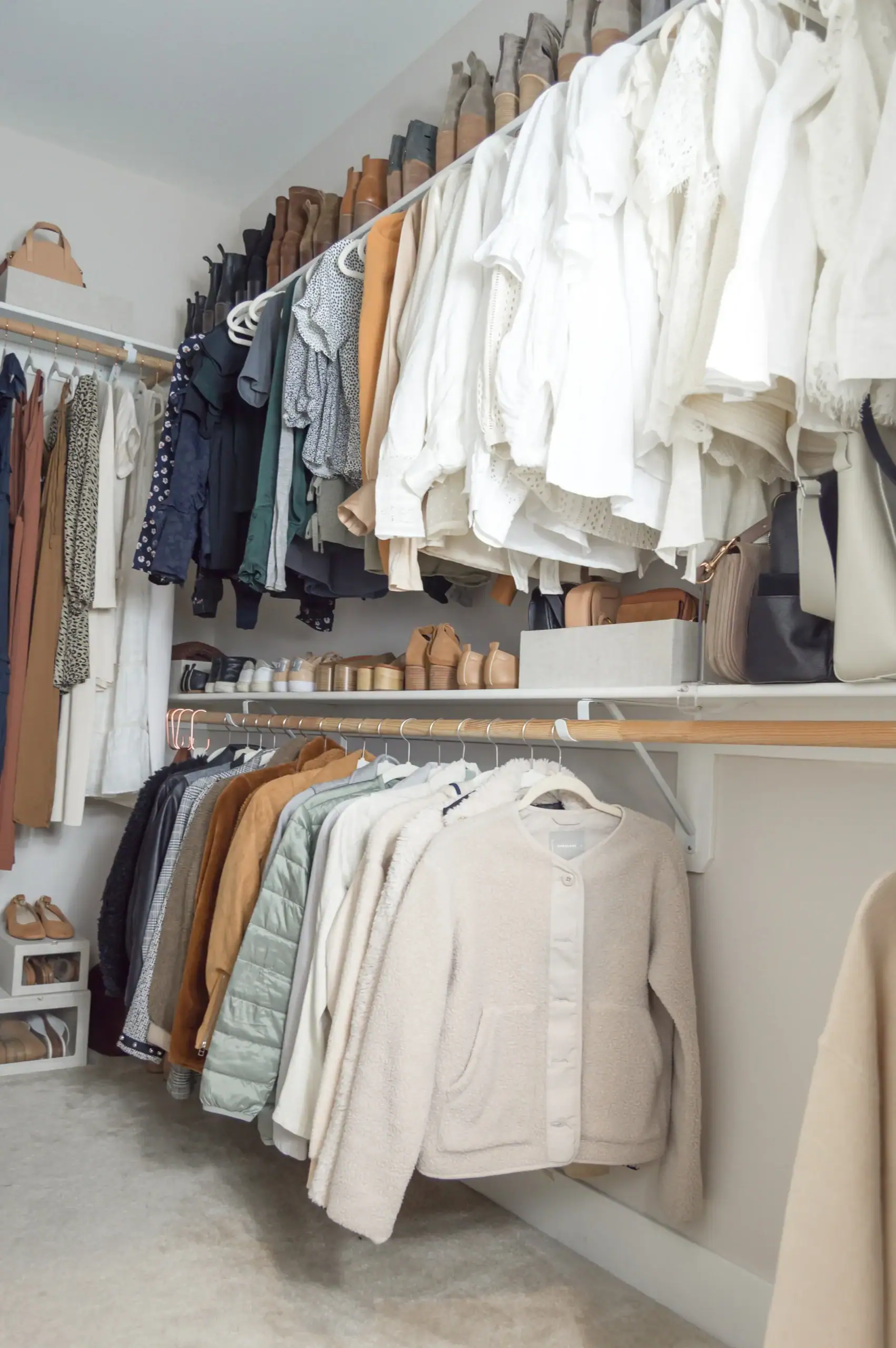
Once everything leaves the room, wipe shelves, straighten hangers, and enjoy the extra space you created with each thoughtful decision.
How To Keep Clothes Clutter From Coming Back
The best way to keep clothes clutter from coming back is to create simple habits before your closet slowly starts filling up again.
A decluttered closet stays easier to manage when every item has a home, a purpose, and enough open space to breathe easily.
You do not need a perfect system, but you do need one that matches your laundry routine, storage space, and real habits.
Try a one-in, one-out habit when buying clothes so your closet does not slowly return to its old crowded state again.
Keep a small donation bag in your closet for pieces you try on, dislike, or keep avoiding during the week repeatedly.
Schedule a quick closet check every season so you can remove clothes that no longer fit your body or daily routine.
Fold basics the same way each time, keep hangers facing one direction, and give every clothing category a clear home afterward.
If clutter keeps spreading beyond your closet, you can use my organizing and decluttering tips to help you reset other busy spaces.

Frequently Asked Questions
How do I stop feeling guilty about getting rid of clothes?
You stop feeling guilty by remembering that unused clothes are not serving you when they stay hidden in a crowded closet. Donating clean pieces lets someone else use them, while you gain space for clothes that fit your life right now.
How long does it take to declutter all your clothes?
Decluttering all your clothes can take one afternoon or several short sessions, depending on your closet size and energy level. Most people do better with category sessions because each small finish gives progress without making the whole bedroom messy.
Should I keep clothes that don’t fit me right now?
Keep only a few clothes that do not fit if they feel realistic, useful, and kind to your current body. If they make you feel pressured or unhappy, store them elsewhere or let them go so your closet feels supportive.
How do I declutter sentimental clothing?
Declutter sentimental clothing by choosing the pieces with the strongest memories, then storing them outside your everyday closet space. You can also photograph special pieces, make a memory box, or save fabric from items that feel too meaningful.
How do you declutter clothes when you don’t know your personal style?
Start by keeping clothes you actually wear, feel comfortable in, and reach for during your normal weekly routine. Your personal style becomes clearer when the clothes you dislike, avoid, or never wear are no longer crowding the closet.

Your closet can become a calmer and easier place when every piece inside has a clear reason to stay and support your daily life.
Once you learn how to start decluttering clothes, these decluttering ideas can help you make thoughtful choices without rushing through emotional decisions about what stays.
Start with one small category today, like T-shirts, pajamas, workout clothes, or shoes you already avoid wearing in your weekly routine.
Each decision gives you more room for clothes that fit, feel good, and make daily routines easier to manage with less stress on busy mornings.
So reset your wardrobe with this guide to decluttering, so your closet feels lighter, easier to use, and better for everyday dressing each morning.