Picking the wrong colors for your kitchen can make coastal kitchen color schemes feel cold, dated, busy, or completely disconnected from the rest of your home.
Coastal decorating ideas should create a relaxed atmosphere, yet the wrong colors can leave your kitchen feeling flat, mismatched, overly themed, or lacking warmth.
Choosing between soft blues, sandy neutrals, crisp whites, and muted greens can quickly become confusing when every combination looks different online.
A blue paint color may look fresh on a sample card but suddenly feel too gray, bright, or chilly once it reaches your kitchen walls.
Even neutral shades can create problems when their undertones clash with your cabinets, countertops, flooring, appliances, or natural light throughout the day.
You may also worry that adding too many beach-inspired colors will make your kitchen feel overly nautical instead of relaxed, polished, and welcoming.
On the other hand, keeping everything white and pale can leave the space feeling plain, especially when there are no warm accents to balance the palette.
This post may contain affiliate links. As an Amazon Associate and a participant in other affiliate programs, I earn a commission on qualifying purchases at no additional cost to you.

So, I’m excited to share practical coastal kitchen cabinet colors, color pairings, and decorating ideas that can make your kitchen feel fresh and inviting.
These ideas will help you narrow down your palette, pair colors with confidence, and create a coastal kitchen that feels natural without looking overly themed.
Keep these tips handy as you choose your colors, because a few thoughtful changes can help you create the relaxed kitchen you have been dreaming about.
Quick Glance
- Soft blues, warm whites, sandy neutrals, and seafoam greens form the foundation of a strong coastal color palette.
- Matte finishes are a smarter choice than high gloss in coastal kitchens because they handle glare and salt-air residue better.
- Two-tone cabinet combinations add depth without making the space feel dark or crowded.
- Warm whites and muted taupes are replacing cool grays as the go-to neutral for coastal kitchens in 2026.
- Accent colors work best when they echo natural elements like sea glass, driftwood, and wet sand.
- Avoiding overly nautical or theme-heavy pieces keeps the look sophisticated rather than kitschy.
Why Coastal Kitchen Color Schemes Never Go Out of Style
There is something timeless about ocean-inspired colors because soft blues, warm whites, and sandy neutrals create kitchens that feel calm and welcoming.
These shades connect with the natural colors found along the shore, making them easy to live with even as other decorating trends change.
Blue tones can also create a relaxed feeling, making them especially appealing in kitchens where you gather, cook, eat, and spend time together.
Another reason coastal kitchen color schemes stay popular is their flexibility, since they can work beautifully with traditional or modern kitchen styles.
You can pair soft blue cabinets with classic subway tile for a traditional look, or choose streamlined cabinetry for something more contemporary.
Warm whites and sandy neutrals can also soften modern materials like concrete countertops, natural wood, and simple hardware without making everything feel too stark.
Lighter coastal shades can also make smaller kitchens feel more open, especially when natural light reflects across walls, cabinets, and countertops throughout the day.
That practical benefit makes these colors especially useful when you want your kitchen to feel brighter, airier, and more comfortable without changing its layout.
Whether your style leans classic, modern, or somewhere between, these versatile coastal shades can help your kitchen feel fresh without chasing every new trend.

Best Paint Colors for Coastal Kitchens
When choosing paint for a coastal kitchen, I like starting with soft, relaxed shades that make the space feel fresh without looking overly themed.
Blues, creamy whites, muted greens, and warm neutrals can work together beautifully while giving your kitchen that easygoing seaside feeling.
Before choosing your favorite shade, test samples in your kitchen because natural light, cabinet colors, and surrounding finishes can change how paint appears.
- Benjamin Moore – Palladian Blue HC-144 — This soft blue-green brings an airy feeling to kitchen walls while pairing nicely with white cabinetry, natural wood, and warm metallic hardware.
- Sherwin Williams – Sea Salt SW 6204 — The muted green with blue undertones creates a relaxed backdrop that works especially well with white trim, light wood, and natural textures.
- Benjamin Moore – White Dove OC-17 — This classic off-white has a clean appearance that works well when you want bright kitchen walls without creating an overly stark or cold atmosphere.
- Sherwin Williams – Accessible Beige SW 7036 — The warm neutral carries subtle gray undertones, making it a comfortable choice for kitchens with wood finishes, earthy accents, and soft coastal colors.
- Benjamin Moore – Balboa Mist OC-27 — This gentle neutral works nicely when you want a little more depth than white while keeping your kitchen feeling light, relaxed, and versatile.
- Sherwin Williams – Spare White SW 6203 — This soft white can create a clean backdrop for coastal kitchens, especially when paired with muted blue-green cabinetry and natural wood accents.
Accent Color Ideas for Coastal Kitchen Color Schemes
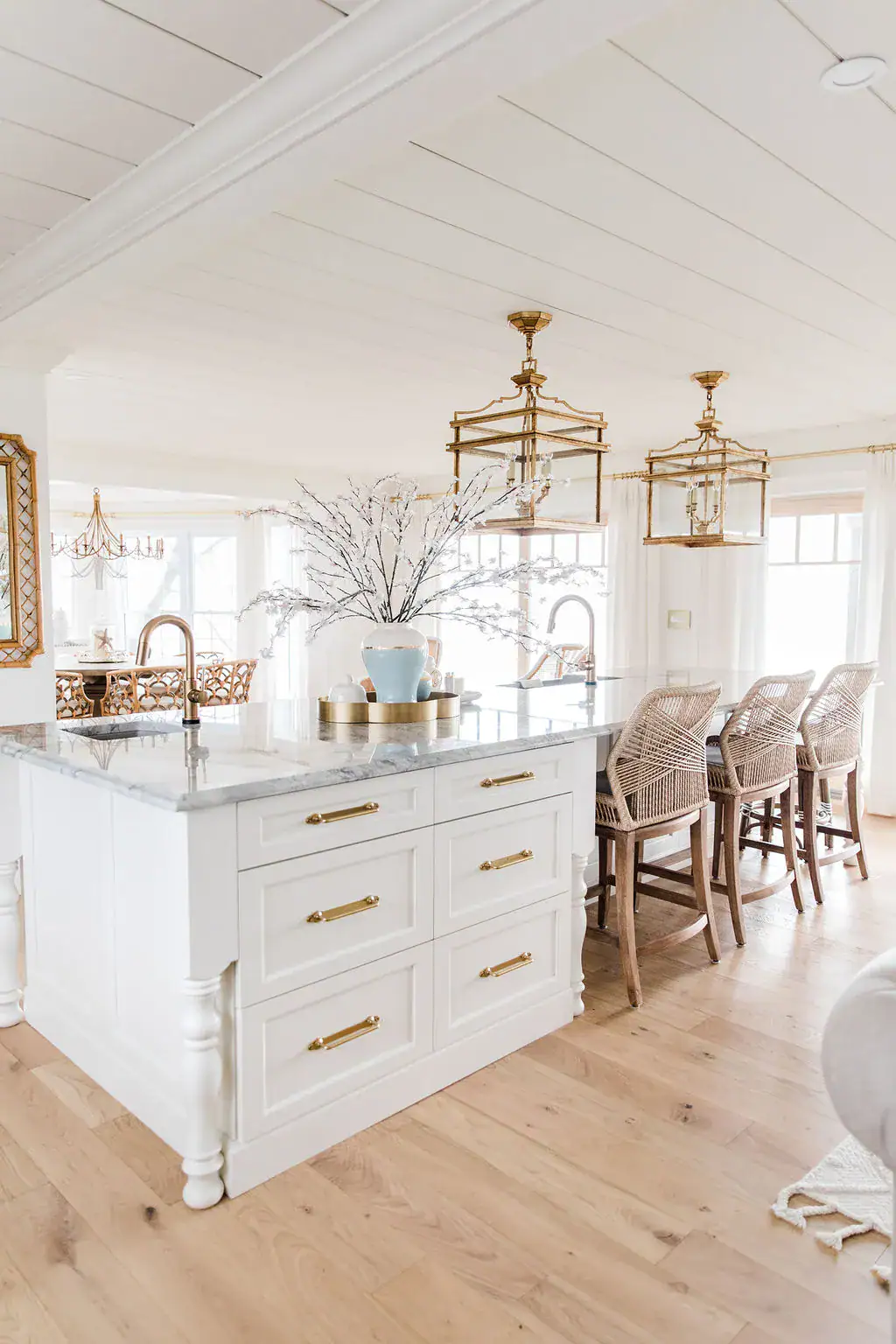
Accent colors can bring personality to coastal kitchens while keeping the overall palette relaxed, natural, and easy to live with every day.
I usually look to colors inspired by sunsets, sea glass, sandy shores, and natural materials when choosing accents for this decorating style.
Soft coral, terracotta, faded pink, and warm gold can bring subtle warmth without making the kitchen feel overly colorful or heavily themed.
Sea glass shades like pale mint and translucent aqua work especially well through smaller touches such as dishes, lamps, towels, or artwork.
If your kitchen already has warm whites and sandy neutrals, adding deeper navy can create contrast and give the room more visual balance.
Try using a deeper blue on the island or lower cabinets while keeping surrounding walls and upper cabinets light and airy.
Pairing blue lower cabinets with bright white upper spaces remains a popular combination because it feels fresh while adding enough contrast for interest.
Natural wood can also act as an accent, especially when you want warmth and texture without introducing another strong color into your palette.
The best blue kitchen cabinet colors can inspire combinations with warm wood, creamy whites, brass hardware, and soft coastal accents.
A walnut cutting board, light oak stools, or driftwood-inspired pendant can finish the space with warmth while keeping your coastal palette relaxed and inviting.

Cool vs. Warm Coastal Kitchen Color Palettes
Choosing between cool and warm coastal kitchen color palettes can shape how your entire space feels throughout different times of day.
Cool palettes usually rely on blue-gray, pale aqua, crisp white, and soft silver tones for a fresh, airy atmosphere.
These colors can make a kitchen feel like a breezy shoreline, especially when paired with simple cabinetry, natural textures, and plenty of daylight.
Warm palettes take inspiration from sun-washed sand, creamy white, soft taupe, honey-toned wood, and other earthy coastal colors.
They create a softer, cozier feeling that works especially well when you want your kitchen to feel inviting and comfortable.
Neither approach is better because your natural lighting and personal style should guide the direction you choose for your space.
Kitchens with limited natural light often benefit from warmer shades because cooler colors can sometimes make the room feel chilly.
If your kitchen receives strong sunlight throughout the day, cooler shades can create a refreshing balance without making the room feel too cold.
Warm coastal palettes also work well with today’s growing preference for comfortable interiors, especially when paired with natural wood and woven textures.
Take a look at your lighting first, then choose the palette that makes your kitchen feel relaxed, welcoming, and naturally connected to the coast.
Tips for Pairing Coastal Kitchen Colors: Cabinets, Countertops, and Backsplashes
Pairing your cabinets, countertops, and backsplash can feel tricky, especially when you want everything to look coordinated without feeling too matched.
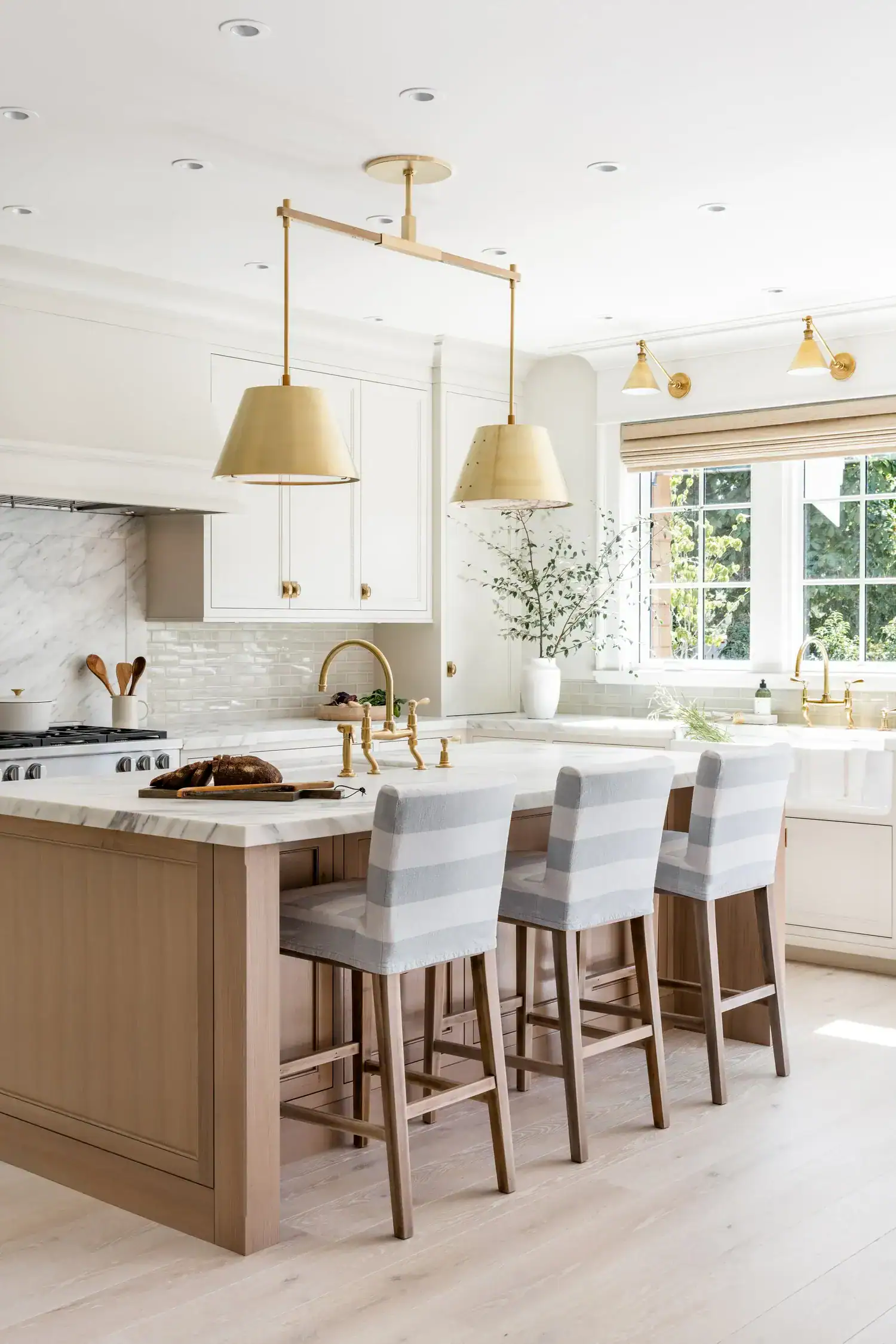
I always recommend choosing your cabinet color first because cabinets cover a large portion of the kitchen and are harder to change later.
Once your cabinets are settled, you can choose countertops and backsplashes that support the color instead of competing with it.
Soft blue-gray cabinets pair nicely with white or creamy quartz countertops, especially when subtle veining adds texture without making the space feel busy.
Natural marble or quartzite can also work well when their softer blue or gray undertones complement the surrounding cabinet colors.
For the backsplash, handmade subway tile in white or cream adds texture while keeping the overall look relaxed and naturally coastal.
Sea glass mosaic tile can also create a pretty accent, especially when used behind the range or across one smaller backsplash section.
The materials you choose matter just as much as the light blue kitchen cabinet colors you bring into the space.
Would you like to save this post?
If your countertop already has noticeable veining or movement, choose a simpler backsplash so the different surfaces do not compete visually.
Try keeping one material or color as the star, then let the remaining finishes support it for a kitchen that feels balanced and inviting.

Best Decor Pieces That Match Your Coastal Kitchen Color Scheme
The right decor pieces can pull your coastal kitchen color scheme together while adding warmth, texture, and personality without making the space feel overly themed.
I like choosing practical accents with natural materials, soft colors, and simple shapes so everything feels relaxed while still looking thoughtfully decorated.
Here are some of my favorite coastal decor pieces to bring these colors together and give your kitchen that relaxed, finished feeling.
Tap Photos To Shop

How to Choose the Right Coastal Kitchen Color Scheme for Your Space
Choosing the right coastal kitchen color scheme starts with looking closely at your space and thinking about how you want it to feel every day.
Start by considering how much natural light enters your kitchen because sunlight can change the appearance of paint throughout different times of day.
The size of your kitchen also matters, since lighter shades can help smaller spaces feel more open while deeper colors can add cozy depth.
Take a look at your appliances, flooring, countertops, and cabinets because their existing colors can affect how new paint shades appear together.
I always recommend testing large paint samples instead of relying on tiny swatches that may not accurately represent how the color will look.
Leave those samples on your walls for several days so you can see how they change from bright mornings to softer evenings.
Pay attention to your kitchen lighting at night too, because warm bulbs can make certain coastal colors appear creamier, darker, or more muted.
Your personal decorating style should also guide the palette, especially if you prefer classic, modern, relaxed, or slightly colorful kitchen spaces.
The most timeless coastal kitchens usually balance fresh colors with warm materials, creating a space that feels welcoming without following every passing trend.
Take your time testing colors and finishes, then choose the combination that feels natural in your space and makes you happy every day.

Coastal Kitchen Cabinet Color Tips
Cabinets can set the direction for your entire kitchen, so choosing the right color makes it easier to coordinate everything else around them.
Soft, muted shades usually work best for coastal spaces because they create a relaxed feeling without making the kitchen look overly dark or saturated.
When choosing coastal kitchen cabinet colors, think about blue-gray, washed denim, dusty sky blue, creamy white, or soft green.
Blue shades with subtle gray undertones can feel almost like neutrals while still bringing that fresh coastal feeling into your kitchen.
If you prefer something softer, pale blue cabinets can create an airy backdrop that works especially well with warm wood and creamy countertops.
Matte finishes are another smart choice because they soften reflections from bright sunlight and help your cabinets maintain a relaxed appearance.
They can also be easier to live with since fingerprints and everyday marks tend to be less noticeable compared with glossy cabinet surfaces.
For added depth, consider using two tone kitchen cabinet colors instead of choosing one shade throughout the entire kitchen.
A light neutral around the perimeter paired with a deeper navy or natural wood island can create contrast without making the room feel heavy.
Before committing to a cabinet color, test samples alongside your countertops, flooring, and backsplash so everything works together naturally in your kitchen.

Modern Coastal Kitchen Color Scheme Ideas
Modern coastal kitchens offer a fresh take on seaside style by combining relaxed colors with cleaner lines and more polished materials.
This approach skips obvious nautical decorations and instead focuses on thoughtful finishes, simple shapes, and a softer, more sophisticated color palette.
Warm white, soft sage, muted blue, and sandy neutrals work especially well when you want a modern kitchen with subtle coastal character.
Flat-front cabinets in creamy white or gentle sage can create a streamlined foundation without making the space feel too stark or formal.
Pairing those cabinets with a waterfall countertop in softly veined white stone can add a polished touch while keeping the overall palette light.
For the backsplash, consider large-format tiles in pale blue, muted green, or creamy white instead of traditional small subway tiles.
Natural wood accents can warm up the room, especially when used through bar stools, cutting boards, shelving, or simple decorative accessories.
Open shelving also works well when styled with a few carefully selected ceramic pieces instead of filling every available space with accessories.
A frosted glass or brushed brass pendant can add personality overhead, while a natural fiber runner brings softness and texture underfoot.
Keep the styling simple and intentional, allowing your coastal colors and natural materials to create a modern kitchen that feels relaxed and inviting.

Common Mistakes That Make Coastal Kitchens Look Kitschy
One of the easiest ways to lose the relaxed coastal feeling is adding too many themed details instead of letting your colors set the mood.
Starfish knobs, anchor towels, lighthouse decorations, and rope accents can quickly make your kitchen feel more like a souvenir shop than home.
You really do not need literal ocean decorations when your color palette already creates that breezy seaside feeling throughout the space.
Another common mistake is using too many colors at once, making the kitchen feel busy instead of calm, balanced, and thoughtfully decorated.
Try choosing two or three main shades, then add one accent color for contrast without making the overall palette feel scattered.
Going too dark can also create problems, especially when deep navy or other saturated shades take over a kitchen with limited natural light.
Dark kitchen cabinet colors can still work beautifully when balanced with lighter walls, natural wood, bright countertops, and enough open space around them.
It is also easy to mix too many patterns across backsplashes, rugs, curtains, and accessories, creating visual competition throughout the room.
The most cohesive coastal kitchens usually have a clear color story where each finish and accessory supports the overall feeling.
When choosing your colors and decor, remember that restraint can create a more relaxed kitchen that feels polished without losing its coastal personality.
Things to Know
- Warm whites with slightly creamy undertones read as more coastal and inviting than stark, bright white.
- Matte cabinet finishes handle glare and residue better than high gloss, which matters especially in sun-filled coastal-style kitchens.
- Cool-toned palettes need ample natural light to avoid feeling cold or clinical in the finished space.
- Two-tone cabinet combinations are one of the most effective ways to add depth without sacrificing brightness.
- Over-theming with literal nautical accessories is the fastest way to make a coastal kitchen feel cheap rather than collected.
- Warm sand and taupe neutrals are replacing cool gray as the dominant neutral in 2026 coastal kitchen design.
Frequently Asked Questions
What is the most popular color for a coastal kitchen in 2026?
Warm whites, soft blue-grays, and muted seafoam greens are leading the coastal kitchen color conversation in 2026. The shift away from cool gray has made warmer neutrals like sandy taupe and creamy off-white more popular than they have been in years. These tones pair naturally with the organic textures and natural wood accents that define the modern coastal aesthetic.
Can I have a coastal kitchen without using blue?
Yes, a coastal kitchen works beautifully with warm whites, sandy neutrals, sage greens, and natural wood tones without a single drop of blue. Blue is the most recognizable coastal color, but it is not mandatory. A palette built around driftwood tones, soft linen whites, and muted greens can feel just as beach-inspired and often reads as more sophisticated and less theme-heavy.
What finish should I use on coastal kitchen cabinets?
Matte finishes are the best choice for coastal kitchen cabinets because they reduce glare and hide residue better than satin or gloss options. In regions with strong sunlight or salt air, high-gloss finishes can show every smudge and reflect harshly. A matte or low-sheen finish gives you a cleaner look with far less maintenance over time.
How do I make a small kitchen feel coastal without making it feel dark?
Stick to light, airy colors on all major surfaces and use natural textures rather than heavy patterns to add visual interest without weight. In a small kitchen, keeping the cabinets, walls, and countertops all within a similar light value range creates the illusion of more space. Add texture through materials like woven rattan, linen, and handmade tile rather than bold color contrasts.
Should coastal kitchen cabinets and walls be the same color?
Not necessarily, but a tonal approach where both surfaces stay within the same color family creates a cohesive, spa-like feel that works very well in coastal spaces. Using a slightly lighter or slightly more saturated version of the same hue on walls versus cabinets adds subtle dimension. A stark contrast between wall and cabinet color can feel jarring in a space that is meant to feel relaxed and seamless.

A well-planned coastal kitchen can give you a calm, inviting space that feels fresh, comfortable, and enjoyable to use every day.
Getting your coastal kitchen color schemes right creates a strong foundation for choosing cabinets, countertops, backsplashes, and decorative accents.
Start with soft blues, warm whites, sandy neutrals, or muted greens, then build your palette around the natural light and existing finishes.
Keep the styling simple, avoid overly themed accessories, and balance cooler shades with natural wood, warm metals, and textured materials for depth.
Now grab your favorite paint samples and use these ideas to start creating the relaxed coastal kitchen you have been dreaming about.