If you’ve ever opened a cabinet and watched a can of soup roll out at you, then you already know the struggle of figuring out how to organize food in kitchen cabinets.
Bad cabinet organization is one of those home organization ideas that seems easy at first, but can quickly make everyday cooking and meal planning feel frustrating.
You open a door looking for pasta, only to find expired sauce jars hiding behind snack boxes and other items you completely forgot were sitting there.
Finding what you need takes longer than it should, and making dinner can start feeling like a scavenger hunt instead of a simple task.
Many people end up buying duplicate groceries because items get buried in the back and stay out of sight for weeks.
Food often expires before it gets used, and that means throwing away groceries and wasting money that could have stayed in your budget.
A messy cabinet can make cooking feel more stressful than enjoyable, especially when you’re already trying to juggle a busy daily schedule.
This post may contain affiliate links. As an Amazon Associate and a participant in other affiliate programs, I earn a commission on qualifying purchases at no additional cost to you.

That’s why I’m excited to share simple and practical tips that have completely changed the way my kitchen feels, looks, and works every day.
So, use my easy-to-follow tips and budget-friendly ideas to help you get your cabinets organized without spending an entire weekend cleaning and sorting.
Once you start using these brilliant kitchen organization hacks, opening your cabinets will feel easier, more organized, and much more enjoyable every single day.
Why Organizing Food in Kitchen Cabinets Makes Life Easier
Having a well-organized food cabinet saves you a surprising amount of time every single day when you’re trying to get meals on the table.
When everything has a designated spot, you’re not digging around or moving things just to grab what you actually need for dinner.
A tidy cabinet also helps you keep track of what you have, so you stop buying duplicates of things that are already sitting in the back.
You can actually see your food clearly, which means you’re more likely to use it before it expires and goes to waste.
This also makes grocery shopping so much easier because you know exactly what you’re running low on before you even leave the house.
A calm, organized cabinet genuinely reduces stress in the kitchen, especially on busy weeknights when you’re already tired after a long day.
It also makes cooking more enjoyable because you spend less time searching and more time actually making something delicious for yourself or your family.
Learning the right kitchen cabinet organization ideas can truly change how smooth your whole morning and evening routine feels at home.
I honestly didn’t realize how much mental energy a messy cabinet was costing me until I finally got things sorted out the right way.
The difference it makes in your daily life is so much bigger than you’d expect just from rearranging a few shelves.
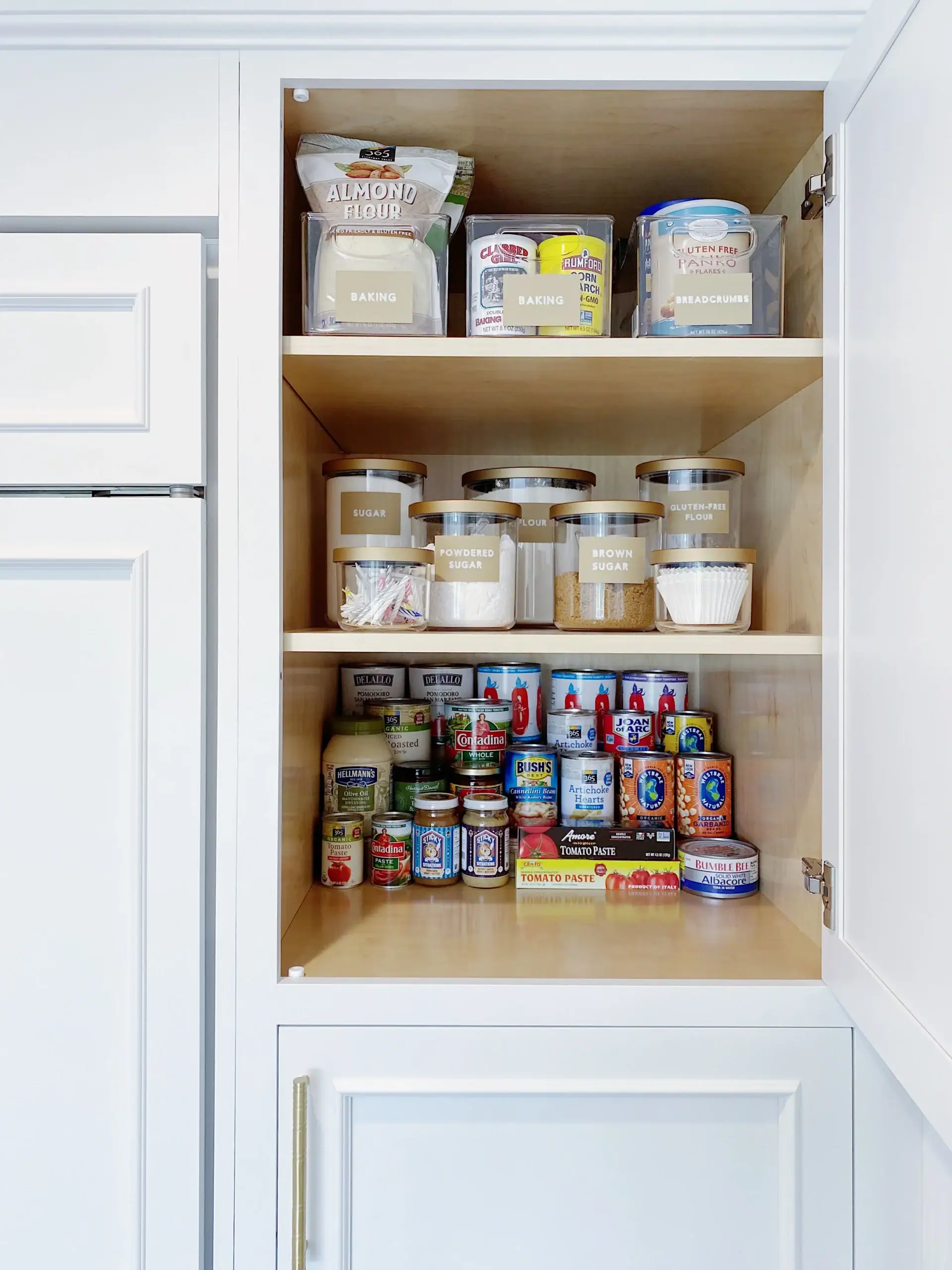
How to Organize Food in Kitchen Cabinets Step by Step
Before you start buying bins or containers, it really helps to go through a clear process so you’re not just moving the mess around to a different shelf.
Taking things one step at a time makes the whole project feel manageable instead of like a big, overwhelming task you keep putting off.
Here’s a simple step-by-step approach that I’ve personally found works really well for getting cabinets organized from scratch.
Step 1: Take Everything Out
Pull everything out of your cabinets completely so you can see exactly what you’re working with before you make any decisions.
Step 2: Check Expiration Dates
Go through each item and toss anything that’s expired, stale, or something you honestly know your family is never going to eat.
Step 3: Sort Into Categories
Group your food into categories like grains, canned goods, snacks, baking supplies, and condiments so similar items stay together naturally.
Step 4: Assign a Cabinet or Zone
Decide which cabinet or shelf zone each category belongs in based on how often you actually use those items throughout the week.
Step 5: Use the Right Organizers
Add shelf risers, bins, lazy Susans, or containers to make each category easy to access and clearly visible every time you open the door.
Step 6: Label Everything
Label your bins and containers clearly so everyone in your household knows exactly where things go when they put groceries away.

Best Way to Organize Food in Kitchen Cabinets by Category
Organizing your food by category is honestly one of the smartest things you can do for your kitchen cabinets, and it makes such a big difference.
When you keep like items together, you always know exactly where to look instead of scanning every single shelf every time.
I like to keep baking supplies like flour, sugar, and baking soda all in the same zone so I can grab everything at once when I’m cooking.
Grains like rice, quinoa, and pasta deserve their own shelf area because they get used so regularly and need to be easy to reach.
Canned goods are great when grouped by type, like vegetables together, beans together, and soups together, instead of being mixed randomly across shelves.
Snacks are a category on their own, and keeping them in one designated spot makes it easier for kids to grab what they’re allowed to have.
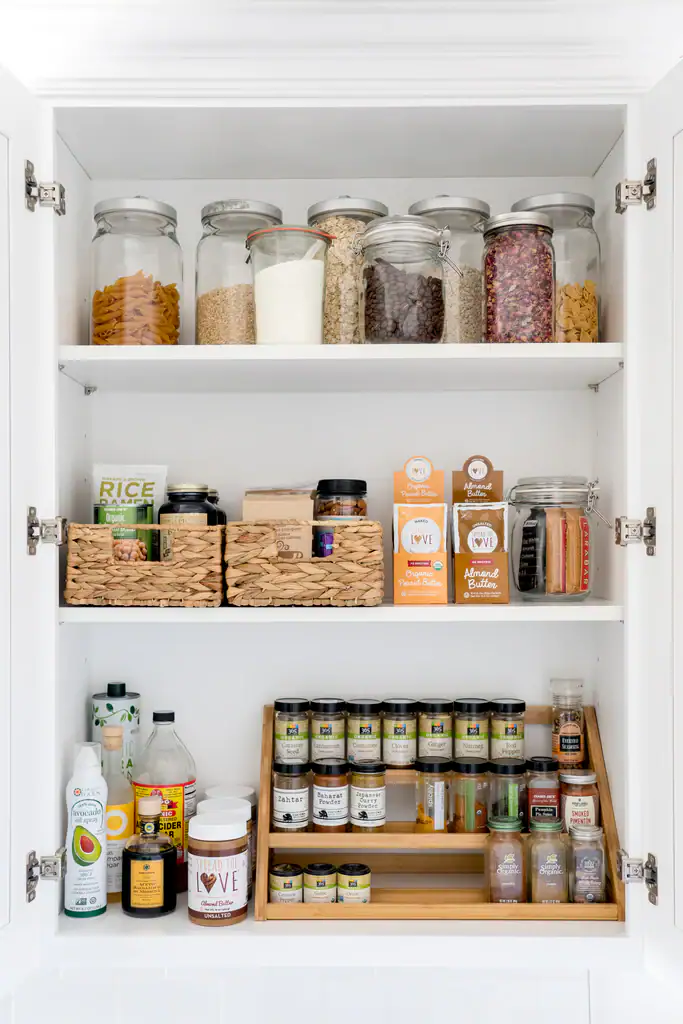
Condiments and sauces that don’t need refrigeration can share a shelf with oils and vinegars, so you can build flavor all from one spot.
Learning how to organize a kitchen cabinet by category is one of the best habits you can build for long-term kitchen sanity.
Baking and cooking supplies that you only use occasionally can go on a higher or harder-to-reach shelf to save prime space for everyday items.
The category system just makes everything feel logical, and once it’s in place, maintaining it becomes second nature pretty quickly.

Best Methods for Organizing Canned Goods and Dry Foods
Canned goods and dry foods are probably the trickiest things to keep neat because they come in so many different shapes and sizes that don’t stack well together.
One of the best things you can do is use a can rack or tiered shelf riser so that you can actually see every single can from the front.
Without a riser, cans in the back just disappear and get forgotten until they’re way past their expiration date, which is such a waste.
For dry foods like pasta, rice, oats, and cereal, transferring them into clear, airtight containers makes a huge difference in both visibility and freshness.
Clear containers let you see exactly how much you have left, which makes it easier to know when you need to restock before you run out mid-recipe.
Knowing how to declutter kitchen cabinets first is really important before you start adding any new organizers or bins to your shelves.
Grouping canned goods by type and keeping the newest cans behind the older ones helps you use things in the right order naturally.
Dry foods in containers also look so much neater and make your cabinet feel calm and intentional instead of chaotic and random.
Adding labels to your containers with the food name and the date you opened or filled them is a small habit that makes a really big difference.
The goal is for every single item to be visible and accessible without having to move five other things out of the way first.

Best Storage Containers to Organize Food
Using the right storage containers is one of the easiest ways to instantly make your food cabinets look organized and feel functional at the same time.
Would you like to save this post?
Clear, airtight containers protect your dry foods from moisture, bugs, and staleness while also making everything look consistent and neat on the shelf.
I’ve rounded up some of the best kitchen storage organizer ideas, and I think having good containers is the single biggest upgrade you can make to your kitchen storage setup.
Tap Photos To Shop

Tips for Maximizing Space When Organizing Food in Kitchen Cabinets
If your cabinets feel cramped, the problem usually isn’t that you have too much food, it’s that the space isn’t being used efficiently enough.
Stacking canned goods on flat shelves wastes so much vertical space that you could be using with a simple riser or rack.
Adding a second shelf riser inside a cabinet essentially doubles your storage space without any tools or permanent changes to your kitchen.
The backs of cabinet doors are often completely ignored, but they’re actually great spots for small racks that hold spices, foil, or small snack items.
Deep cabinets are tricky, but using pull-out bins or drawers means you can actually access what’s in the back without emptying the whole shelf.
Choosing the best kitchen cabinet organizers for your specific cabinet size and depth makes a huge difference in how much space you actually get to use.
Corner cabinets can feel useless, but a lazy Susan turntable turns that awkward space into one of the most accessible spots in your kitchen.
Storing items vertically instead of flat, like baking pans, cutting boards, and trays, frees up an incredible amount of cabinet floor space.
Always put the things you use most at eye level and easy reach, and move lesser-used items to higher or lower shelves where they’re out of the way.
Maximizing space is really about being intentional and creative with every single inch you have available to you.

Kitchen Cabinet Food Organization Ideas for Small Kitchens
Small kitchens need to make every single inch count, so being strategic about your cabinet organization is absolutely essential.
The key to succeeding with limited space is to store only the things you actually use regularly and find creative spots for everything else.
Vertical space is your best friend in a small kitchen, so using shelf risers, stackable containers, and door-mounted organizers is totally worth it.
You might need to store some less-used items in a different location, like a closet or pantry, to free up prime cabinet real estate.
Understanding snack organizer ideas can help you keep snacks contained in one compact zone instead of scattered across multiple shelves.
Hanging shelves on the wall above your counter can give you extra storage without taking up any cabinet space at all.
Clear containers are even more important in small kitchens because you can see what you have at a glance without opening every single door.
Consider using slim, tall containers instead of wide, short ones because they take up less space on your shelves while still holding plenty of food.
Rotating seasonal items or things you only use occasionally keeps your everyday cabinets focused on the foods your family eats all the time.

How to Organize Snacks in Kitchen Cabinets
Snack cabinets are a whole different beast because snacks come in so many different sizes, shapes, and packaging styles that are nearly impossible to organize neatly.
If you have kids, keeping snacks organized means they can grab something on their own without you having to fish around and pull everything out.
Using clear bins or baskets for different snack categories makes it so easy for anyone in your household to see what’s available at a quick glance.
Learning how to organize a snack cabinet can make such a difference compared to just throwing everything on a shelf and hoping for the best.
You might want to create zones like healthy snacks, sweet treats, salty snacks, and snack bars so kids know where to look for what they want.
Transferring bulk snacks into smaller containers or portion-sized bags makes grabbing snacks easier and helps you see when you’re running low.
A lazy Susan in a snack cabinet is genius because everyone can spin it to find exactly what they’re looking for without moving other items.
Keeping a snack cabinet somewhat separate from your main food storage helps contain the chaos and makes cleanup faster after snack time.
Label your snack containers clearly so younger kids know what’s inside and where things belong when they help put groceries away.

Common Mistakes to Avoid When Organizing Food in Kitchen Cabinets
One common mistake people make when organizing food in kitchen cabinets is trying to keep everything without checking expiration dates first.
Old cans, stale snacks, and forgotten ingredients take up valuable space and make it harder to see the foods you actually use.
Another mistake is placing newer groceries in front of older items, causing food in the back to sit untouched for months.
Many people also mix different food categories together, making cabinets look cluttered and slowing down meal preparation.
Stuffing cabinets too full is another problem because it becomes difficult to reach items without knocking something over.
Ignoring vertical space can also waste storage opportunities that could help keep food organized and easier to access.
Some people buy storage bins and organizers before measuring their cabinets, only to discover they do not fit properly.
Failing to create a simple system often leads cabinets back into the same messy condition within a short period.
Labeling containers may seem unnecessary, but it can save time and help everyone find items more quickly.
Taking a little extra time to avoid these mistakes can make your kitchen cabinets easier to manage and much less frustrating to use every day.
Tips for Keeping Kitchen Food Cabinets Organized Long-Term
Getting your cabinets organized is one thing, but keeping them that way is where the real challenge lies for most people.
The easiest way to maintain organization is to create a simple system and then stick to it every single time you put groceries away.
When you’re unloading groceries, take just thirty seconds to put things in their assigned spots instead of just shoving them anywhere that fits.
Doing a quick five-minute sweep of your cabinets once a week keeps small messes from turning into big organizational disasters.
Check expiration dates every few months and toss anything that’s expired so nothing surprises you when you’re cooking.
Wiping down shelves occasionally keeps them clean and makes you want to keep things organized because the space feels cared for.
If someone in your household puts something in the wrong place, gently remind them where it actually belongs so the system stays consistent.
Taking a photo of your organized cabinets and putting it inside the door is a helpful visual reminder of how things should look when everything is in its place.
Celebrate the wins when your family helps maintain the organization instead of just pointing out when things go wrong.
The goal is to make the organization feel like a normal part of your routine rather than a special project you have to do occasionally.

Frequently Asked Questions
Should food be stored in its original packaging or transferred to containers?
Both options can work well, depending on the type of food and how often you use it in your daily routine. Dry goods like rice, pasta, cereal, and flour are often easier to store in clear containers because they stay visible and organized.
How can you prevent food from getting lost or forgotten in cabinets?
Keep similar items together and place older products near the front so they are seen and used before newer purchases. A quick cabinet check before grocery shopping can also help you avoid forgetting items already sitting on your shelves.
What shelf organizers work best for deep kitchen cabinets?
Pull-out bins, tiered shelf risers, and stackable organizers are great choices because they make items easier to see and reach. These simple tools help reduce clutter and prevent food from disappearing behind larger boxes or containers.
How do you create a first-in, first-out (FIFO) system for food storage?
Place newly purchased items behind older products so the older food gets used first during meals and snack preparation. This simple habit helps keep food moving through your cabinets and reduces the chance of products expiring unnoticed.
How do you organize kitchen cabinets to reduce food waste?
Store foods by category, keep expiration dates visible, and regularly check for items that should be used soon. Creating a simple system makes it easier to track what you have and helps prevent groceries from being forgotten or thrown away.

The time you spend getting things organized now saves you so much frustration, money, and stress every single day going forward.
Learning how to organize food in kitchen cabinets makes it easier to find ingredients, avoid duplicate purchases, and keep track of foods before they expire.
It can also encourage better habits for the whole family by making items easier to locate and put away properly.
Simple strategies, including snack organizer ideas and food categories, can make a noticeable difference without requiring a complete kitchen makeover.
Start with one cabinet at a time, and you will quickly enjoy a cleaner, more organized space that is easier to maintain!