If your kitchen constantly feels cluttered, you can’t find anything, and difficult to manage during busy weekdays, these kitchen cabinet organization ideas can completely improve your daily routine.
Many people search for practical kitchen organization ideas because crowded cabinets make cooking, cleaning, meal prep, and finding ingredients feel frustrating almost every single day.
It is very easy for food containers, reusable water bottles, random gadgets, baking supplies, and pantry snacks to slowly pile up without anyone noticing the growing mess.
Deep kitchen cabinets often become frustrating catch-all spaces where forgotten ingredients, duplicate tools, and unused dishes disappear into the back corners for several months.
Small kitchens can feel even harder to manage because every shelf, drawer, and storage area needs to work better while still feeling clean and organized.
You probably have bought trendy organizers hoping they will instantly solve the mess, but clutter usually returns quickly when there is no simple system keeping everything in place.
The good news is that organizing your kitchen cabinets does not need to feel expensive, overwhelming, time-consuming, or unrealistic for busy families managing everyday responsibilities.
This post may contain affiliate links. As an Amazon Associate and a participant in other affiliate programs, I earn a commission on qualifying purchases at no additional cost to you.

So, I’m excited to share practical ideas that help your kitchen feel calmer, easier to use, and much more functional without needing a complete kitchen makeover.
Plus, I’ve got some simple organization tips to help you save space, improve accessibility, reduce clutter, and make your cabinets easier to keep tidy throughout the entire year.
Get ready to organize your kitchen cabinets with simple ideas that make cooking, cleaning, and everyday routines feel easier, calmer, and much more manageable.
Why Kitchen Cabinet Organization Ideas Matter
Kitchen cabinet organization ideas matter because an organized kitchen creates a calmer environment that makes cooking, meal preparation, and cleaning much easier during busy everyday routines.
When cabinets feel overcrowded and messy, even simple tasks like packing lunches or making dinner after work can quickly become stressful and frustrating experiences.
Organized cabinets help you find ingredients, cookware, dishes, and storage containers much faster, saving valuable time during hectic mornings and weeknight cooking sessions.
Better organization also helps reduce food waste because pantry items stay visible instead of getting forgotten behind clutter hiding deep inside crowded kitchen shelves.
A thoughtfully organized kitchen can even make smaller spaces feel larger, brighter, and easier to use without spending money on expensive renovations or remodeling projects.
Another important benefit is saving money because organized cabinets help prevent unnecessary duplicate purchases of spices, canned foods, kitchen gadgets, and storage containers already sitting somewhere inside.
One thing I have noticed in many real kitchens is that families naturally spend more enjoyable time cooking together when spaces feel clean, practical, organized, and welcoming.
Well-organized cabinets also encourage children and family members to return items properly because storage systems feel easier to understand and maintain throughout the week.
You do not need a huge kitchen or expensive storage products to create meaningful improvements that make your kitchen feel much more manageable and functional.
Even simple kitchen organization ideas and hacks, like grouping similar items together, using bins, or adding shelf risers, can completely improve your kitchen’s daily flow and overall appearance.

How To Get Started Organizing Kitchen Cabinets
The best way to start organizing kitchen cabinets is by removing everything first so you can clearly see what you actually use, need, and enjoy regularly.
Pulling everything out may feel overwhelming at first, but it helps you quickly notice expired foods, duplicate items, broken tools, and unnecessary clutter taking valuable cabinet space.
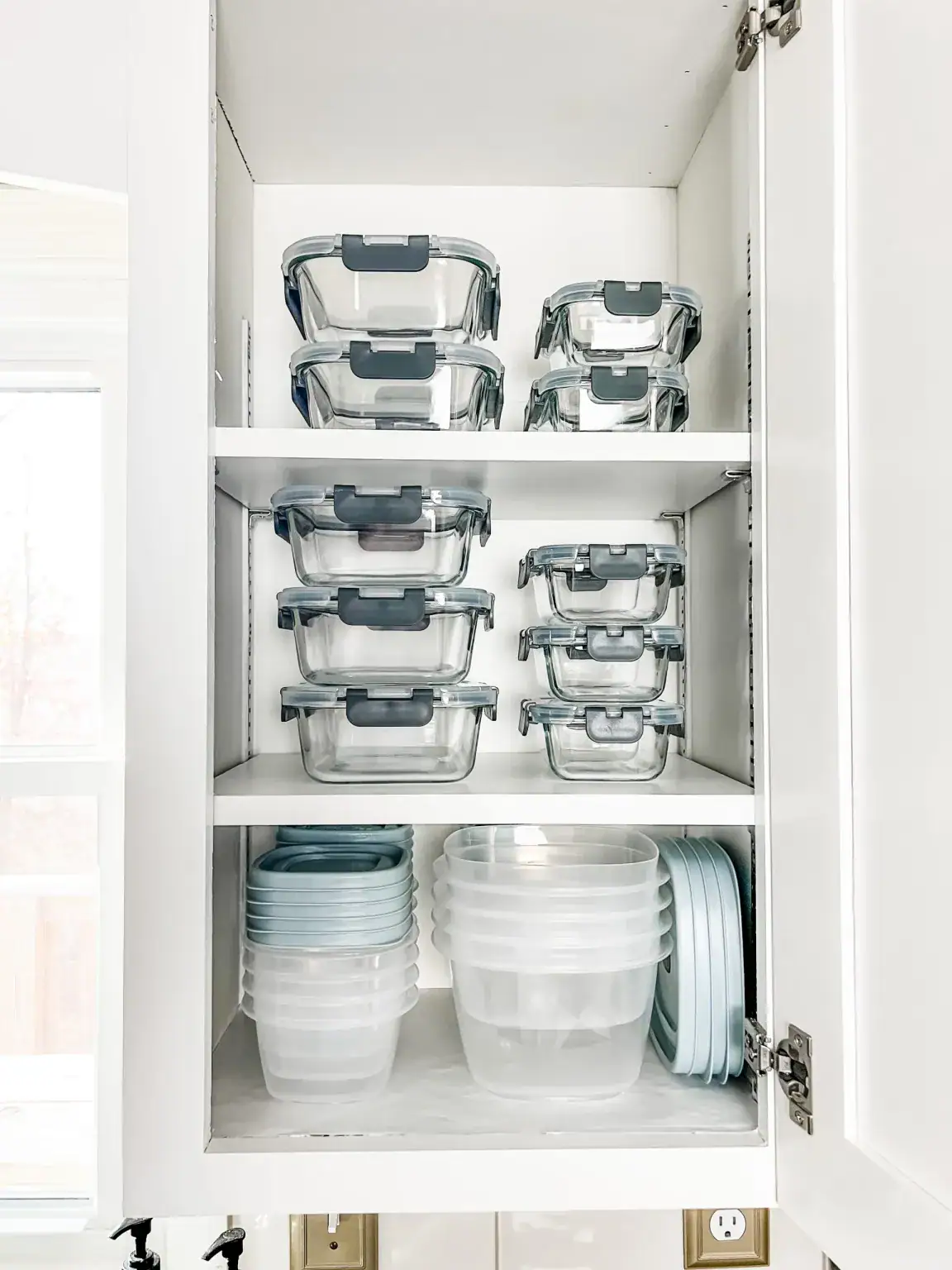
Once everything is removed, begin grouping similar items together, such as baking supplies, cooking oils, coffee essentials, food storage containers, serving dishes, and pantry snacks.
Organizing items into categories makes it easier to understand how much storage space each group realistically needs inside your kitchen cabinets and drawers.
After sorting everything, think carefully about what your family uses every single day and what only comes out during holidays or special gatherings.
Everyday essentials should stay in lower, easy-to-reach cabinets so cooking, unloading groceries, and preparing meals feel more convenient and less time-consuming for everyone.
Seasonal dishes, oversized appliances, and rarely used serving trays can move into higher shelves, garage storage, or separate pantry areas outside your cooking space.
Before buying organizers, measure every cabinet shelf carefully because getting the wrong size products often wastes money and creates even more frustrating kitchen clutter.
Clear bins, lazy Susans, shelf risers, and simple baskets work especially well because they improve visibility while helping cabinets feel cleaner and easier to maintain consistently.
Knowing how to organize a kitchen cabinet starts with choosing the simplest kitchen organization systems because realistic routines work much better for busy families than complicated, picture perfect setups requiring constant effort.
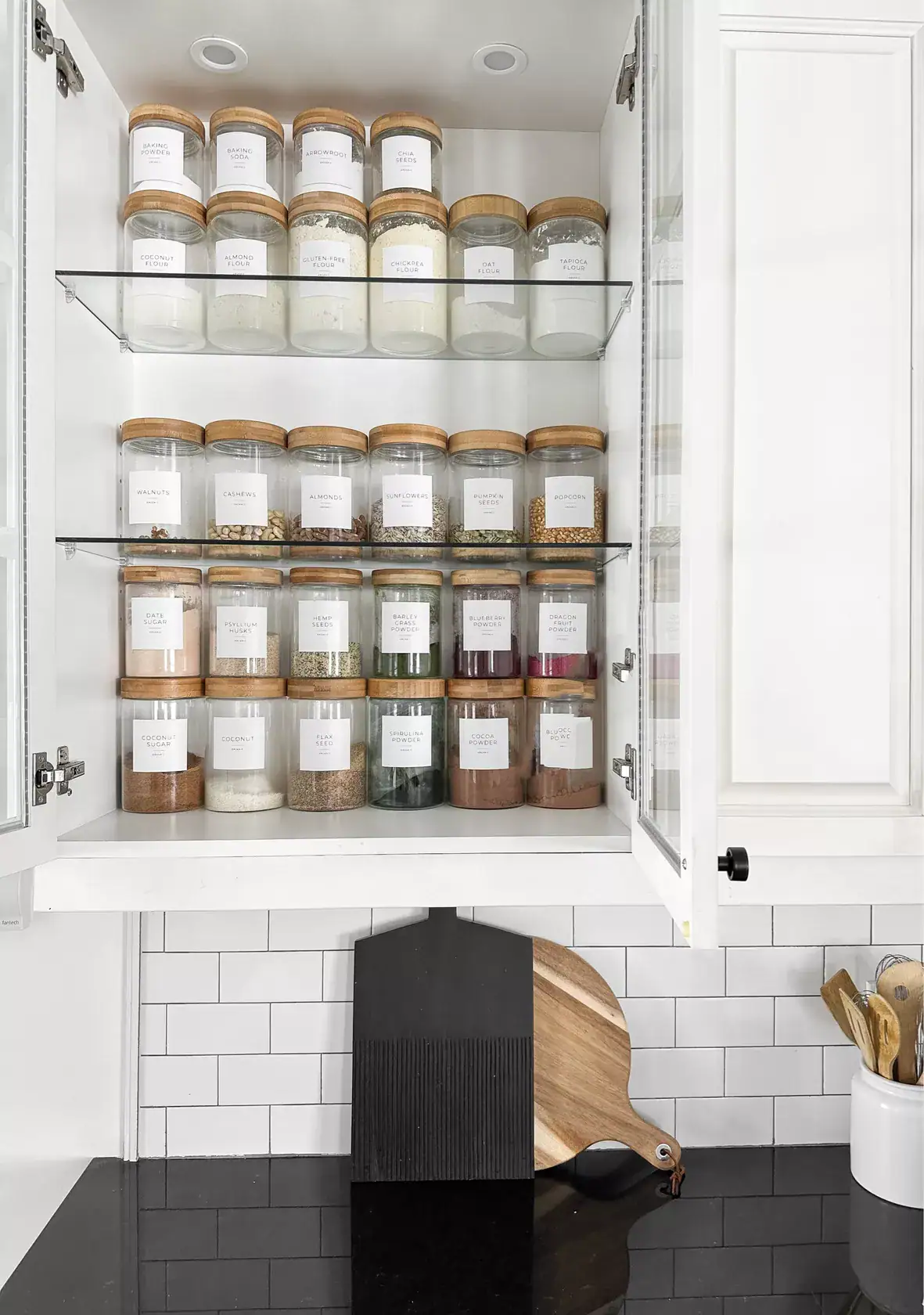
Best Storage Organizer for Kitchen Cabinets
The right kitchen cabinet organizers can completely improve how your kitchen works by creating easier access, better visibility, and more useful daily storage for busy family routines.
Good storage organizers help prevent clutter from building up again because every item has a designated place that feels simple and realistic for everyday use.
So, I’m going to share the best kitchen organizers that are practical, affordable, and easy to maintain so you can create a cleaner, more functional kitchen without making daily life feel complicated.
Tap Photos To Shop

Best Kitchen Cabinet Organization Ideas for Everyday Use
The best kitchen cabinet organization ideas for everyday use focus on making your daily routines feel faster, smoother, and much less stressful during busy mornings and evenings.
One helpful strategy is storing your most frequently used dishes, cups, and bowls close to the dishwasher so unloading clean dishes becomes easier and more efficient.
Cooking oils, utensils, spices, and cutting boards should stay near the stove because keeping related items together creates a more practical and enjoyable cooking experience overall.
Clear storage containers work especially well for pantry foods and snacks because they make it easier to quickly see what needs restocking during grocery shopping trips.
Lazy Susans are another helpful solution because they make oils, condiments, spices, and canned foods easier to grab from deep or awkward kitchen cabinets.
It can also help to create separate kitchen zones for breakfast items, lunch supplies, baking essentials, or meal prep ingredients, depending on your family’s routines.
Labeling bins and baskets is especially useful in busy kitchens because everyone understands exactly where items belong after using them throughout the day.
Avoid stuffing cabinets completely full because overcrowded shelves quickly become difficult to maintain and usually allow clutter to return much faster than expected.
Leaving some extra space inside cabinets makes it easier to clean shelves while also making daily cooking and cleanup routines feel less overwhelming.
The overall goal is to create a kitchen that feels practical, functional, welcoming, and manageable for real everyday life instead of trying to achieve unrealistic perfection.

Small Kitchen Cabinet Organization Ideas That Maximize Space
In a small kitchen, the best cabinet organization ideas are shelf risers, clear bins, vertical dividers, door racks, and keeping only daily-use items within easy reach.
Would you like to save this post?
One of the easiest ways to free up cabinet space is by keeping fewer items inside your most-used kitchen cabinets throughout the week.
Rarely used appliances, seasonal serving dishes, and party pieces should move into storage areas outside the kitchen so your cabinets are easier to manage daily.
Vertical dividers are especially helpful for organizing cutting boards, baking sheets, trays, and cooling racks because they prevent messy stacked piles from constantly falling over.
Cabinet doors can also become valuable storage spaces when you use command hooks for plastic wraps, storage bags, measuring spoons, spices, or small cleaning cloths that normally create drawer clutter.
Stackable bins work really well for pantry foods and snacks because they maximize storage space while still keeping ingredients visible and easy to grab quickly.
Shelf risers are another simple solution because they instantly create extra layers of storage space for mugs, bowls, plates, and pantry staples inside smaller cabinets.
At the same time, try not to overbuy organizers because small kitchens still need some open breathing room to feel calm, clean, and practical every day.
A small kitchen usually feels much more functional when cabinets stay simple, organized, and focused mainly on items your family actually uses regularly.

Under-Sink Kitchen Cabinet Organization Ideas
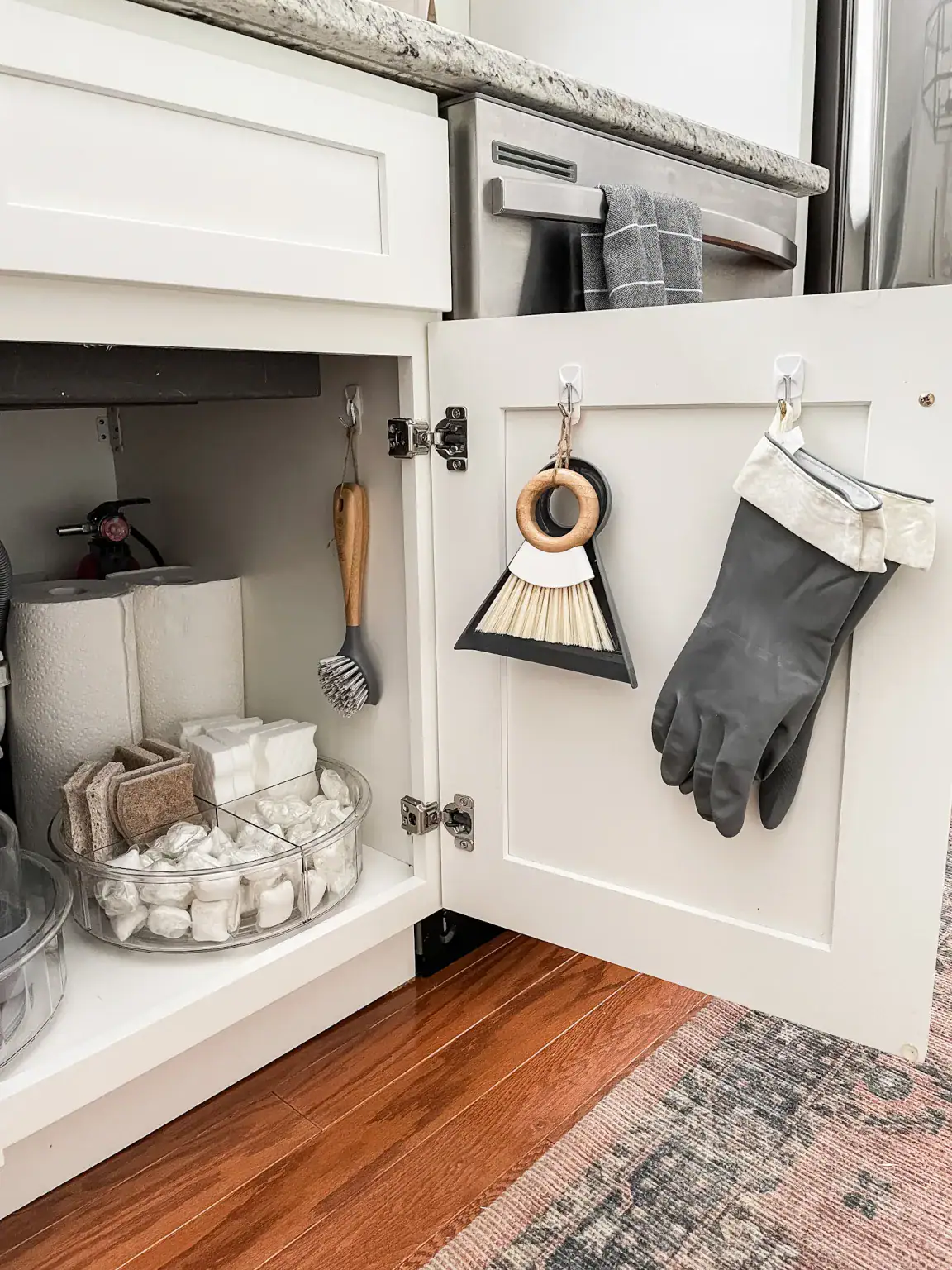
The best way to organize under the kitchen sink is to use a two-tier organizer, small bins, and door storage while leaving enough room around the plumbing.
Start by removing anything that does not actually belong under the sink because this area often becomes a catch-all space for unnecessary household clutter.
Adjustable shelves and two-tier organizers work especially well because they help maximize storage space while fitting neatly around pipes and plumbing underneath the sink.
Small storage bins can hold sponges, dishwasher pods, trash bags, microfiber cloths, and cleaning sprays, so supplies stay grouped instead of sliding everywhere.
Cleaning products should always stay upright and stored away from anything food-related to help keep your kitchen safer and easier to clean.
A small door caddy is also helpful for storing gloves, scrub brushes, extra sponges, or small cleaning tools without taking up valuable shelf space.
Try to keep only your everyday cleaning supplies under the sink because too many extra products quickly make this small area feel cluttered again.
It also helps to wipe down the space regularly so spills, dust, and moisture do not build up around your storage bins and organizers.
Even a small under-sink cabinet can feel surprisingly neat and functional when everything has a simple place that works for your daily routine.
Kitchen Cabinet Storage Ideas for Pots and Pans
Kitchen cabinets should make cooking feel easier by helping you grab cookware quickly without digging through loud, messy cabinet piles every day.
One of the simplest ways to organize pots and pans is by storing your most-used pieces in lower cabinets close to the stove for easier access.
Deep drawers work especially well because they allow cookware to stack neatly while still making everything easier to reach during busy cooking routines.
If your kitchen has standard cabinets instead of deep drawers, pull-out organizers can help prevent pots and pans from disappearing into the back corners.
Vertical organizers are also helpful because they separate pans, lids, and baking sheets instead of forcing everything into one heavy stack that constantly falls over.
Pot lids can quickly create clutter, so storing them upright inside a divider rack makes finding the correct size much easier while cooking meals.
Heavy cookware like cast-iron pans should stay on lower shelves because lifting them from high cabinets can feel awkward and unsafe during everyday use.
Tension rods and simple dividers can also help create separate storage spaces for cutting boards, trays, and baking pans that normally pile together messily.
Try not to stack too many pots together because it can scratch cookware surfaces and make cabinets feel harder to maintain over time.
A simple cookware storage setup saves time daily while helping your kitchen feel cleaner, calmer, and much easier to cook in throughout the week.

How To Keep Kitchen Cabinets Organized Long-Term
Complicated organization setups often stop working quickly because they require too much effort to keep looking neat and perfectly arranged all the time.
One helpful habit to keep the kitchen cabinet organized long-term is doing a quick cabinet reset every week, so misplaced items return to their proper spots before clutter starts building up again.
It also helps to avoid overbuying groceries, snacks, storage containers, and kitchen gadgets because excess items quickly overwhelm even well-organized cabinet spaces.
Leaving a little empty space inside cabinets actually makes kitchens easier to maintain because shelves do not feel overcrowded or frustrating to use daily.
Labels can also make a huge difference, especially in busy family kitchens where everyone needs to understand where dishes, snacks, and pantry foods belong.
Another helpful tip is regularly donating unused kitchen items instead of letting cabinets slowly fill up with tools, dishes, and appliances nobody uses anymore.
Seasonal serving pieces, holiday dishes, and specialty appliances should stay stored separately so they do not take up valuable everyday cabinet space year-round.
It is also smart to reevaluate your kitchen setup every few months because routines, cooking habits, and family needs naturally change over time.
Brilliant kitchen organization hacks work best when they support your real daily life instead of trying to create a perfectly styled kitchen that feels impossible to maintain consistently.

Mistakes To Avoid with Kitchen Cabinet Organization
Keeping kitchen cabinets organized becomes much easier when you avoid habits that quickly create clutter and make daily routines feel more stressful than necessary.
Many kitchens start feeling messy again because organizational systems become too complicated, overcrowded, or difficult to maintain during busy everyday schedules.
The best kitchen organization setups are usually simple, practical, and realistic enough to work even when life gets hectic during the week.
Here are some common mistakes that can make kitchen cabinets feel cluttered, harder to maintain, and much less functional for everyday cooking and cleaning routines.
- Creating complicated systems that feel difficult to maintain daily.
- Buying organizers before decluttering your cabinets first.
- Keeping too many unused kitchen gadgets and dishes.
- Overcrowding shelves until items become difficult to reach.
- Storing everyday items too high or too far away.
- Forgetting to use vertical cabinet space effectively.
- Stacking pots, pans, and lids in unstable messy piles.
- Using too many small containers that create visual clutter.
- Letting expired pantry foods stay hidden in deep cabinets.
- Keeping seasonal dishes inside prime everyday cabinet space.
Frequently Asked Questions
What is the best way to organize kitchen cabinets?
The best way to organize kitchen cabinets is to group items by how you use them and keep everyday pieces within easy reach. Start by decluttering, then create zones for dishes, cookware, food, spices, cleaning supplies, and small appliances.
How do I organize pots and pans in kitchen cabinets?
Store pots and pans in a lower cabinet near the stove and avoid stacking too many pieces together. Use pull-out shelves, pan racks, or vertical dividers so each piece is easier to grab without moving everything else.
How do I organize corner kitchen cabinets?
Corner kitchen cabinets work best with Lazy Susans, pull-out shelves, or large grouped bins. These organizers make awkward back corners easier to reach and help prevent items from getting lost.
How do I organize food in kitchen cabinets?
Group food by category, such as snacks, baking items, breakfast foods, canned goods, and dinner staples. Clear bins, labels, turntables, and shelf risers help keep food visible and reduce expired or forgotten items.
How do I keep kitchen cabinets organized long term?
Keep kitchen cabinets organized long term by giving every item a clear home and putting things back in the same place each time. A quick weekly reset, simple labels, and fewer duplicate items make the system easier to maintain.

Organizing your kitchen cabinets can make your entire kitchen feel calmer, cleaner, and much easier to use during busy everyday routines at home.
I hope these kitchen cabinet organization ideas help you create better storage, reduce clutter, and make cooking, cleaning, and meal prep feel far less stressful every single day.
From using shelf risers and stackable bins to organizing pots, pans, and under-sink supplies, small changes can completely improve how your kitchen functions overall.
The key is creating simple systems that fit your daily habits while keeping cabinets easy to maintain without feeling overcrowded or complicated.
Start using these practical tips and ideas today so you can finally create a kitchen that feels organized, functional, and enjoyable to use every day!