You know how it feels when you’re trying to figure out how to layer bed sheets, and nothing seems to look quite right, no matter what you do.
It’s easy to wonder how to layer a bed without making it look too plain or too fluffy, especially when you just want something cozy.
Sometimes the sheets slide around or wrinkle up, and you end up tucking and fixing corners again and again before giving up.
Other times, the colors you pick don’t blend like you imagined, and suddenly your bed looks more like a laundry pile than a retreat.
You might even get stuck choosing between soft cotton, smooth linen, or a quilt that looks cute but feels too heavy for everyday use.
And let’s be honest, trying to make the bed look neat while keeping it comfortable can make you feel like you’re chasing perfection.
It’s funny how something so simple can feel like such a puzzle when you just want a pretty, welcoming space to rest each night.
This post may contain affiliate links. As an Amazon Associate and a participant in other affiliate programs, I earn a commission on qualifying purchases at no additional cost to you.
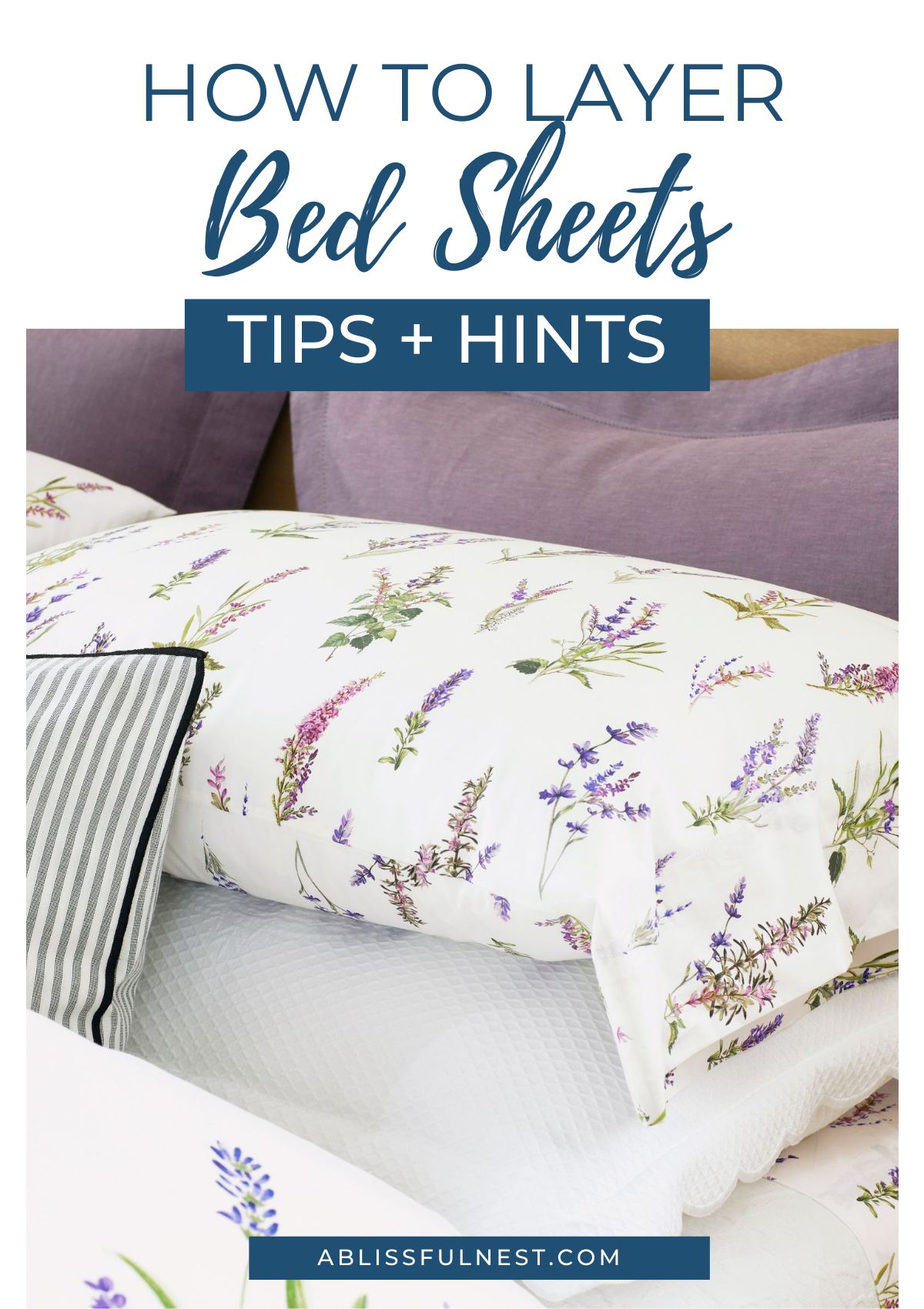
Layering bed sheets is a simple yet effective method to achieve a luxurious look while also adding an extra touch of warmth during those chilly nights.
I will give you the ins and outs of layering bed sheets, from selecting the right materials to arranging them in the most inviting way possible.
Let’s create a cozy and inviting bedroom you’ll look forward to every night!
Why Is It Important To Layer Bed Sheets Properly
Properly layering bed sheets isn’t just about aesthetics-it’s about optimizing your sleep environment for maximum comfort and hygiene.
One primary reason to layer bed sheets is to protect your mattress and extend its lifespan. The top sheet is a barrier between you and the mattress, absorbing sweat and oils that would otherwise seep into the mattress fabric.
Regularly washing your top sheet can prevent the buildup of dirt and allergens, promoting a cleaner and healthier sleep environment.
Layering bed sheets allows for better temperature regulation throughout the night. Depending on the season, you can add or remove layers to stay comfortably warm or cool.
For instance, adding an extra blanket or duvet between your top sheet and comforter during colder months provides additional insulation, trapping body heat and keeping you snug.
Alternatively, using lightweight sheets and skipping the additional layers in warmer weather can help prevent you from getting to warm at night and let you have a more restful sleep.
Also, mastering how to layer bed linens, like bed sheets, can enhance your bed’s overall look and feel, adding depth and texture.
By coordinating different colors, patterns, and fabrics, you can create visually appealing combinations that complement your bedroom decor and reflect your personal style.
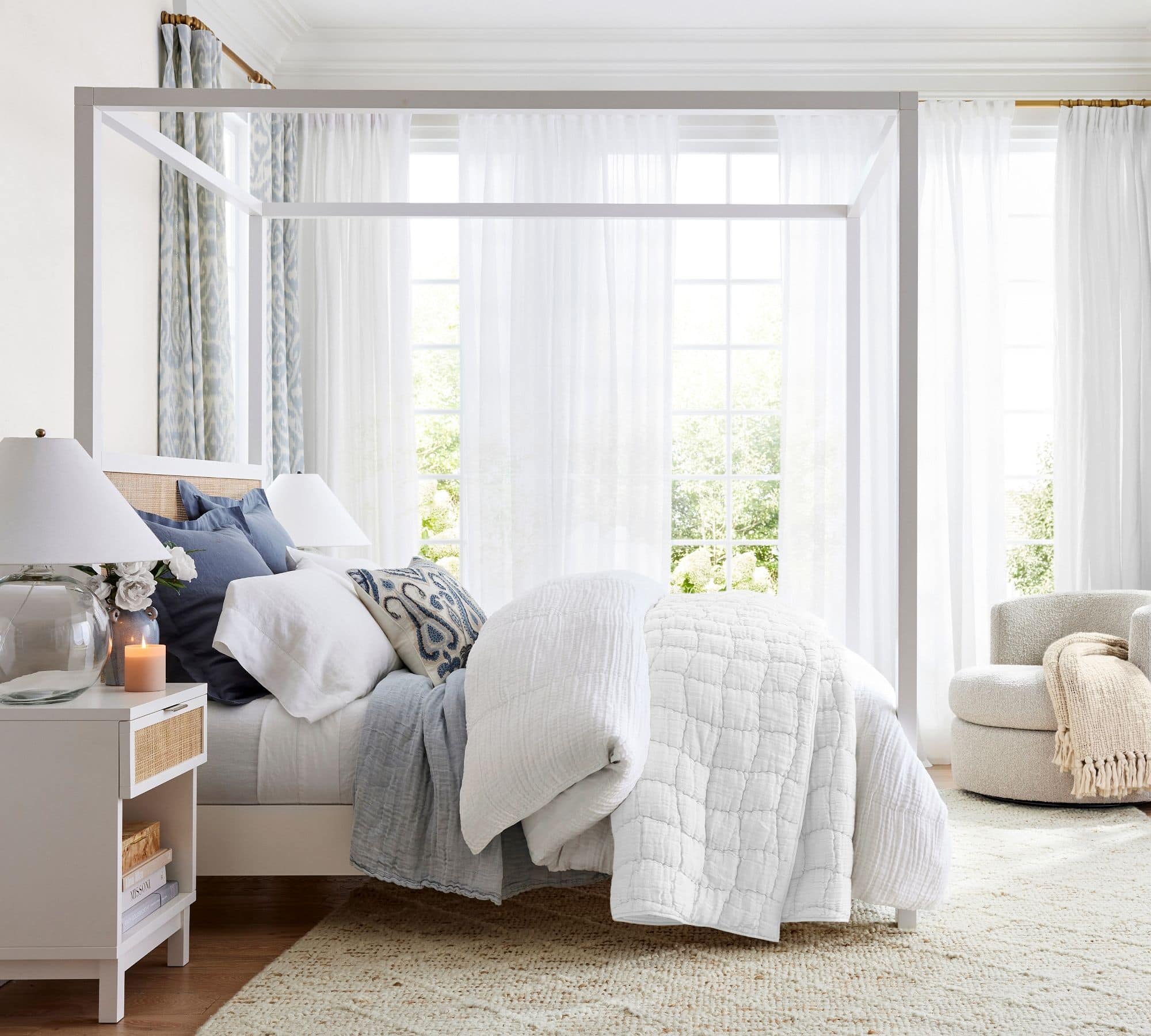
What Makes Bed Sheets High Quality
High-quality bed sheets are more than just a luxurious indulgence. They’re essential to your sleep comfort and overall well-being.
There are several things that contribute to their superior quality, including the type of fabric, thread count, and weave.
First and foremost, the choice of fabric plays a significant role in determining the quality of bed sheets.
Natural fibers such as cotton, linen, and bamboo are highly regarded for their breathability, durability, and softness.
Egyptian cotton, known for its long fibers and superior strength, is often considered the gold standard in luxury bedding.
Similarly, linen sheets are known for their natural texture, moisture-wicking properties, and ability to soften with each wash, while bamboo sheets offer exceptional softness and hypoallergenic benefits.
Thread count, or the number of threads per square inch of fabric, is another big factor of sheet quality.
While a higher thread count typically signifies a smoother and more luxurious feel, considering other factors, such as fiber type and weave, is important.
Opting for sheets with a thread count between 300 and 600 ensures a balance of softness, durability, and breathability, providing a comfortable sleeping surface without compromising quality.
Would you like to save this post?
The weave of the fabric also influences the overall quality and feel of bed sheets. Common weave types include percale, sateen, and twill, each offering unique characteristics and benefits.
Percale sheets feature a crisp, matte finish and a breathable, lightweight texture, making them ideal for warm sleepers and hot climates.
In contrast, sateen sheets have a silky-smooth surface and a lustrous sheen, providing a luxurious feel and drape. Twill weave sheets are known for their durability and wrinkle resistance, offering a sturdy yet soft bedding option.
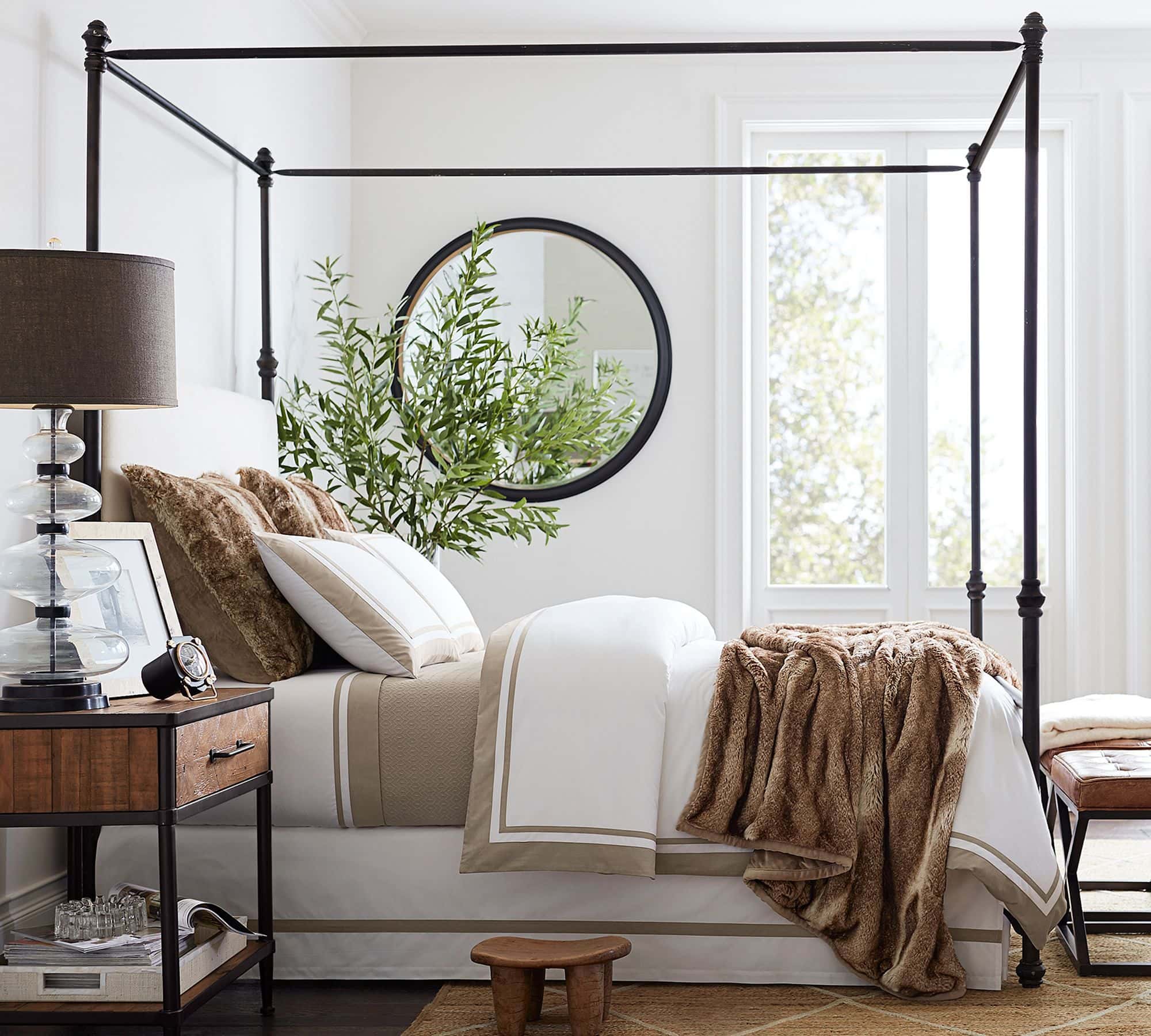
Best Bed Sheets
Selecting the right bed sheets is essential for creating the ultimate bed space. The market is flooded with options, each having unique materials, weaves, and thread counts.
Here are some of the best bed sheets out there that I love to recommend to my clients.
Tap Photos To Shop

What Order Do You Put Bed Sheets On
Layering bed sheets is not just about aesthetics but also about ensuring comfort and durability. Understanding different layers of bedding and the correct order in which to place each sheet can significantly affect the quality of your bed and how comfortable you feel while sleeping.
The first layer is the fitted sheet, which goes directly onto the mattress.
This sheet is designed with elastic edges to fit snugly around the corners of the mattress, ensuring it stays in place throughout the night.

Designer Tip
Look for deep pocket fitted sheets so they easily wrap around the sides of your mattress and nothing is left exposed. This will especially help if you have a mattress topper.
Next comes the flat sheet, lay it on top of the fitted sheet and tuck it under the mattress at the foot of the bed.
This sheet provides an extra layer of comfort and warmth while acting as a barrier between you and the blankets, comforter, or duvet.
Once the flat sheet is in place, it’s time to add any additional layers, such as a blanket or quilt, followed by the comforter or duvet.
By using this bed layering guide, each layer of your bed will be correctly positioned for maximum comfort and look its best.
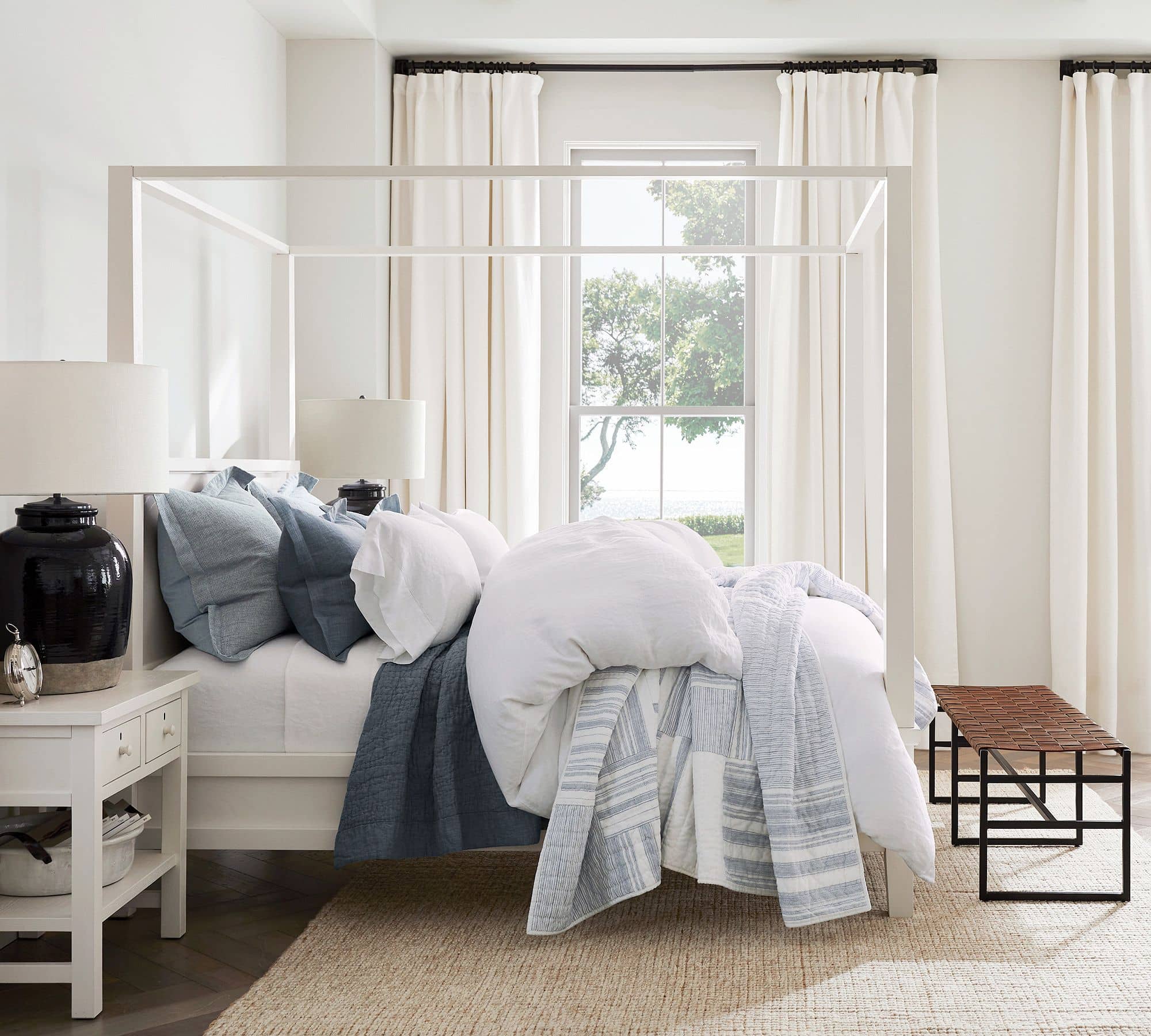
How To Arrange Bed Sheets
Arranging bed sheets is about making your bed look good and making sure it has comfort and practicality.
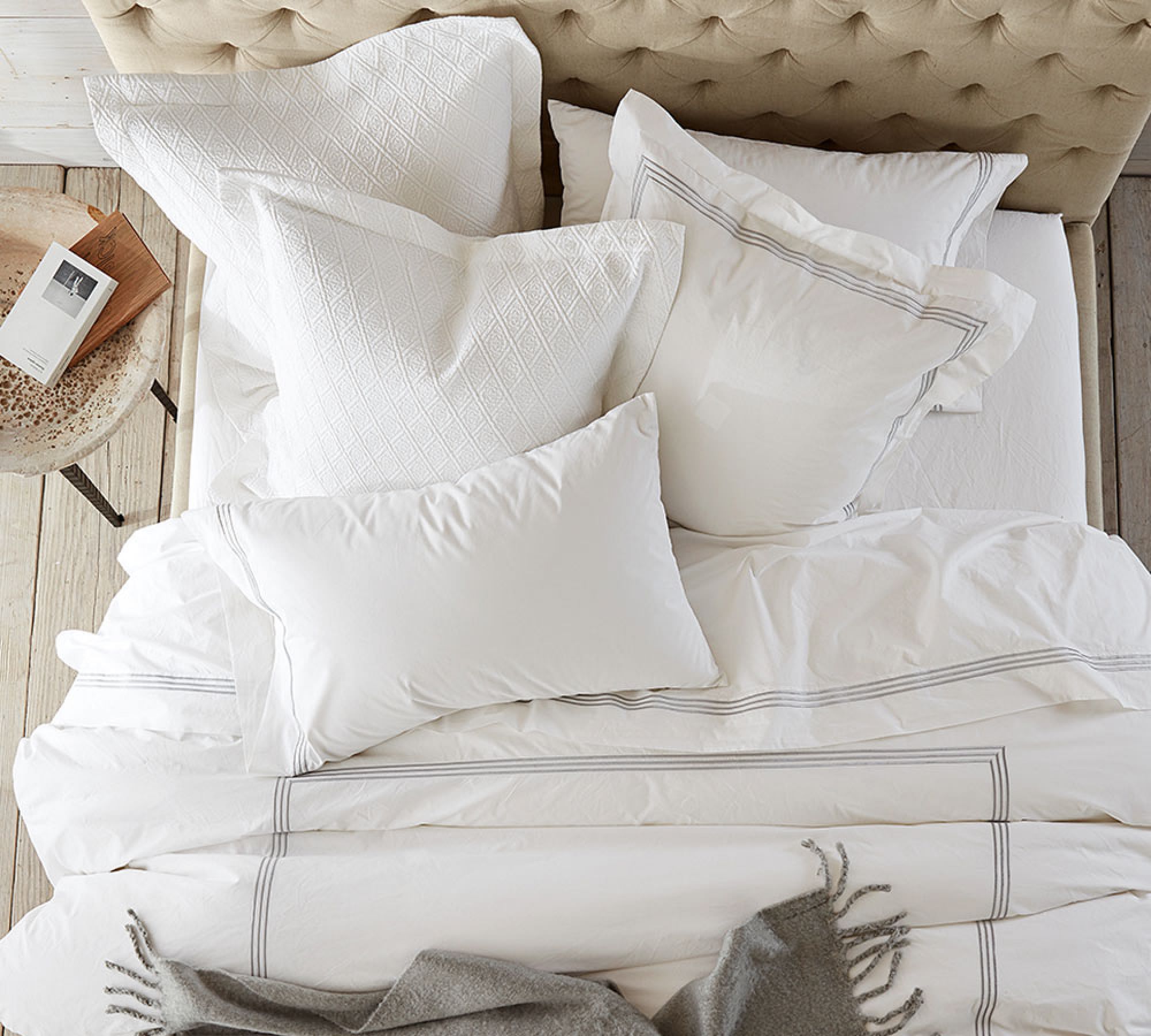
First, start by smoothing out the fitted sheet, ensuring it fits snugly around the corners of the mattress with no wrinkles or bunching.
Next, lay the flat sheet on top of the fitted sheet, ensuring it is evenly spread out and tucked neatly under the mattress at the foot of the bed.
Some people prefer to fold the top of the flat sheet down over the duvet or comforter, creating a layered look, while some may prefer to leave it untucked for easy access during the night. This is totally up to you and what you like.
Once the flat sheet is in place, it’s time to add any additional layers, such as a blanket or quilt, followed by the duvet or comforter.
Again, ensure these layers are evenly spread out and neatly arranged to create a cohesive look.
Finally, add decorative pillows and shams to complete the ensemble, following the guide on how to layer bed pillows to create a visually pleasing arrangement that enhances the overall aesthetic of your bed.
This would be a good chance to coordinate colors and patterns with the bed sheets.
Frequently Asked Questions
What’s the best order for layering bed linens?
Start with a fitted sheet, then add a flat sheet, followed by a light blanket or quilt, and finish with a comforter or duvet on top. This order keeps your bed cozy, easy to adjust for the weather, and always looking smooth and comfortable.
How many bedding layers do I really need?
Most beds look and feel great with three to four layers, depending on the season and how warm or cool you like to sleep. That usually means a fitted sheet, flat sheet, one blanket or quilt, and a cozy comforter or throw.
Can I mix different fabrics when layering a bed?
Yes, mixing fabrics adds depth and makes your bed feel more inviting, especially when you blend soft cotton with linen or velvet textures. Just keep the colors in the same tone family so everything looks balanced and relaxing instead of busy.
What kind of throw blanket looks best on top?
A lightweight knit or waffle weave throw looks beautiful folded at the end of the bed and adds a soft, welcoming touch. Choose something in a neutral or warm shade that matches your pillows or sheets for a finished look.
Should I use both a quilt and a comforter?
You can absolutely use both if you want extra warmth and that plush, layered look you see in cozy bedrooms. Place the quilt under the comforter for texture and comfort, or fold it at the foot for a relaxed, stylish finish.
By understanding the importance of how to layer bed sheets, selecting high-quality sheets, and arranging them thoughtfully, you can create a dreamy and cozy bed.
Remember to prioritize comfort and what you personally love when choosing the best sheets for your bed. Experiment with different layering techniques and decorative accents to find what works best for you and your sleep environment.
With the right approach to bed sheet layering, as explained in our bedding layers explained guide, you can transform your bed into a cozy spot that invites you to unwind and recharge after a long day.