If your entry feels plain or disconnected from your home’s style, traditional front porch ideas can help create a warmer and more welcoming space.
Many front porch ideas look beautiful online, but they often feel difficult to recreate when your porch feels small, outdated, crowded, or unfinished right now.
You may struggle choosing furniture, lighting, and planters because too many decorating styles mixed together can make the entire porch feel confusing.
Some porches also feel uncomfortable during daily use because bulky furniture blocks walkways, seating feels awkward, or decorations start making the space look crowded.
It can feel frustrating when your porch still looks empty after decorating because the colors, textures, or accessories never seem balanced together naturally.
A lot of people also worry about wasting money on trendy porch pieces that stop feeling timeless after only one season outside.
Even simple decorating updates can feel stressful when you want a porch that feels welcoming, practical, and easy to maintain throughout changing seasons each year.
This post may contain affiliate links. As an Amazon Associate and a participant in other affiliate programs, I earn a commission on qualifying purchases at no additional cost to you.

I can’t wait to share traditional decorating ideas that can help your porch feel cozy, classic, balanced, and much easier to style confidently every season.
From color combinations, furniture recommendations, landscaping tips, and affordable front porch ideas, there are many simple ways to create a porch that works beautifully for real homes and everyday family life.
So, find your favorite traditional porch ideas and start creating an entry that feels welcoming whenever guests arrive, or your family relaxes outside together.
What Makes A Front Porch Look Traditional
A traditional front porch feels balanced, welcoming, and timeless when the furniture, lighting, colors, and greenery all work together naturally.
Start with classic pieces that feel useful and comfortable, then build the look slowly so the porch never feels too full.
Symmetry makes a big difference because matching planters, lanterns, or chairs can help the entry feel calmer and more finished.
Comfortable seating also matters because a traditional porch should feel lived-in, not just pretty from the street.
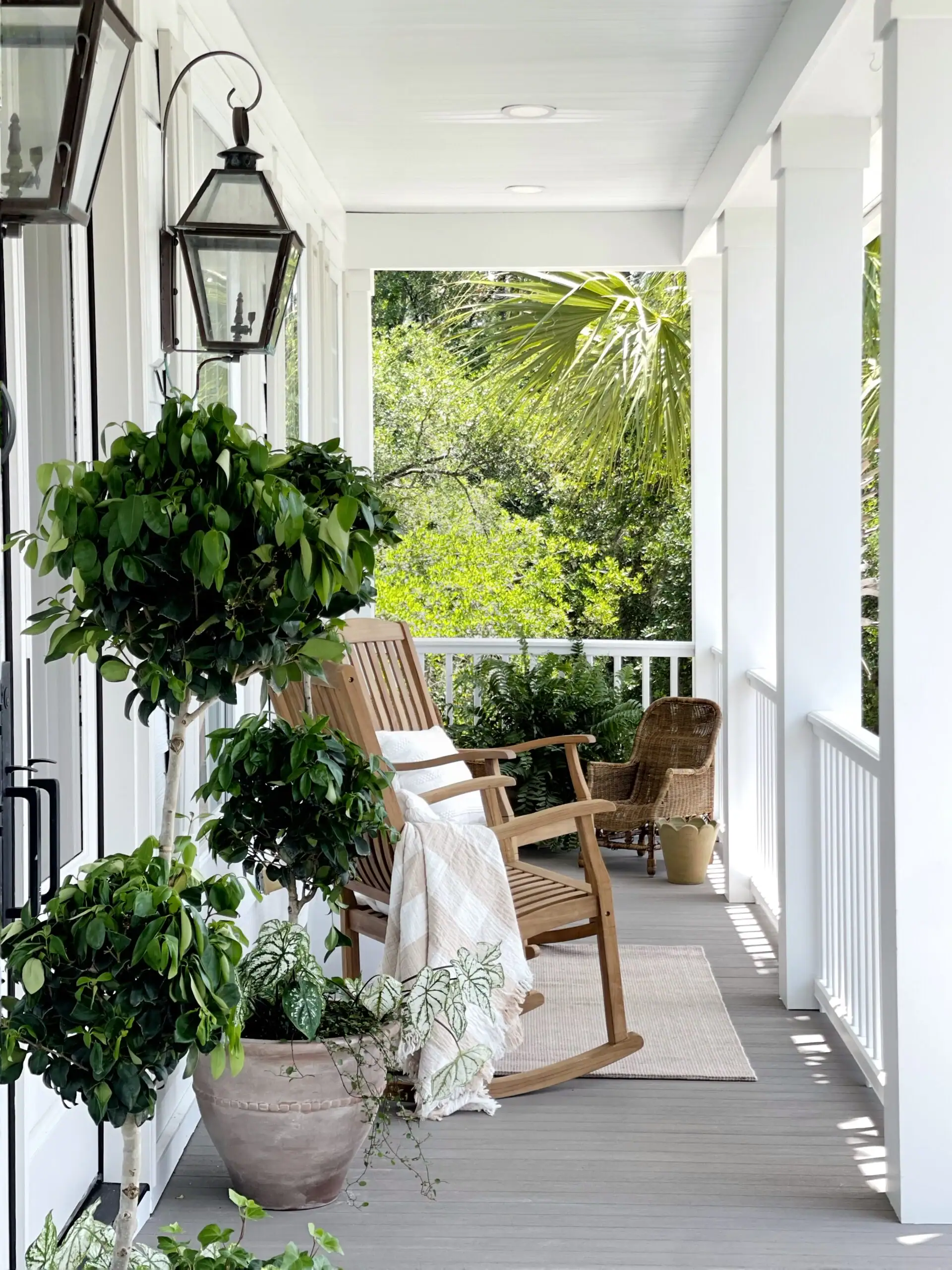
Rocking chairs, benches, or a simple porch swing can make the space feel warm while giving your family a place to enjoy quiet evenings.
Lantern-style lighting is another beautiful choice because it feels classic and pairs easily with brick, siding, wood doors, or neutral exterior colors.
Natural materials help the porch feel warmer, especially when you repeat wood, wicker, stone, brick, or greenery in small details.
Soft traditional colors like white, cream, beige, gray, navy, green, black accents, and natural wood tones usually work best.
Simple wreaths, larger planters, and seasonal flowers can soften the entry without making the porch feel too bright or overly decorated.
When every detail has a purpose, your porch feels classic, comfortable, and easy to refresh through every season.

Best Traditional Front Porch Colors
The best traditional front porch colors feel soft, classic, and easy to style through every season.
Start with a simple base, then add broader accents through the front door, lighting, hardware, and planters.
When the colors feel connected to your home’s exterior, the whole porch looks more welcoming and thoughtfully finished.
- White: Fresh and clean without feeling busy, white front porches look brighter and provide a timeless backdrop for wreaths, planters, and seating.
- Cream: Warm and soft on older homes, it keeps the entry feeling cozy while still looking polished beside brick, wood, and greenery.
- Beige: Easy to live with and simple to decorate, it works beautifully when you want the porch to feel calm, warm, and not too stark.
- Soft Gray: Cool but still classic, it pairs nicely with black lanterns, white trim, stone steps, and deeper front door colors.
- Black: Strong and timeless, it gives the front door, railings, or lanterns enough contrast to make the entry feel more grounded.
- Navy: Rich without feeling too bold, it adds depth to the front door while still working well with white trim and warm wood accents.
- Forest Green: Natural and welcoming, it blends beautifully with shrubs, planters, wreaths, and traditional landscaping around the front entry.
- Deep Red: Warm and classic, it makes the front door feel inviting while adding personality without making the porch look too trendy.

Favorite Planters for Traditional Front Porch
The right planters can make a traditional front porch feel more balanced, polished, and welcoming before you add anything else.
Choose pieces with classic shapes, sturdy materials, and enough size to stand out beside the front door, steps, or porch columns.
I’m going to share my favorite and affordable garden planters that add timeless style, soft greenery, and just the right amount of structure to your porch.
Tap Photos To Shop

Traditional Front Porch Decorating Ideas That Always Work
Your porch usually looks best when the space feels comfortable, balanced, and easy to enjoy without looking too busy.
Start with simple layers, like an outdoor rug, matching lanterns, pretty planters, and a wreath that fits the season.
A classic outdoor rug can soften plain porch flooring and make your seating area feel more finished without changing anything permanent.
Matching lanterns beside the door help the porch feel polished, especially when the lights add a warm glow in the evening.
I also love repeating one color through the pillows, planters, wreath ribbon, or flowers so everything feels connected and intentional.
Outdoor pillows are another easy update because they make rocking chairs, benches, and porch swings feel more relaxed and comfortable.
Choose stripes, florals, gingham, or soft neutral patterns if you want the porch to feel classic without looking too trendy.
Seasonal wreaths work beautifully when they stay simple, with greenery, muted flowers, or ribbon that complements the rest of the porch.
If your porch feels empty, try adding one larger planter instead of several tiny decorations that can quickly make the space feel cluttered.
These small decorating choices can help your traditional front porch feel warm, welcoming, and pulled together through every season.

Traditional Front Porch Seating Ideas
A front porch feels more inviting when the seating is comfortable, useful, and placed where people can actually enjoy it.
Traditional porch seating works best when you balance cozy furniture with enough open space for walking, opening the door, and welcoming guests.
Start with one main seating piece first, then add smaller accents only if the porch still feels open and easy to move through.
Wood rocking chairs are always a beautiful choice because they feel timeless and give you a cozy spot for morning coffee or quiet evenings.
Would you like to save this post?
Painted white rocking chairs look especially pretty beside neutral homes because they keep the porch feeling fresh, classic, and bright through every season.
A porch swing can make the whole entry feel softer, especially when you add neutral cushions and keep the surrounding decor simple.
Benches are perfect for smaller porches because they offer seating without taking up as much visual space as several separate chairs.
Add outdoor cushions in soft neutral fabrics to make benches feel more comfortable while warming up brick, concrete, or painted porch floors.
A small accent table is also helpful for holding drinks, books, lanterns, or a simple seasonal plant beside your seating area.
Choose smaller round tables when space feels tight because bulky furniture can block walkways and make the porch feel crowded quickly.

Budget-Friendly Ways To Create A Traditional Front Porch
A traditional front porch does not need a big renovation to feel beautiful, welcoming, and more connected to your home.
Start with the areas people notice first, like the front door, doormat, planters, lighting, pillows, and railings.
Painting the front door is one of the easiest updates, and choosing the right front door paint colors can make the whole entry feel more polished.
Black, navy, forest green, or deep red are beautiful choices when you want a classic look that will not feel dated quickly.
A fresh doormat can also make the porch feel cleaner, especially when the old one looks faded, thin, or worn down.
Matching planters beside the door create instant balance and help the porch feel styled without needing a lot of extra decor.
Outdoor pillows are another simple update because they add comfort, pattern, and softness to rocking chairs, benches, or porch swings.
If your lighting feels outdated, classic lantern-style fixtures can make the porch feel warmer while improving visibility in the evening.
Thrifted benches, baskets, or stools can add character, especially when you paint them in soft neutral colors that match your porch.
Finish with a simple seasonal wreath and freshly painted railings so the whole porch feels cared for, classic, and welcoming.

Traditional Front Porch Landscaping Ideas
Your porch feels more welcoming when the landscaping around it looks soft, balanced, and connected to the style of your home.
Traditional front porch landscaping works best when structured greenery, pretty flowers, and classic walkway materials guide the eye toward the entry.
Start with plants that fit the size of your porch so shrubs do not hide railings, steps, windows, or pretty exterior details.
Symmetrical shrubs beside the walkway can make the front entry feel more organized while naturally leading guests toward the door.
Boxwoods, hydrangeas, and smaller evergreen shrubs are beautiful choices because they feel classic and work well with many traditional home styles.
Layered flower beds can make the porch feel fuller, especially when you mix taller greenery with lower flowers near the front.
I like using white blooms, soft pink flowers, lavender, and plenty of greenery because the colors feel gentle and easy to style.
Brick or stone walkways can make the porch feel more grounded while adding texture that blends beautifully with traditional exterior materials.
Hanging ferns and window boxes are also lovely because they add greenery without taking away seating space or crowding the walkway.
Keep the landscaping simple and easy to maintain so your porch feels polished, welcoming, and pretty through every season.

How To Make a Traditional Front Porch Feel Cozy
A traditional front porch feels cozy when the seating, lighting, greenery, and textures all work together in a simple, comfortable way.
Start by adding softer layers slowly so the porch feels warm and inviting without filling every corner with too many decorations.
Warm lighting makes a big difference in the evening because lanterns, candles, or string lights can make the entry feel calmer.
If the porch feels dark at night, better lighting can also make the space feel safer and more welcoming for guests.
Outdoor rugs and pillows help soften hard surfaces, especially when your porch has brick, concrete, stone, or painted wood flooring.
Neutral patterns usually work best because they add comfort and texture without making the porch look too busy or trendy.
Greenery also makes the porch feel more lived-in, especially when you mix hanging plants, large planters, and smaller tabletop pots.
I like using plants at different heights because they fill empty corners and make the porch feel layered without adding clutter.
Choose useful, best front porch decor like baskets, benches, lanterns, and planters so everything looks pretty while still serving a real purpose.
When every piece feels soft, useful, and easy to enjoy, your porch becomes a place people naturally want to spend time.

Traditional Front Porch Decorating Mistakes To Avoid
Traditional porches look best when decorations feel balanced because too many competing colors, furniture pieces, or accessories can quickly make the space feel cluttered.
The most common decorating mistakes usually happen when you focus only on trends instead of creating a porch that feels comfortable and practical daily.
Avoiding these smaller mistakes can help your porch feel more welcoming while making decorating decisions much easier throughout every season outside naturally.
- Using too many small decorations
- Choosing furniture that is too large
- Mixing too many design styles
- Ignoring lighting
- Picking trendy colors that do not match the home
- Forgetting about scale
- Using planters that are too small
- Blocking the front door or walkway
Frequently Asked Questions
How do I decorate a traditional front porch?
Start with one main focal point, such as a wreath, bench, rocking chair, or porch swing. Then add matching planters, a layered doormat, warm lighting, and simple seasonal accents to make the porch feel finished.
Are rocking chairs good for a traditional porch?
Yes, rocking chairs are one of the most classic furniture choices for a traditional porch. They work especially well on covered porches, wide entries, and homes with a warm, welcoming exterior style.
Is a porch swing traditional?
Yes, a porch swing is a traditional porch feature, especially for covered front porches. It adds comfort, movement, and a relaxed feeling while still keeping the porch classic and timeless.
What plants look best on a traditional front porch?
Ferns, boxwoods, hydrangeas, topiaries, mums, tulips, and classic seasonal flowers look beautiful on a traditional front porch. Matching planters on each side of the door help create a more balanced and polished look.
What furniture is best for a traditional front porch?
The best furniture for a traditional front porch includes rocking chairs, porch swings, garden benches, wicker chairs, and small side tables. Choose pieces that fit the porch size and still leave enough room to walk comfortably.

Your front porch can become a warm and welcoming space when every decorating choice feels balanced, practical, timeless, and comfortable for everyday family life naturally.
Traditional front porch ideas work beautifully when you focus on cozy seating, softer lighting, natural textures, and simple decorations that continue feeling timeless.
Start with one smaller update today, like matching planters or fresh lantern lighting, because simple changes often create the biggest visual improvement.
I hope these decorating tips help your porch feel more inviting while making seasonal updates easier, less stressful, and much more cohesive every year.