A messy pantry can waste time, make grocery shopping more confusing, and turn everyday cooking into a frustrating task, but the right food pantry organizer ideas can change that.
If you have been searching for kitchen organization ideas, you already know how difficult it can be to keep pantry shelves neat after only a few busy days.
Opening your pantry should make meal preparation easier, yet crowded shelves often make finding simple ingredients take much longer than expected during busy afternoons or evenings.
Food that gets pushed behind other items often stays forgotten until it expires, leaving you with wasted groceries and another unnecessary trip back to the store.
Buying duplicate items becomes surprisingly common when similar products are scattered across different shelves, making it difficult to know what you already have at home.
Even after organizing everything, many pantries slowly become cluttered again because everyday routines make it easy for items to end up in random places.
Without a simple organizing system, cooking feels more stressful, grocery shopping becomes less efficient, and your pantry quickly loses the neat appearance you worked hard to create.
This post may contain affiliate links. As an Amazon Associate and a participant in other affiliate programs, I earn a commission on qualifying purchases at no additional cost to you.

So, I’m excited to share pantry organization ideas, smart storage solutions, and simple tips that can help your pantry stay organized with much less effort every day.
From choosing the right organizers to arranging everyday foods, I will share easy ideas that make your pantry simpler to use while keeping everything visible and easy to reach.
Use my tips and ideas, then enjoy opening your pantry and finding everything neatly organized, easy to access, and exactly where you expect it to be every day.
Why Food Pantry Organization Makes Everyday Life Easier
When your pantry is organized, you spend less time searching and more time actually cooking the meals your family loves every week.
Using a kitchen decluttering checklist helps you clear out unnecessary items first, making it much easier to organize your pantry and see exactly what you already have before shopping.
Cooking dinner feels so much faster when every ingredient has a dedicated spot you can grab without digging through the whole shelf.
A tidy pantry also reduces stress because a cluttered space genuinely affects how calm or anxious you feel in your own kitchen daily.
You waste less food when items are visible and properly rotated, which keeps your grocery budget under much better control every single month.
Kids and other family members can actually help themselves or put things away correctly when the system is simple enough for anyone to follow.
An organized pantry also makes meal prepping on Sundays so much easier because you can take stock of what you need with one quick glance.
Keeping your pantry in order is one of the simplest habits that improves your daily routine more than most people expect it to.

How to Organize a Food Pantry Before Buying Organizers
Before spending a single dollar on bins or containers, you need to pull absolutely everything out of your pantry and start with a completely blank slate.
Once everything is out, check every expiration date and toss anything that is outdated, stale, or something your family realistically will never eat again.
Group the remaining items into categories like grains, canned goods, snacks, baking supplies, sauces, and breakfast items so you can see what you actually have.
Once you see your categories, measure your shelves carefully because organizers that are even half an inch too wide will not fit and create more frustration than they solve.
Think about how often you use each category because the things you reach for daily should sit at eye level, where they are easiest to grab quickly.
Write down exactly which types of kitchen cabinet organizers you need based on your categories before opening any shopping app or walking into a store aisle.
Consider the depth of your shelves because deep shelves need turntables or tiered risers, while shallow shelves work better with simple straight-line bins and labels.
This prep step takes about an hour but saves you from buying the wrong things and having to start the whole process over again later.
How to Use Food Pantry Organizer Bins, Baskets, and Labels Effectively
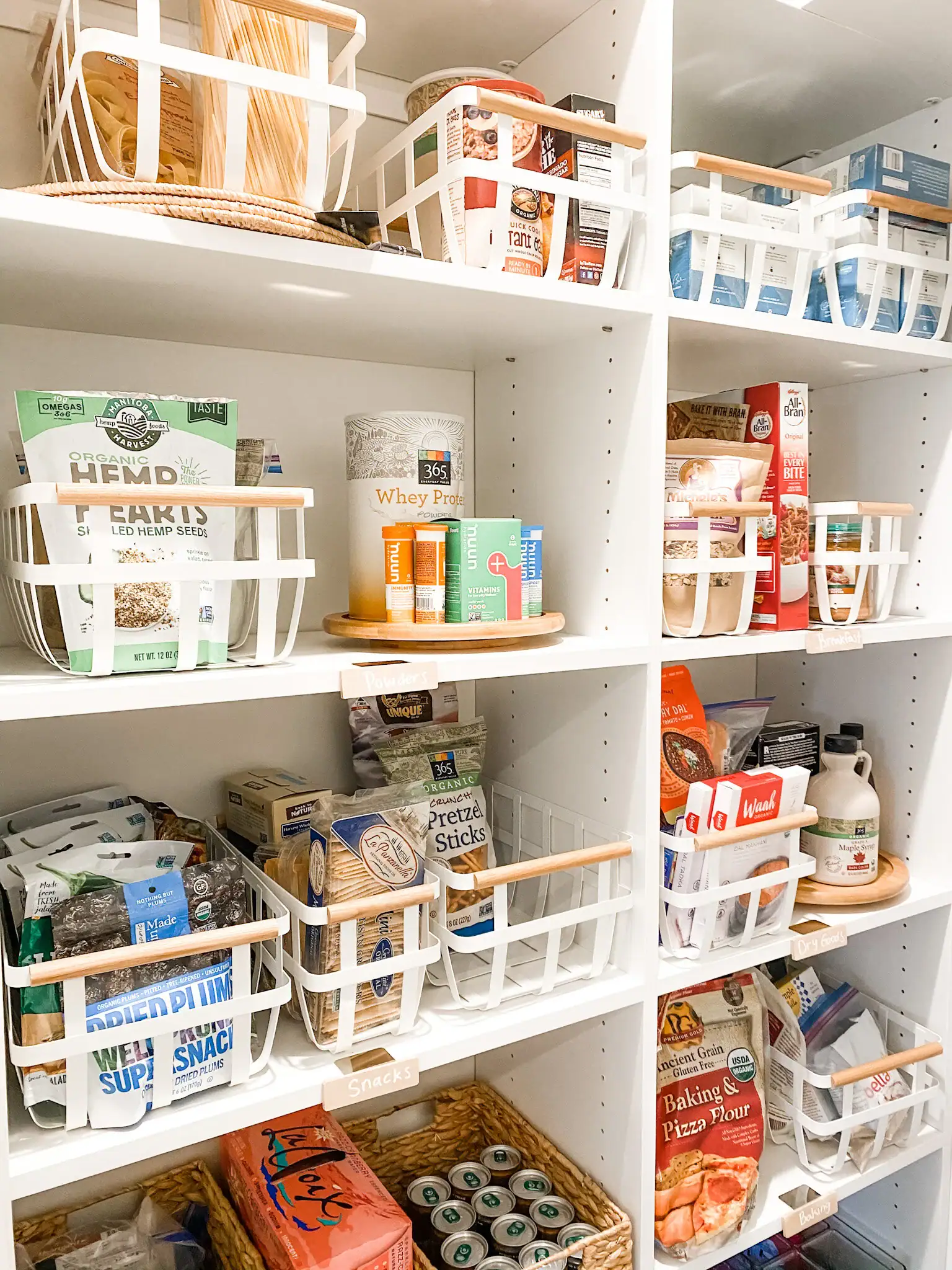
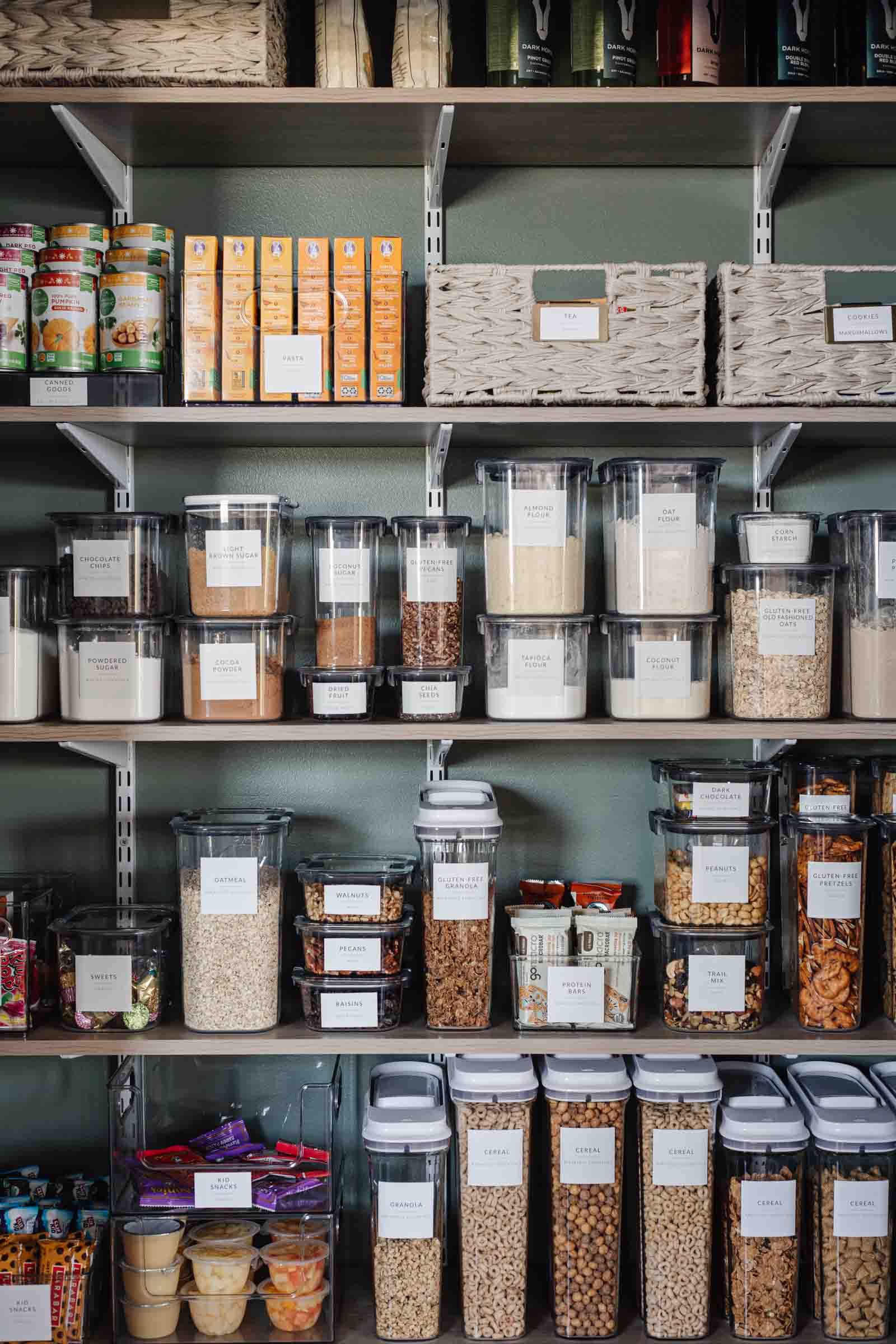
Bins and baskets are the backbone of any good pantry system because they group similar items together and stop things from sliding around every time you open the door.
I personally prefer rectangular bins over round ones because they line up tightly against each other and use every inch of shelf space without leaving awkward gaps.
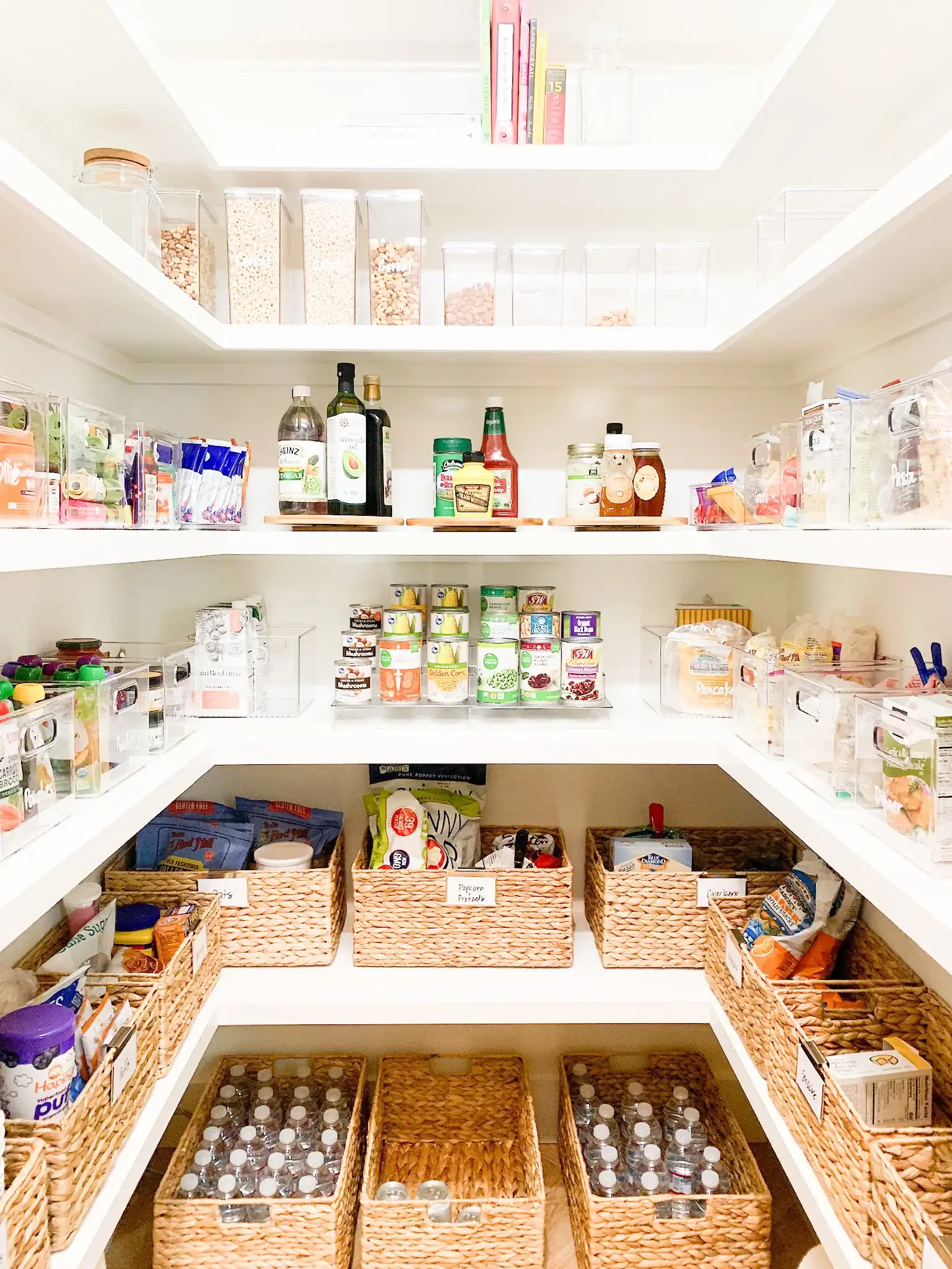
Woven baskets work really well for snacks, bread, or packets because they add a warm, cozy look that makes your pantry feel less like a storage closet and more like a curated space.
Clear plastic bins are perfect for items you need to see at a glance, like pasta or grains, because you can check your supply level without opening anything.
Labels are what actually make a system stick long-term. Without them, bins become junk drawers within a couple of weeks, and the whole system falls apart fast.
I recommend a label maker for a clean look, but handwritten kraft paper labels with a marker also work beautifully and add a rustic, personal touch.
Place labels on the front edge of each bin at eye level so anyone in your household, including kids, can put things back in the right spot.
Swap out bins whenever your needs change because your pantry system should adapt to your life, not the other way around.
Best Food Pantry Organizer Containers to Use
Choosing the right containers is one of the most important decisions you will make for your pantry setup, and it is worth taking a little time to pick ones that fit your lifestyle.
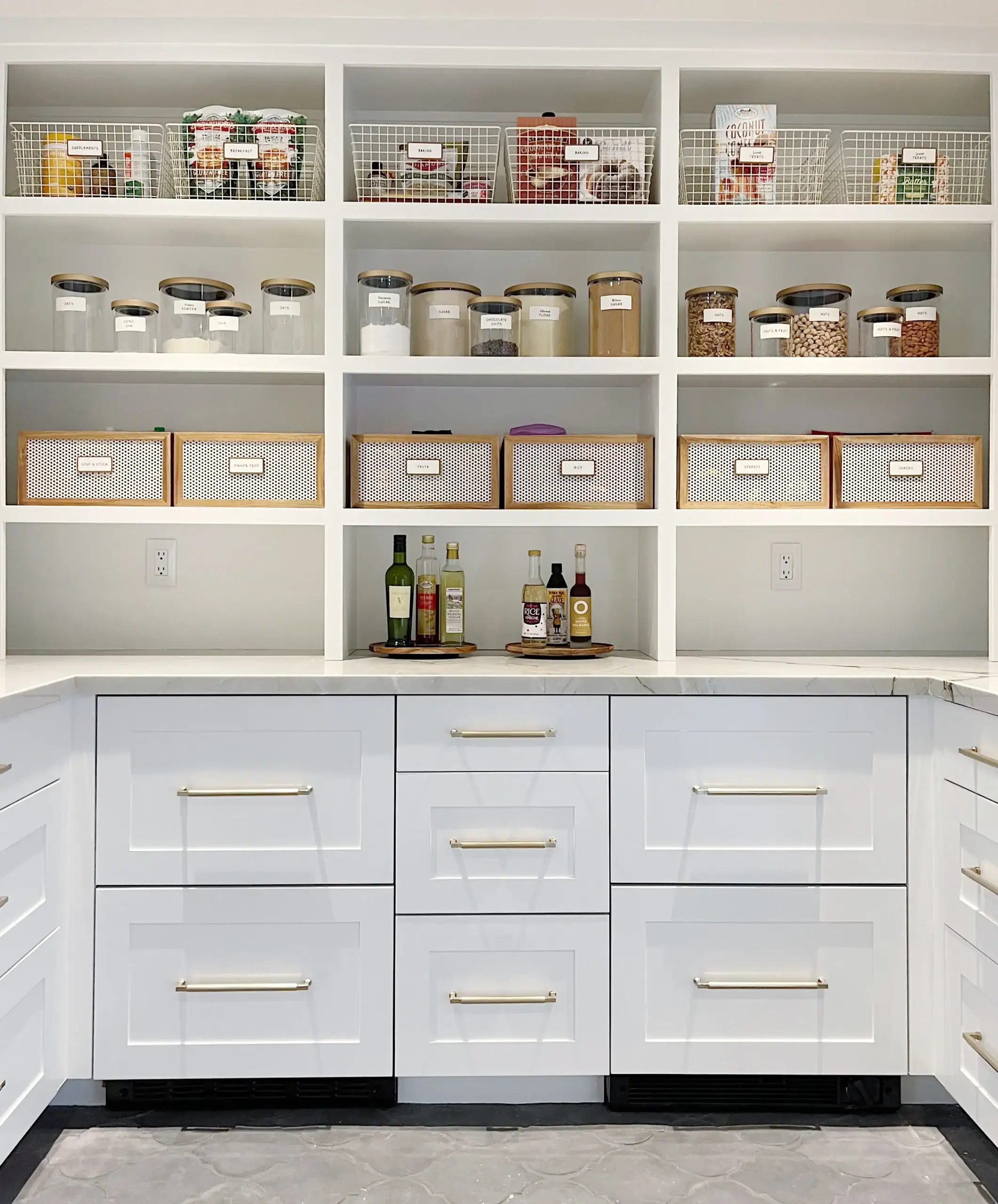
The decanting trend, meaning transferring food from original packaging into sealed containers, has taken off for a good reason: it keeps food fresher longer and looks so much cleaner on the shelf.
Here are some of my favorite pantry storage containers that can help keep everyday foods organized, easy to find, and much simpler to maintain every day.
Tap Photos To Shop

Tips for Organizing a Food Pantry
One of the best tips I can give you is to apply the FIFO method, which stands for “first in, first out,” by moving older items to the front every time you unpack new groceries.
Turntables, also called lazy Susans, are one of the best tools for corner cabinets and deep shelves because they let you spin to reach anything without knocking other things over.
You can organize your kitchen so much more effectively by assigning each shelf a clear purpose, like one shelf for baking, one for breakfast, and one for snack items.
Would you like to save this post?
Pegboards or magnetic wall panels inside or beside your pantry are a smart way to hang measuring cups, small tools, or even aprons to free up precious shelf space.
Set a monthly reset date on your calendar where you spend 15 minutes checking expiration dates, restocking containers, and making sure every category is back in its proper zone.
Integrated LED strip lighting along the edge of your shelves is a 2026 trend that solves the problem of shadowy pantry corners, making items hard to spot.
Group your baking supplies, grains, snacks, and breakfast items separately so meals and cooking times do not become a scavenger hunt through mixed-up categories.
A system only works if it is easy enough to maintain, so keep it simple, keep it labeled, and do not overthink every single detail when you are setting it up.

Food Pantry Organization Solutions for Small and Deep Shelves
Small pantries come with their own unique set of challenges, but the right layout makes even the tiniest space surprisingly functional and easy to use.
Over-the-door organizers are one of the smartest solutions for small pantries because they turn wasted door space into prime storage real estate for spices or packets.
Tiered shelf risers, sometimes called “stadium seating” organizers, let you stack three rows of canned goods on a single shelf so you can actually see what is behind the front row.
Vertical stacking works much better with rectangular containers than round ones because rectangles fit tightly together without any wasted space between them on the shelf.
For deep shelves, use pull-out drawers or bins with handles so you can bring the back of the shelf to you instead of reaching blindly behind things.
Tall, narrow items like oil bottles or cereal boxes stay much more stable on a deep shelf when they are grouped inside a tall bin together.
If you are working with a very small pantry, check out these small pantry organization ideas for space-specific solutions that can genuinely change how your kitchen functions.
Keep deep shelves dedicated to items you use less often, like bulk dry goods or backup cans, so the front of every shelf stays clear and easy to access daily.
Best Food Pantry Organizer Ideas for Canned Goods and Bottles
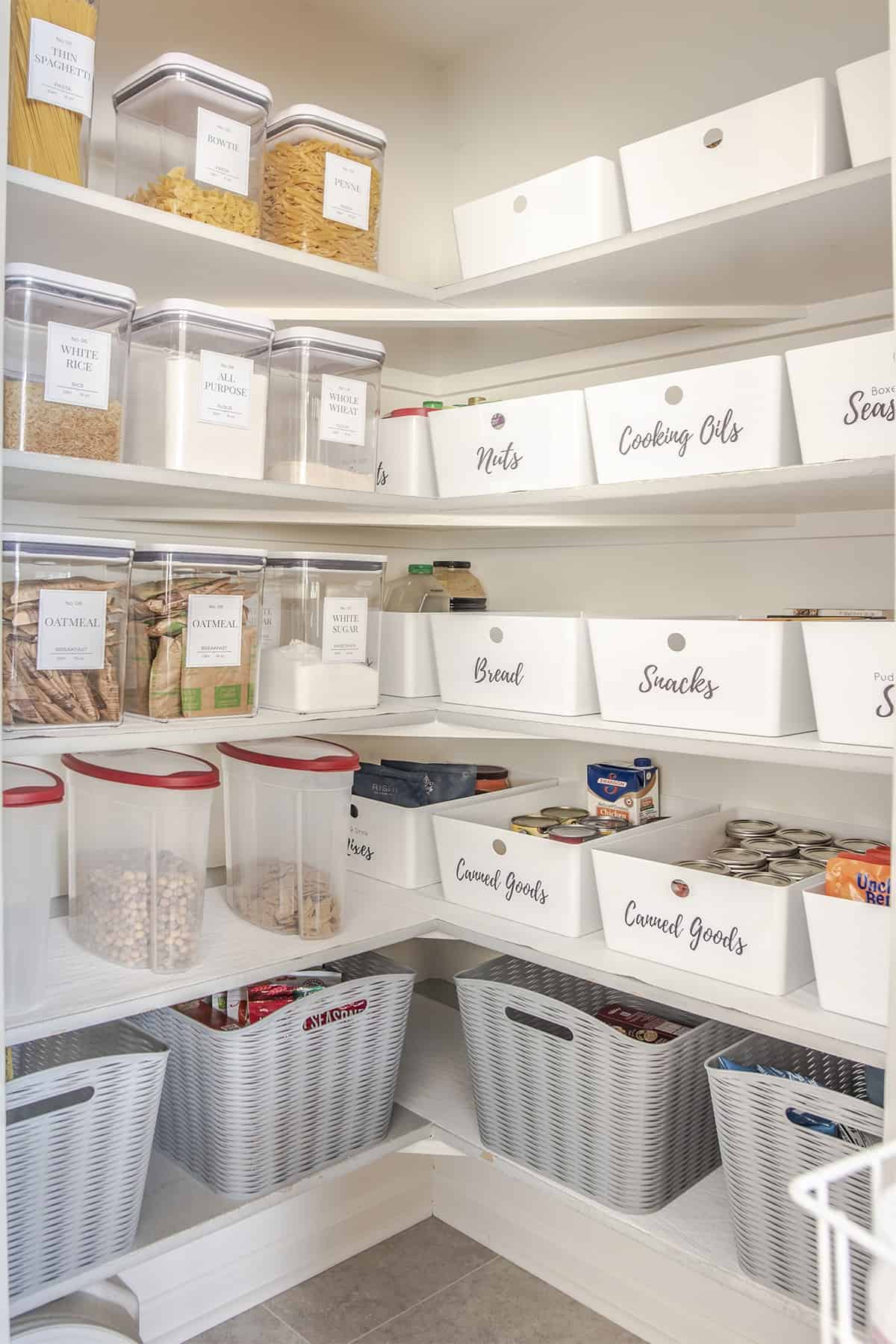
Canned goods are some of the hardest pantry items to manage because they roll around, stack unevenly, and hide what is behind them if you are not careful about how you set them up.
A can organizer rack, which loads cans from the top and dispenses them from the front, automatically applies the FIFO method so your oldest cans always get used first.
If you do not have a rack, line cans up in rows by type, with labels facing forward, inside a bin so they stay in place and are easy to read.
Tiered shelf risers also work well for cans because you can see the second and third rows without having to move anything in front of them at all.
For bottles like soy sauce, vinegar, or cooking oil, a deep bin or a turntable keeps them grouped and prevents them from tipping over onto other things on the shelf.
Label the bins holding bottles so everyone in the family knows exactly where each type of bottle lives and puts it back in the right spot.
You can also browse these pantry organization ideas for more creative solutions that go well beyond the basics of cans and bottles.
Tall bottles benefit from being stored on the lowest shelf of your pantry, where height is not an issue and grabbing them is the most convenient.
Best Food Pantry Organizer Ideas for Families With Busy Households
Busy families need a pantry system that is fast to use and even faster to reset after a hectic week of meals, school lunches, and last-minute cooking.
Assign each family member a dedicated snack bin so kids can grab what they are allowed to eat without pulling apart the whole pantry looking for something to munch on.
Use color-coded labels or bins to separate adult staples from kid-friendly snacks so the system is intuitive for absolutely everyone in your household.
A grab-and-go zone near the front of your pantry, stocked with easy lunch and snack items, saves so much time on busy school mornings and after-school rushes.
Keep your most-used cooking staples, like olive oil, pasta, rice, and canned tomatoes, at eye level so weeknight dinner prep stays fast and does not slow you down.
Deep shelves in a family pantry work best with large pull-out bins because you can fill them with bulk items and still access everything without a second of frustration.
Meal prep gets significantly easier when your baking zone, your grain zone, and your snack zone are clearly separated, and every family member actually respects where things go.
You can find even more inspiration through these kitchen cabinet organization ideas that complement your pantry setup and keep your whole kitchen feeling cohesive and under control.

Common Food Pantry Organization Mistakes to Avoid
One of the biggest mistakes people make is buying organizers before they have actually measured their shelves, which leads to bins that are too wide, too tall, or completely wrong for the space.
Mixing categories, like putting snacks next to baking supplies next to condiments, makes your pantry feel chaotic even when everything technically has a container.
Forgetting to label your bins is a mistake that seems small at first but causes the whole system to fall apart within a few weeks as things end up in the wrong spots.
Using round containers instead of rectangular ones wastes shelf space and makes your pantry look more cluttered than it actually is at first glance.
Skipping the monthly reset is a habit that lets expired items pile up and causes your carefully organized zones to slowly drift into chaos over time.
Putting your most-used items on the highest or lowest shelves is an ergonomic mistake that makes cooking harder than it needs to be every single day.
Overcrowding your pantry by keeping items you never use takes up space that could be used for things you actually reach for on a regular basis.
Not accounting for your household size and eating habits when setting up categories means the system will never quite fit how your family actually lives and cooks.

Frequently Asked Questions
What is the best way to start organizing a food pantry from scratch?
Pull everything out first, check expiration dates, and group items by category before buying a single organizer. Measuring your shelves after categorizing lets you buy exactly what fits without guessing. Starting from a clean, empty pantry gives you a clear picture of how much space you actually have to work with.
Are clear containers really necessary for pantry organization?
Clear containers are not strictly necessary, but they make it significantly easier to check your supply levels without opening anything. If you prefer a more styled look, opaque containers with good labels work fine. The key is that whatever container you choose has a clear label on the front so you are never guessing what is inside.
How do I organize canned goods so nothing gets lost in the back?
Use a can dispenser rack or tiered shelf risers so every can is visible and the oldest ones are always in the front. Applying the FIFO method, first in, first out, means you rotate stock every time you unpack new groceries. This prevents cans from sitting forgotten in the back until they expire without being used.
What is the best pantry organization system for a family with kids?
Assign each child a dedicated snack bin at a reachable height so they can serve themselves without disrupting the rest of the pantry. Color-coded labels or bins for different family members make the system intuitive enough for everyone to follow. A grab-and-go zone near the front of the pantry also speeds up busy school mornings dramatically.
How often should I reorganize my pantry?
A quick 15-minute monthly reset is all you need to keep your pantry system running smoothly long-term. During each reset, check expiration dates, refill containers, and tighten up any categories that have drifted out of place. A monthly habit is much easier to stick with than a big annual cleanout that feels like a full project every time.
I hope these food pantry organizer ideas help you create a pantry that feels easier to use, keeps everyday items within easy reach, and makes cooking much more enjoyable every day.
You do not have to organize everything at once because starting with one shelf, grouping similar foods, and adding simple storage solutions make the entire process feel much more manageable.
Simple habits like using clear containers, labeling categories, and doing a quick monthly reset help your pantry stay organized no matter the size of your storage space.
So, choose one idea, put it into practice, and enjoy a pantry that makes every grocery trip, meal preparation, and busy week feel much easier.