A messy pantry can make everyday cooking feel more stressful than it needs to be, and without the right kitchen pantry organization ideas, shelves can quickly become overcrowded, cluttered, and hard to manage.
If you have already tried different kitchen organization ideas but still deal with lost groceries, expired food, and shelves that never seem to stay organized, you are definitely not alone.
Many pantries end up packed with half-open boxes, random snack bags, and forgotten grocery items hiding in the back corners where nobody can find them.
Small shelves and awkward layouts only make the problem worse, especially when everything starts piling up after a busy week.
It gets frustrating when you accidentally buy duplicates because you could not see what was already there, or when breakfast and lunch supplies are scattered everywhere during rushed mornings.
And while a perfectly styled pantry may look nice online, it can quickly become overwhelming if the setup is not realistic for everyday life.
This post may contain affiliate links. As an Amazon Associate and a participant in other affiliate programs, I earn a commission on qualifying purchases at no additional cost to you.

The good news is that you do not need a huge walk-in pantry or expensive custom shelves to make your space work better.
I’m excited to share practical kitchen organization ideas and hacks, smart storage ideas, and simple systems that help busy homes stay tidy without adding extra stress.
These ideas will help you create a pantry that feels organized, functional, and easy to keep up with long after the organizing project is done.
Why Organizing Your Kitchen Pantry Matters
Organizing your kitchen pantry makes everyday life feel less stressful because everything is easier to find when you actually need it.
A well-organized pantry can save time during busy mornings, weeknight dinners, and even grocery shopping since you can quickly see what you already have at home.
It also helps reduce food waste because expired items and forgotten groceries are less likely to get pushed to the back of the shelves.
When foods are grouped into simple categories, meal planning feels more organized, manageable, and far less stressful during busy weeks.
An organized pantry can also help you avoid buying duplicate groceries, which saves both money and storage space.
Keeping daily-use items at eye level makes cooking feel smoother, especially when everyone in the family knows where things belong.
Simple systems like labels, bins, and shelf organizers also help the pantry stay organized long term instead of constantly needing complete resets.
Even small pantry spaces can feel bigger and more functional when clutter is under control, and shelves are arranged thoughtfully.
The best part is that an organized pantry is not just about making the space look pretty, but about creating a kitchen that works better for your real everyday routine.
Quick Kitchen Pantry Organization Tips
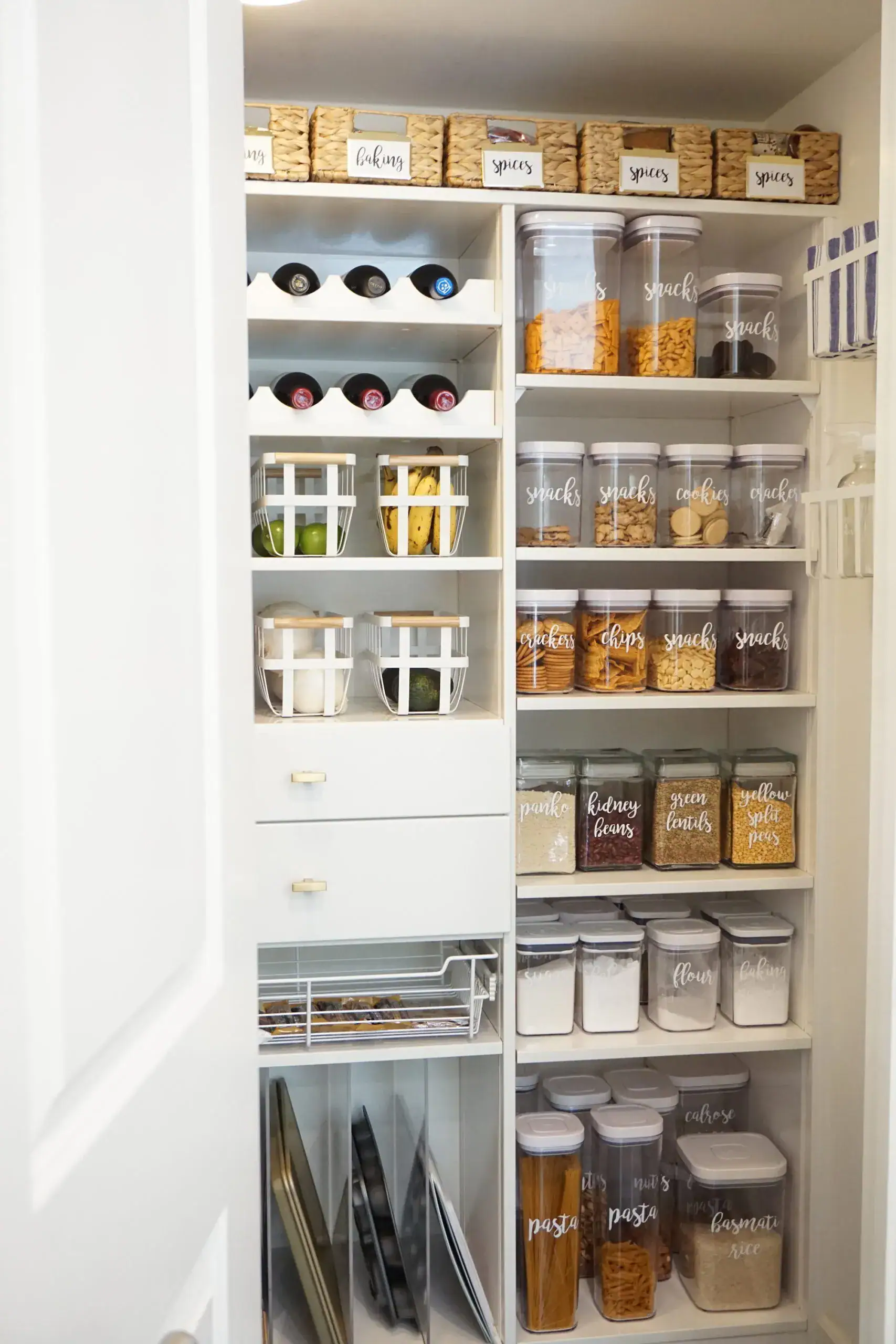
One of the best ways to organize a pantry is to take everything out first so you can clearly see what you have.
As you go through each shelf, sort foods into simple categories like snacks, baking supplies, canned goods, breakfast foods, and dinner staples to make items easier to find later.
This is also a great time to check expiration dates and throw away anything that is old or no longer being used.
Before buying organizers, measure your pantry shelves carefully so bins and containers fit properly without wasting space.
Keep everyday foods at eye level where they are easy to grab during busy mornings and weeknight dinners.
Extra backstock items can be stored on higher or lower shelves to free up convenient eye-level space for the foods your family uses daily.
Clear labels can also help the whole family keep the pantry organized because everyone knows where things belong.
Try using baskets or clear bins to group smaller pantry items together so shelves stay organized, simpler to maintain, and much less visually cluttered.
One simple habit that makes a big difference is doing a quick pantry reset after grocery shopping to keep everything neat before the mess starts building up again.

More Kitchen Organization Ideas + Inspiration
Tips To Label Pantry Containers And Shelves The Right Way
Labeling pantry containers and shelves can make a huge difference when it comes to keeping the space organized long term.
The easiest approach is to label broad categories like snacks, pasta, baking, breakfast, cans, and backstock instead of labeling every single food item.
This gives you more flexibility as pantry items change throughout the week and helps keep the organization system consistent without constantly relabeling containers.
Shelf labels work especially well in family kitchens because they help everyone know exactly where groceries should go.
Container labels are also helpful for dry goods like flour, sugar, rice, cereal, and pasta since they make shelves look cleaner and easier to manage.
Try keeping labels simple and easy to read so nobody has to stop and search for items during busy mornings.
Large clear lettering usually works much better than tiny decorative labels that are hard to see from a distance.
If you use bins for snacks or lunch supplies, labeling them can also help kids put things back in the right place.
A simple labeling system may seem small, but it is often one of the biggest reasons pantry organization actually lasts.
Best Kitchen Pantry Organizer to Use
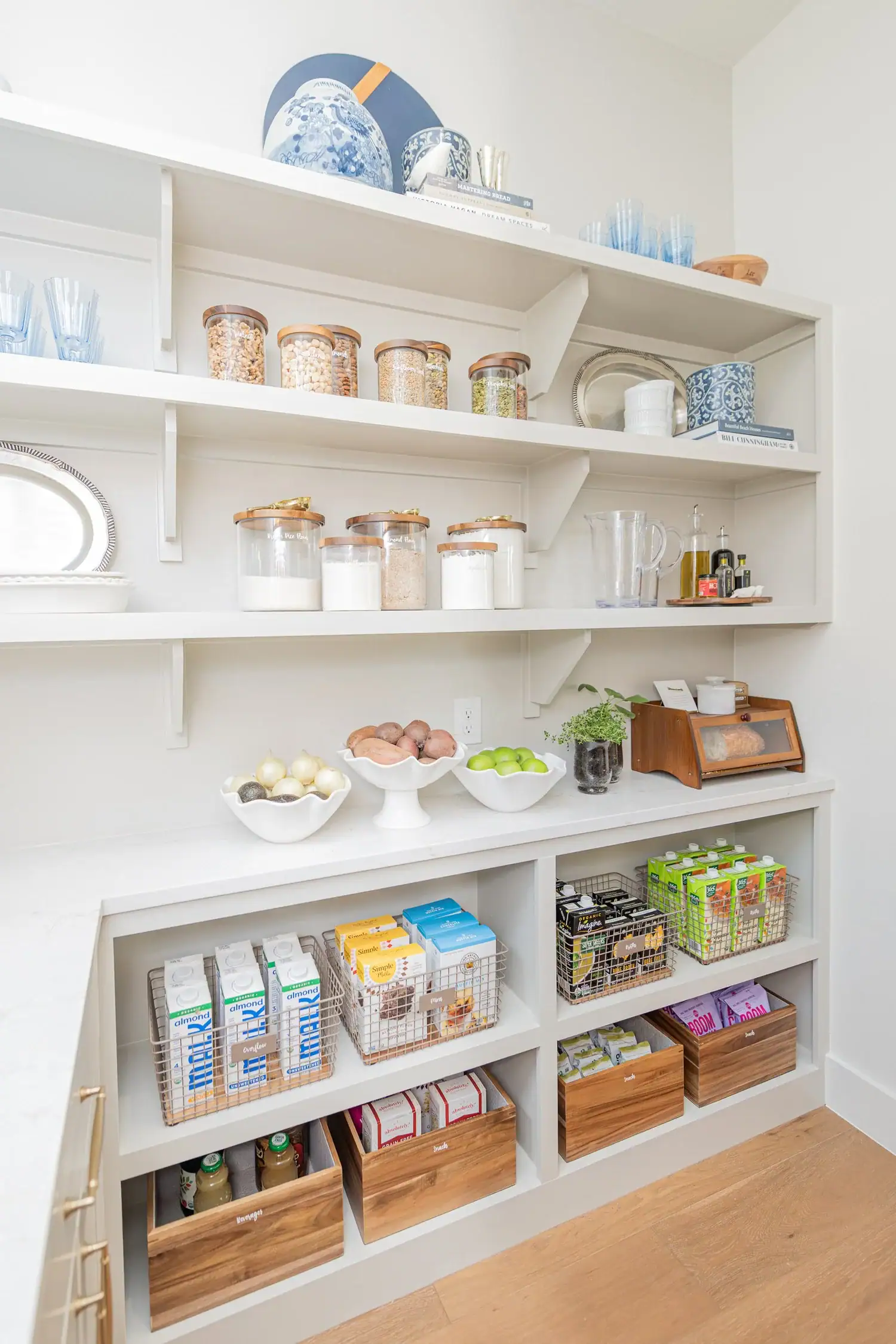
Using the right pantry organizers can make a huge difference in how functional, organized, and easy-to-maintain your kitchen pantry feels every day.
These brilliant kitchen organization hacks help maximize shelf space, reduce clutter, and allow you to quickly find groceries instead of digging through crowded shelves and overflowing bins.
So, I’m going to share some of the best kitchen pantry organizers that can help create a cleaner, more organized pantry system that actually works for busy everyday life.
Tap Photos To Shop

Small Kitchen Pantry Organization Ideas That Save Space
A small pantry can still feel organized and highly functional when shelves, doors, and vertical storage spaces are used carefully and intentionally every day.
One of the best ways to save space is by using vertical storage with shelf risers that help double the amount of usable room on each shelf.
Clear stackable bins also make it easier to group snacks, breakfast foods, and pantry staples without creating clutter.
Over-the-door racks are another smart solution because they provide extra storage for spices, packets, small jars, and grab-and-go snacks that usually take up shelf space.
Would you like to save this post?
If your kitchen feels tight, a narrow rolling cart beside the refrigerator can create extra pantry storage without making the room feel crowded.
It also helps to remove bulky packaging from food boxes, when they waste valuable shelf space.
Keeping overflow groceries together in one backstock bin can prevent shelves from becoming overcrowded and disorganized.
Small pantries work much better when every category has a dedicated home instead of random items being scattered everywhere.
Using clear containers can also help you quickly spot what needs to be restocked before heading out for grocery shopping.
Even simple changes like grouping similar foods together can make a small pantry feel bigger, cleaner, and far more manageable to maintain every day.

Kitchen Pantry Organization Ideas For Snacks, Cans, And Baking Supplies
A pantry becomes much easier to use when snacks, canned goods, and baking supplies each have their own organized zone.
Creating separate sections helps everyone in the family know where things belong and makes grocery shopping feel less overwhelming.
For snack organizer ideas, open bins and grab-and-go baskets work especially well because they make it easy for kids and busy adults to quickly find what they need.
Keeping snacks at a lower height can also help younger kids grab items without pulling everything off the shelves.
Canned goods stay more organized when stored on tiered shelves or can risers that keep labels clearly visible at a quick glance.
It also helps to keep canned food labels facing forward so items stay visible, quicker to grab, and less likely to expire unnoticed in the back.
Baking supplies like flour, sugar, chocolate chips, sprinkles, baking powder, and extracts should stay grouped together in one dedicated pantry section for smoother baking days.
Clear containers can make baking ingredients look neater while also helping you quickly see when items need to be restocked.
Breakfast foods like cereal, oatmeal, pancake mix, and coffee supplies can also have their own area to make rushed mornings feel smoother.
When every category has a designated place, the pantry stays cleaner, more functional, and much easier to maintain long-term.

Budget-Friendly Pantry Organization Ideas Without Custom Shelving
You do not need expensive custom shelving to create a pantry that feels clean, organized, and functional.
One of the easiest ways to save money is by reusing baskets, bins, and containers you already have around the house.
Simple clear bins can help organize messy categories like snacks, drink packets, and baking supplies without costing a lot.
Shelf risers are another affordable option because they instantly create more vertical storage space on crowded shelves.
Turntables are especially helpful for pantry corners where jars, sauces, and spices often get lost or forgotten.
Dollar-store bins can also work surprisingly well for organizing lunch items, snack pouches, and small pantry products.
Adhesive hooks are another inexpensive solution for hanging measuring spoons, scissors, or lightweight kitchen tools inside pantry doors.
It is also perfectly okay to skip matching containers in the beginning and focus on building a system that actually works for your family.
Many organized pantries are built slowly over time as families figure out what storage systems, containers, and organization methods work best for their lifestyle.
The most important goal is creating a pantry that feels easier to use every day, not spending a fortune trying to make it look perfect immediately.

How To Keep Your Pantry Organized After Grocery Shopping
Keeping your pantry organized after grocery shopping feels much more manageable when you build a few simple habits into your weekly routine.
One of the best things you can do is spend about 10 minutes resetting the pantry before heading to the store so you can clearly see what you already have.
As you put groceries away, move older food to the front of the shelves so it gets used before newer items.
New backstock should go behind older products to help reduce food waste and prevent forgotten items from expiring.
It also helps to keep duplicates together in one designated backstock bin instead of scattering extras throughout the pantry.
Try to avoid buying more groceries than your pantry can realistically hold because overcrowded shelves quickly become difficult to manage.
Giving every pantry item a specific home makes cleanup after grocery shopping much faster, more organized, and far less overwhelming during busy weekdays and weekends.
Small habits like tossing empty boxes right away and grouping similar foods together can help prevent clutter from building up again.
Cleaning one shelf each week is often much easier than waiting until the entire pantry feels overwhelming.
With a simple maintenance routine, your pantry can stay neat, functional, and much more organized long after grocery day is over.
Common Pantry Organization Mistakes To Avoid
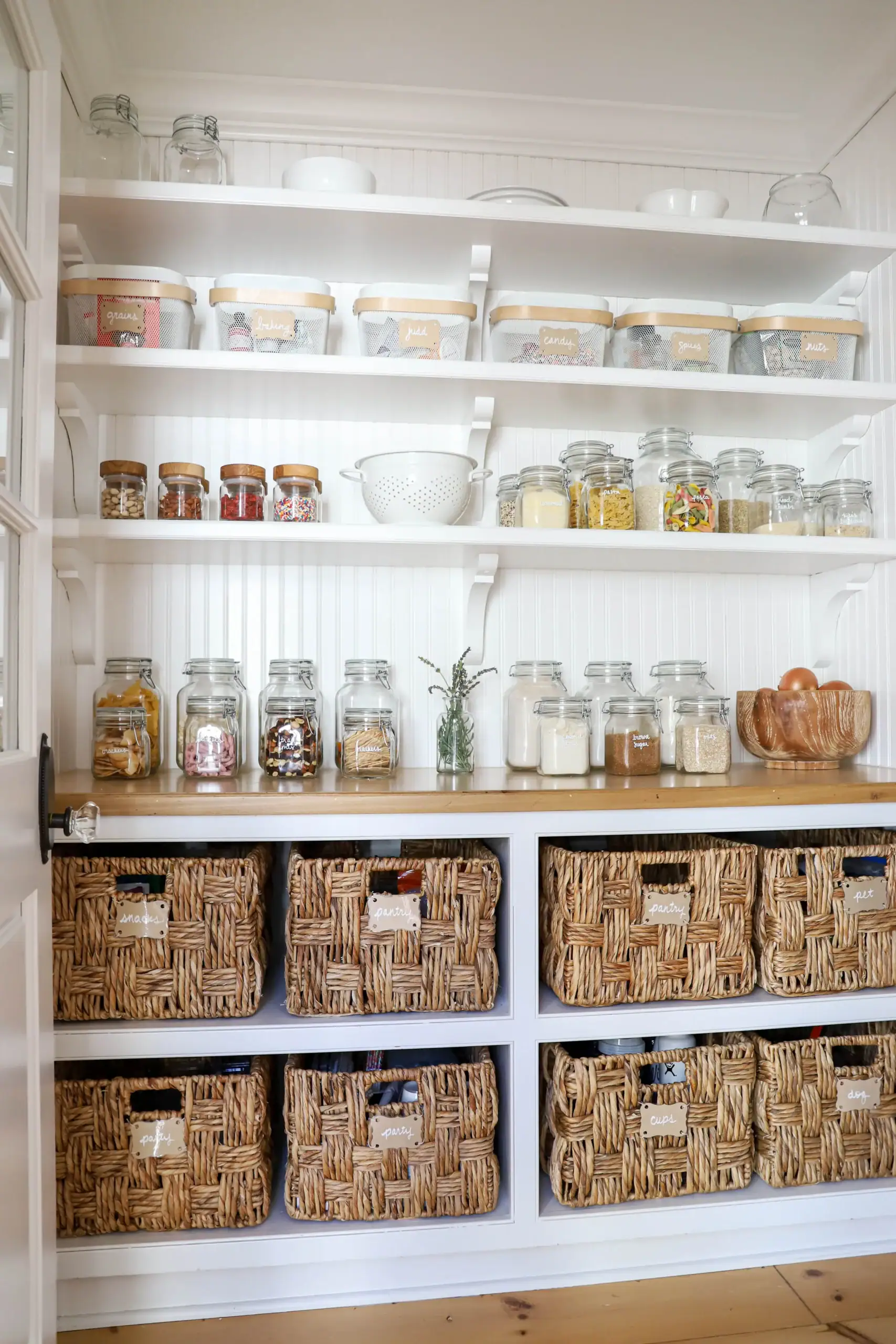
A pantry can become messy again very quickly when the organization system is difficult to maintain in real everyday life.
Knowing the most common pantry organization mistakes can help you save time, money, and frustration before buying containers or rearranging shelves.
The goal is not just creating a pretty pantry, but building a system that actually works for your family long term.
- Buying containers before measuring shelves
- Decanting too many foods into separate containers
- Using bins that are too deep or too heavy
- Putting everyday items too high to reach easily
- Keeping expired food “just in case”
- Creating too many tiny categories
- Making the pantry look pretty but hard to use
- Forgetting to leave space for new groceries
- Overcrowding shelves with too much backstock
- Using labels that are too small or hard to read

Frequently Asked Questions
What should I put in clear pantry containers?
Clear pantry containers work best for dry foods you use often, such as flour, sugar, rice, pasta, cereal, oats, and snacks. They make it easier to see when food is running low and help reduce bulky packaging.
Are pantry labels really necessary?
Pantry labels are useful if more than one person uses the pantry. Simple labels like snacks, baking, pasta, cans, breakfast, and backstock help everyone return food items to the correct place without confusion.
What are the best pantry zones to create?
The best pantry zones are breakfast, snacks, baking, pasta and grains, canned goods, dinner staples, drinks, backstock, and paper goods. Pantry zones help keep similar items together so food stays organized and quick to locate during busy meals and grocery restocking.
How often should I clean out my pantry?
Clean out your pantry every month for a quick reset and every three to six months for a deeper clean. Check expiration dates, wipe shelves, and move older food to the front before adding new groceries.
How do I organize a pantry without buying expensive containers?
You can organize a pantry without expensive containers by grouping food into categories, using baskets you already own, adding shelf risers, and labeling shelves. Focus on visibility and easy access before buying matching organizers.

An organized kitchen makes everyday life feel smoother, and proper pantry storage helps reduce stress, food waste, and clutter.
These kitchen pantry organization ideas can help you create a space that feels cleaner, easier to use, and more manageable for your family.
From simple labeling systems to budget-friendly storage solutions, small changes can make a huge difference in how your pantry functions every day.
The goal is not perfection but creating a realistic system that works well for your home and daily routine.
Start with a few simple pantry organization ideas from this guide and slowly build a space that feels both beautiful and practical.