


If you have ever felt like you are constantly picking up toys with no end in sight, these playroom organization ideas are exactly what you have been looking for.
When you search online for home organization ideas, you probably see picture-perfect rooms that feel pricey, unrealistic, and hard to keep tidy.
Most parents feel like no matter how much they tidy up, the room looks like a tornado hit it again within just a few hours.
It can be really discouraging to put in all that effort and still feel like the space is completely out of control every single day.
The truth is that most playrooms are not messy because of the kids but because the storage setup is not working the way it should be.
When toys have a clear and easy home to go back to, even young children can learn to clean up after themselves with very little help.
But getting a playroom organized does not require a big budget or a complete room makeover to see real results.
This post may contain affiliate links. As an Amazon Associate and a participant in other affiliate programs, I earn a commission on qualifying purchases at no additional cost to you.

Let me walk you through how to sort, store, and set up your playroom so that keeping it tidy actually becomes manageable and realistic.
I’m also going to share some tips on toy storage, decluttering, small space solutions, and systems that kids can actually follow and maintain on their own.
So, let me help you turn your playroom into a space that works for your whole family, feels calmer, and stays easier to clean.
Why Your Playroom Gets Messy So Fast
Playrooms get messy so quickly because most toys do not have a clear and consistent home to go back to after playtime is over.
When kids do not know exactly where something belongs, they will naturally just set it down wherever is most convenient in that moment.
Toy storage ideas only work when they are simple and intuitive enough for children to actually use them on their own without help.
A room with too many toys out at once creates visual noise and makes it nearly impossible for kids to focus on or clean up anything.
Without a system in place, everything ends up in one big pile, and sorting through it all feels exhausting and completely never-ending for parents.
Kids’ room organization also breaks down fast when the storage solutions require more steps than a child can reasonably manage on their own each day.
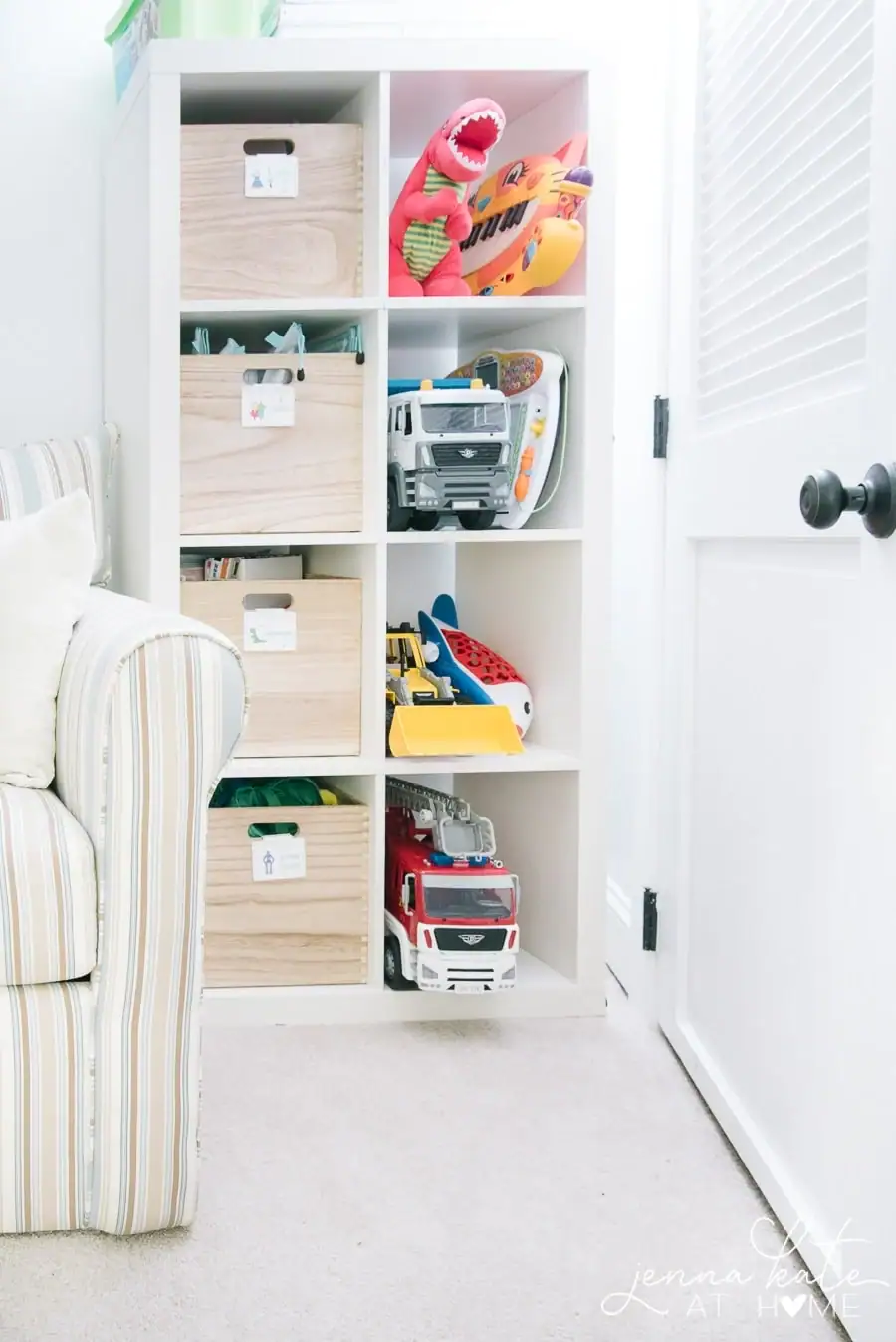
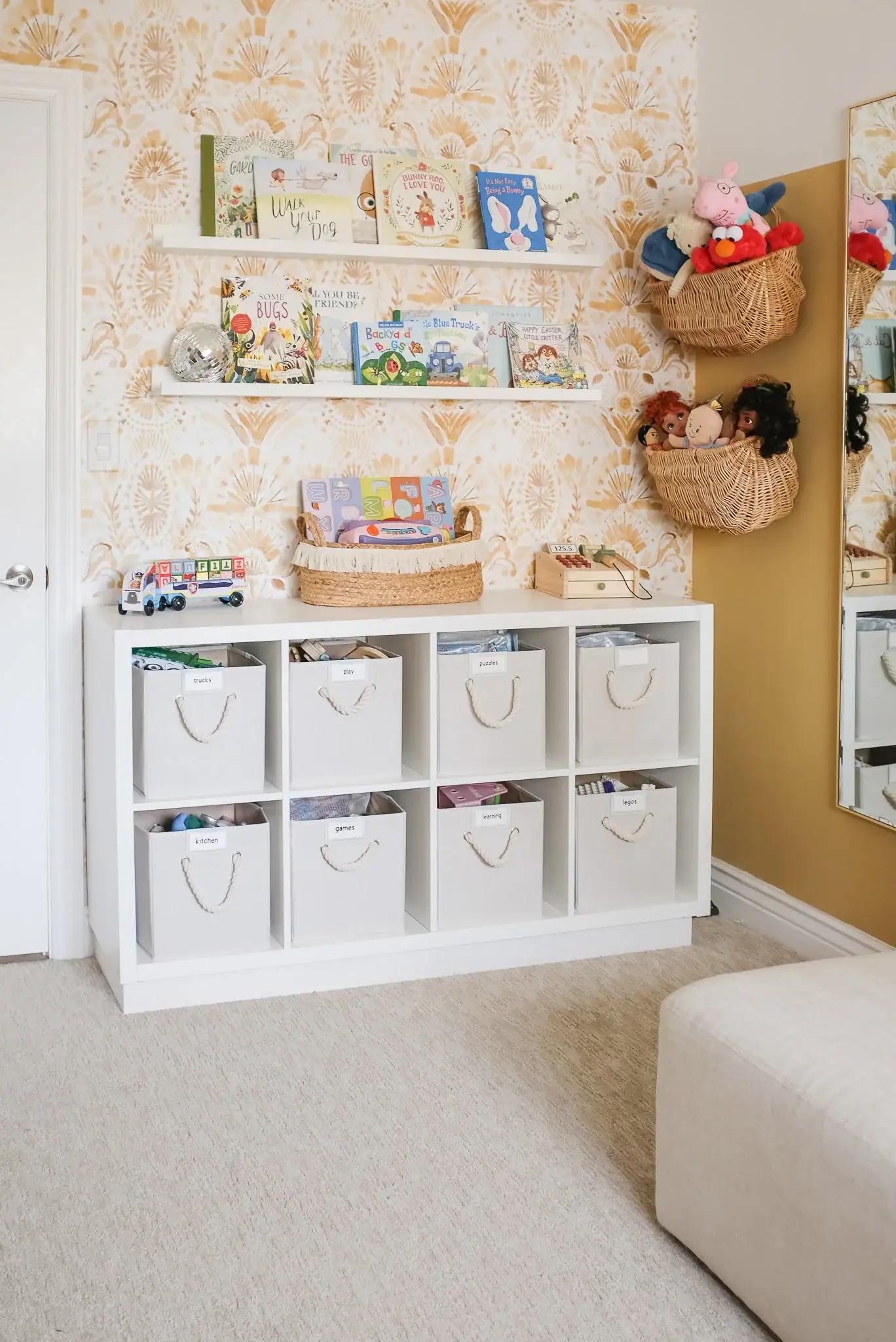
A cube storage organizer for the playroom helps so much because it gives every category of toy a dedicated and visible spot that is easy to find and return to.
Understanding why the mess keeps coming back is the first step toward finally setting up a system that actually sticks long term.

What To Keep In The Playroom VS. What To Store Somewhere Else
Deciding what actually belongs in the playroom is one of the most important steps you can take before setting up any kind of organization system.
Trying to organize a room that has too much stuff in it will always feel frustrating because no storage system can fix a clutter problem on its own.
A toy rotation system works really well here because it lets you keep only the most played-with toys in the playroom while storing the rest somewhere else.
Toys that are broken, missing pieces, or have not been touched in several months are strong candidates for donating, tossing, or storing outside the playroom completely.
Art supplies, board games, and puzzles can sometimes live in other areas of the home if the playroom feels too cramped to store everything comfortably.
Large outdoor toys, sports equipment, and seasonal items almost always make more sense stored in a garage or closet rather than taking up valuable playroom floor space.
Reading through some simple decluttering tips before you start sorting can help you make faster and more confident decisions about what truly deserves a spot in the room.
Keeping only what your kids genuinely love and regularly use in the playroom makes the whole space feel calmer, more inviting, and so much easier to maintain every day.
The goal is a room full of things your kids actually want to play with rather than a room stuffed with everything they have ever owned.
More Home Organization Ideas + Inspiration
Best Storage Organizer For The Playroom
Choosing the right storage organizers for your playroom can make such a big difference in how functional, tidy, and enjoyable the space feels every single day.
The best organizers are ones that are durable, easy for kids to use independently, and flexible enough to grow and change right along with your family.
So here are some of the best storage organizers to use so you can find the perfect options for your playroom and your budget.
Tap Photos To Shop

Tips To Declutter Toys Without Feeling Guilty (Simple Decision Rules)
Decluttering toys is one of those tasks that sounds simple but can bring up a surprising amount of guilt and second-guessing for so many parents.
The most helpful thing you can do before you start is remind yourself that fewer toys actually leads to more creative and focused play for your kids.
A good rule of thumb is to let go of any toy that has not been touched or asked about in the past three to four months.
If a toy is broken, missing important pieces, or frustrating to play with, it is completely okay to get rid of it without any guilt at all.
Toys that your child has outgrown developmentally are also fair game to donate, even if they once brought a lot of joy to your little one.
If you are unsure about a toy, try putting it in a box out of sight for two weeks and see if your child ever asks about it.
Sentimental toys are a real thing, and it is perfectly fine to keep a small and intentional collection of pieces that hold genuine meaning for your family.
Getting your kids involved in the decluttering process in an age-appropriate way helps them develop a healthy relationship with their belongings from a very early age.
Remember that the goal of decluttering is not a perfect minimalist playroom but a calm and functional space where your kids genuinely love to spend their time.
So, use my organizing and decluttering tips to help you move through the process faster while staying motivated.

How to Sort Toys By Category So Cleanup Is Faster
Sorting toys into clear categories is honestly one of the most impactful things you can do to make cleanup faster and easier for everyone in your home.
When every toy has a category, and every category has a home, kids can put things away correctly without needing you to direct them every single time.
Start by gathering every toy in the room into one big pile so you can see exactly what you are working with before you start sorting anything.
Common categories that work really well for most families include building toys, dolls and figures, art supplies, vehicles, stuffed animals, and outdoor play items.
Labeled storage bins for toys make the sorting system so much clearer and easier for kids to follow because they can see exactly where everything belongs at a glance.
Keeping categories consistent and simple is really important because the more complicated your system is, the less likely your kids are to actually follow it each day.
Would you like to save this post?
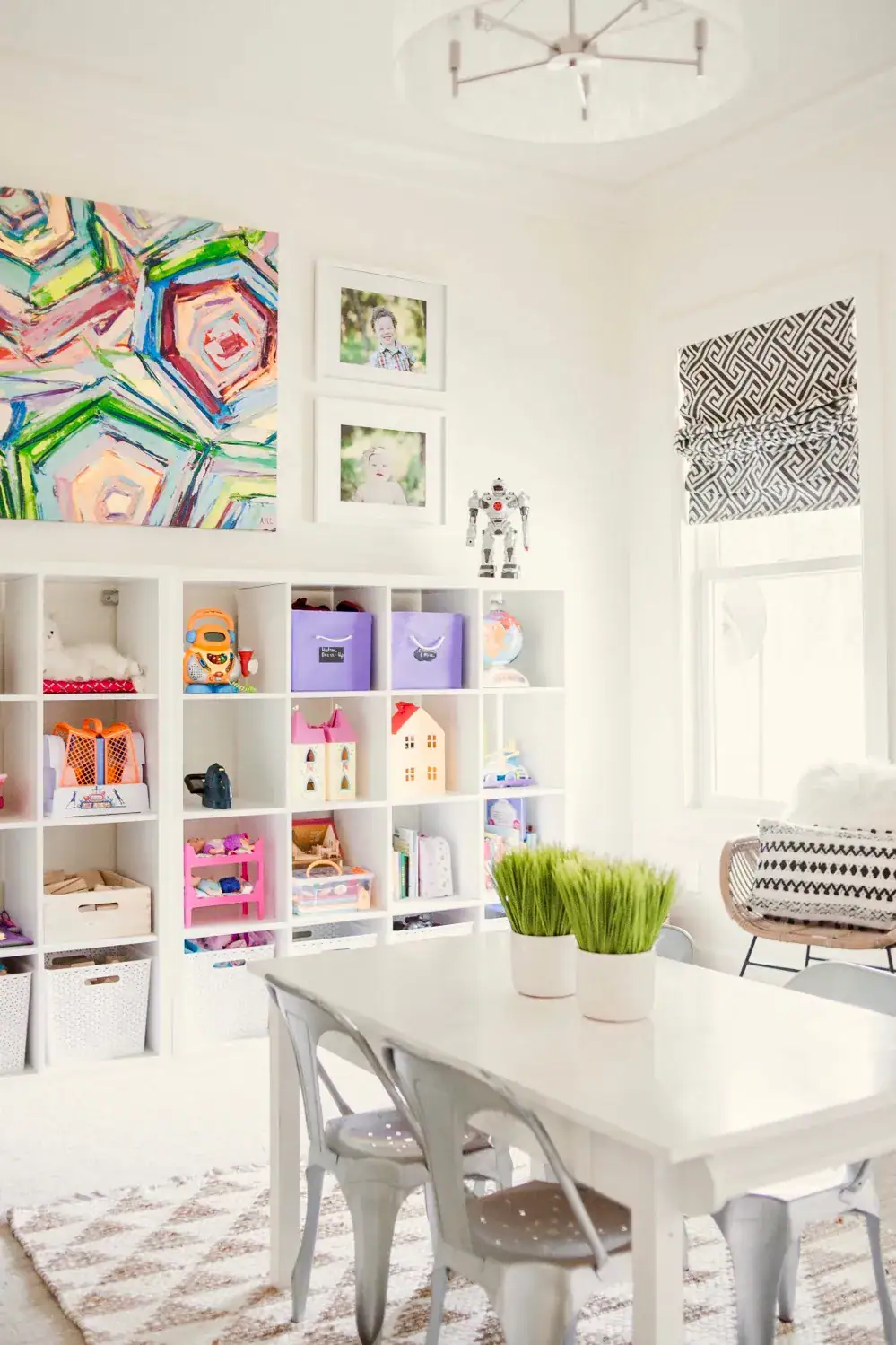
Playroom shelving ideas that dedicate one shelf or one bin to each category make the whole room feel more intentional and so much easier to navigate for little ones.
Avoid mixing categories in the same bin because it creates confusion and makes cleanup take so much longer than it actually needs to.
Once your categories are set, do a test run with your kids and watch how they interact with the system so you can make easy adjustments.
A well-sorted playroom is one where cleanup goes from a dreaded chore to something your kids can actually handle mostly on their own every single day.
Organizing Tips For Small Toys
Small toys are honestly some of the trickiest things to organize because they scatter so easily and can make a room feel chaotic in just minutes.
The best approach for small toys is always containment first, meaning every small item needs a dedicated bin, jar, or pouch to call home.
Clear containers work especially well for small toys because kids can see exactly what is inside without having to dump everything out to find what they want.
Labeled storage bins for toys are a game changer for small pieces like Lego bricks, puzzle pieces, and tiny figurines that tend to end up absolutely everywhere.
Sorting small toys by type and keeping each type in its own separate container makes cleanup so much faster and less frustrating for both kids and parents.
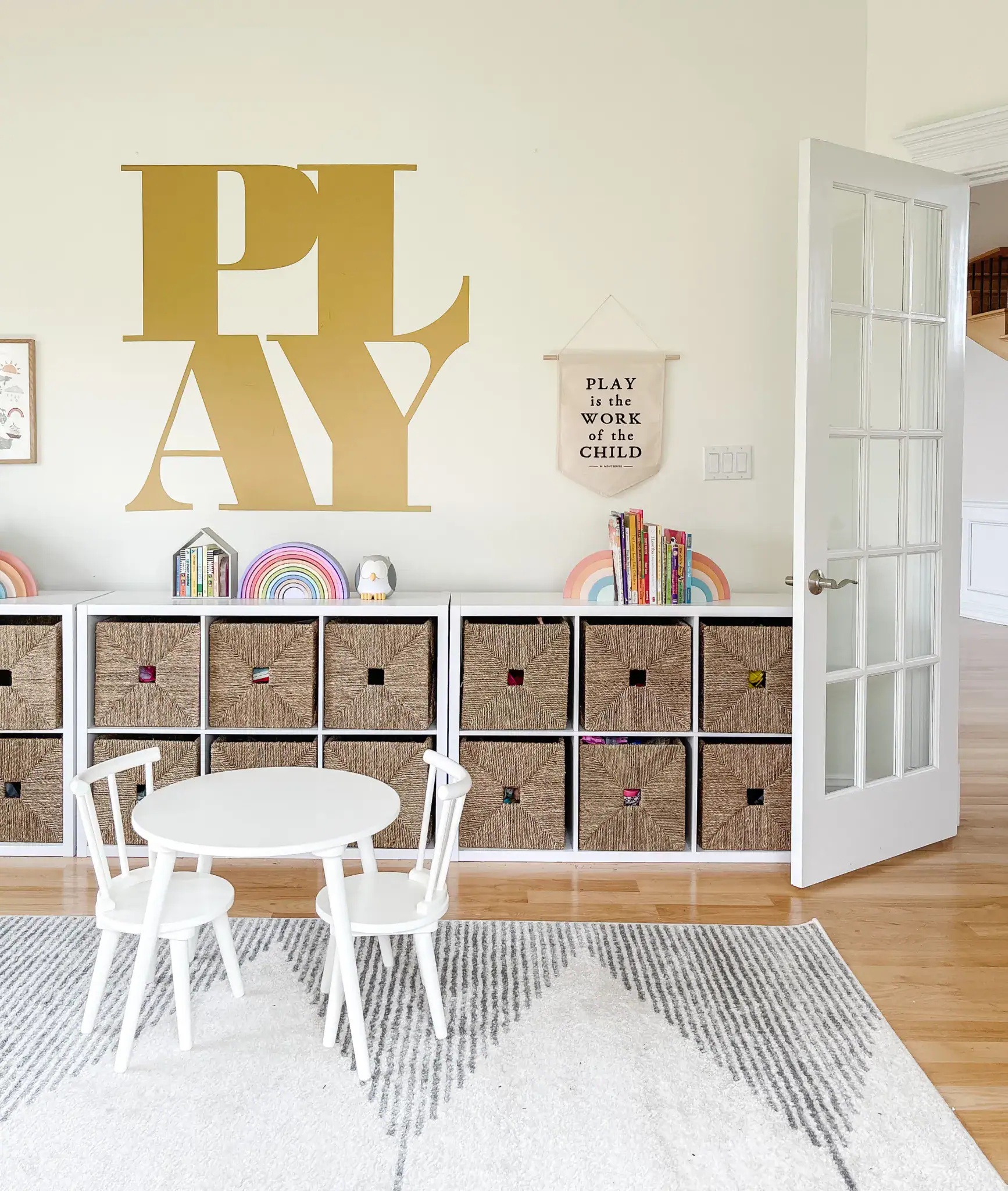
A cube storage organizer for the playroom works beautifully for small toys when you pair each cube with a smaller bin or basket inside it.
Avoid using containers that are too large for small toys because kids will just toss everything in together, and the sorting system will fall apart quickly.
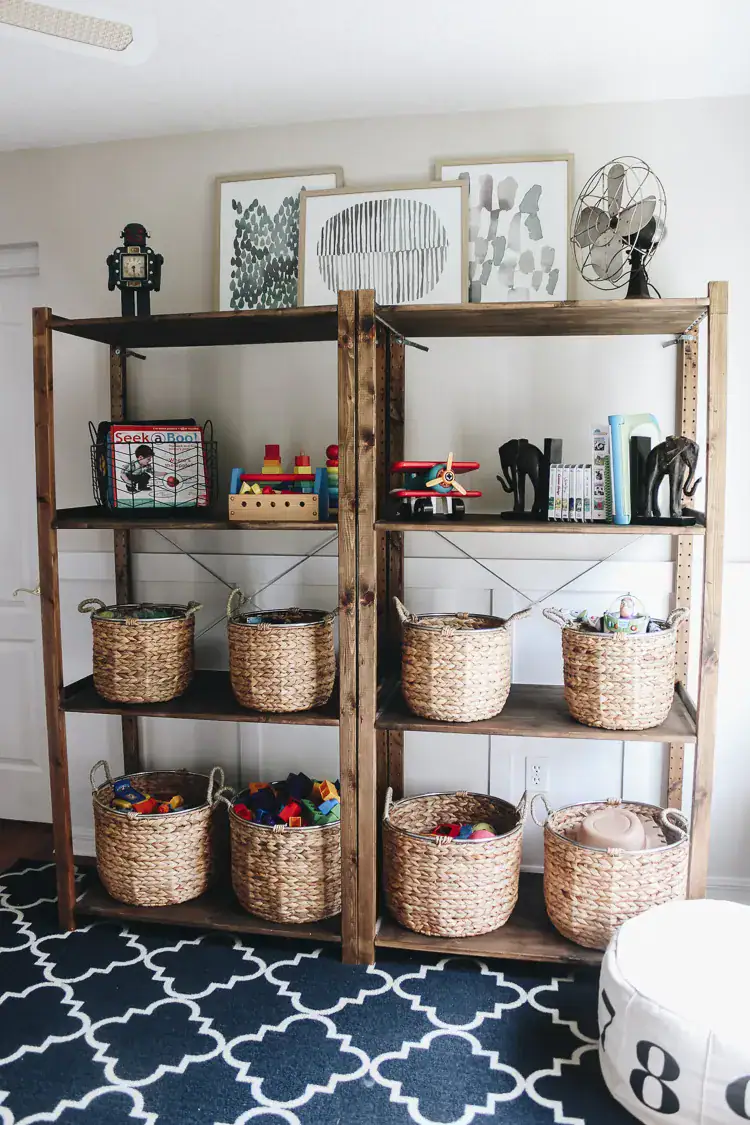
Montessori toy shelves are a wonderful option for displaying small toys in an organized and accessible way that actually encourages children to put things back where they belong.
Doing a quick five-minute sweep of small toys at the end of each day keeps them from building up into a pile that feels impossible to sort later.
The secret to managing small toys long-term is keeping the system simple, consistent, and easy enough for your kids to follow without needing your help every single time.

Best Ways To Organize Books, Puzzles, And Board Games Without Piles
Books, puzzles, and board games are some of the most loved items in any playroom, but they are also some of the easiest things to let pile up.
Having a dedicated and consistent spot for each of these categories makes a bigger difference than most people realize until they finally try it.
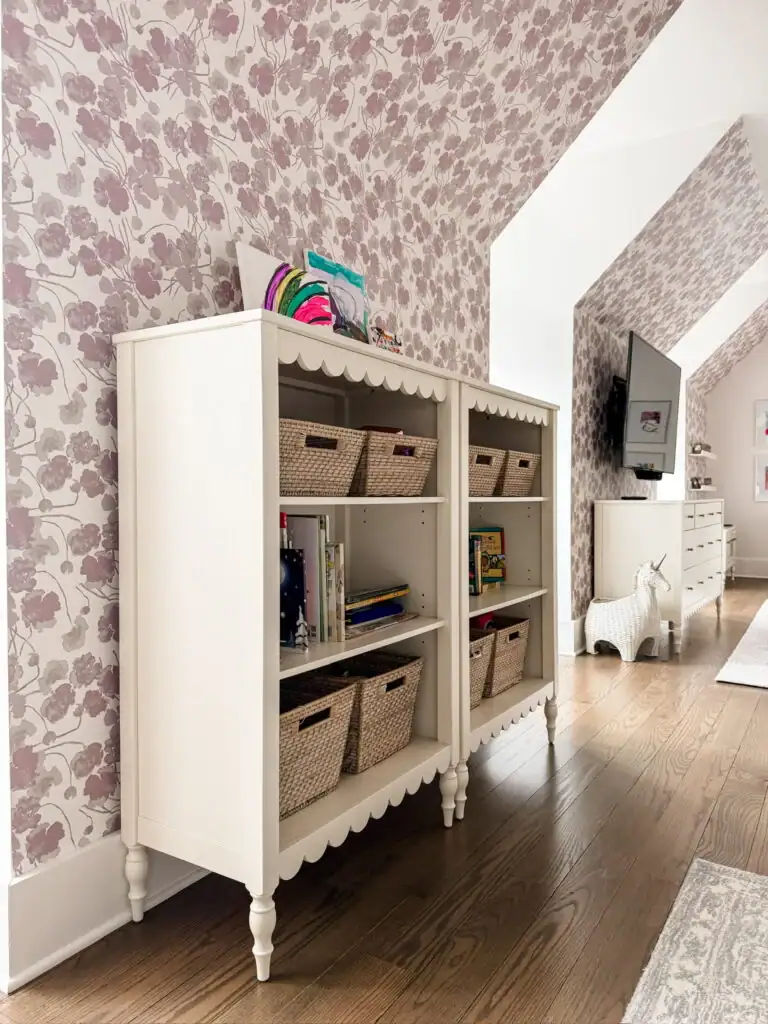
Bookshelf organization for kids works best when books are stored facing forward so little ones can see the covers and make their own choices independently.
A forward-facing bookshelf also makes it so much easier for kids to put books back correctly because they can clearly see exactly where each one belongs.
Puzzles are best stored in their original boxes when possible, but if the boxes are falling apart, resealable bags with a photo of the finished puzzle taped on work beautifully.
Stacking puzzle boxes flat on a low shelf rather than standing them upright keeps them from toppling over and makes them so much easier for kids to access.
Board games should always be stored on a dedicated shelf with the boxes neatly stacked and organized by size so nothing gets crushed or buried underneath.
If board game boxes are damaged or bulky, transferring the pieces into labeled zippered pouches and storing them in a single bin saves a surprising amount of shelf space.
Checking out playroom organizer ideas online can give you even more creative and practical solutions for storing books, puzzles, and games in a way that actually lasts.
When every book, puzzle, and game has its own clear home, the whole playroom feels more peaceful and so much easier for your family to enjoy every day.
Playroom Organization Ideas That Work Long-Term
Setting up a playroom is one thing, but creating a system that actually holds up over weeks, months, and years is a whole different and more rewarding challenge.
The ideas that work long term are always the ones that are simple enough for kids to maintain on their own without constant reminding or parental intervention.
Here are some of the best ideas on how to organize a playroom that are built to last well beyond the initial setup day.
1. Use a Toy Rotation System
A toy rotation system keeps the playroom feeling fresh and exciting by swapping out toys every few weeks so kids stay engaged without needing to buy anything new. It also means fewer toys are out at once, making cleanup dramatically faster and so much more manageable for everyone in the family.
2. Label Everything Clearly
Labeling every bin, basket, and shelf with words or pictures gives kids a clear and consistent guide for where every single toy belongs after playtime. When kids know exactly where things go, they are so much more likely to clean up independently and keep the system working the way it should.
3. Keep the System Simple Enough for Kids to Use Alone
A playroom organization system only works long-term if your children can actually follow it without needing you to direct every step of the cleanup process. The simpler and more intuitive your setup is, the more consistently your kids will use it and the longer it will stay intact and functional.
4. Do a Monthly Toy Audit
Setting aside just fifteen to twenty minutes once a month to go through toys keeps clutter from quietly building back up before you even notice it happening. A quick monthly check also gives you a chance to rotate toys, fix broken containers, and make small adjustments to keep the system running smoothly.
5. Involve Your Kids in the Process
When kids help set up and maintain their own playroom organization system, they feel a sense of ownership that makes them so much more motivated to keep things tidy. Even very young children can participate in sorting, putting things away, and making decisions about what belongs where in their space.

6. Use Playroom Shelving Ideas That Grow With Your Kids
Choosing adjustable shelving means your storage setup can change and adapt as your children grow older and their toy collections naturally evolve over time. Flexible shelving is one of the smartest long-term investments you can make for a playroom that stays functional and organized for years to come.
7. Store Small Playroom Organization in a Consistent Spot
Keeping all of your extra bins, labels, and organizational supplies in one dedicated spot means you can quickly make repairs or adjustments to the system whenever something stops working. Having everything you need on hand makes it so much easier to stay on top of the playroom without it ever feeling like a big, overwhelming project.
8. Create a Daily Cleanup Routine
Building a short and consistent cleanup routine into the end of every single day prevents toys from piling up and the room from reaching a point that feels impossible to tackle. Even a simple five to ten-minute tidy-up before bedtime makes a genuinely noticeable difference in how the playroom looks and feels every morning.
Frequently Asked Questions
How many toys should be kept in the playroom at one time?
Keep 8 to 12 toy sets out, like blocks, dolls, or cars, so kids can see choices fast and clean up easily. Store the rest in labeled bins and swap a few each week instead.
What are the best storage bins for toys that won’t break easily?
Choose thick plastic bins made from polypropylene with strong side walls and snap lids, since they resist cracks and drops. Skip thin boxes and weak fabric cubes, and test each bin by lifting it full.
How can I organize a small playroom with limited floor space and no closet?
Use wall shelves and a low cube unit to keep the floor open, then place one bin per toy type for fast pickup, for playroom organization ideas. Add hooks for dress up and a mat.
How do I set up a toy rotation system that actually works for busy families?
Build four to six labeled bins and keep only two bins out at once, so choices stay clear, using playroom organization ideas that fit busy days. Rotate on trash night and donate broken pieces too.
What’s the easiest daily and weekly cleaning routine to keep the playroom tidy?
Set a 10 minute timer each evening for a fast reset, and put toys back into their home bins before bed. Do one weekly sweep to wipe surfaces, match pieces, and empty trash quickly today.
If you have been feeling stuck about where to begin, these playroom organization ideas are truly the best place to start making real and lasting changes.
Trying these ideas helps you build a system that your kids can actually maintain, and that makes your whole home feel calmer and more peaceful every single day.
Grab some bins, labels, and a little bit of patience, and trust yourself to create a playroom that works for your family.
Your playroom can absolutely become a functional space and easy to keep tidy, so go ahead and take that first step today!






Amazing! Such a creative though to organize kids messy toys. Mom has to busy most time to arrange kids messy zone. It’s must helpful to organize kids playroom. Thanks for such a helpful kids playroom organization ideas.